




If you have a parent, sibling, or child with sleep apnea, you may ask, is sleep apnea genetic? The short answer is that inherited traits can increase the risk of obstructive sleep apnea (OSA), but the condition is not usually passed down through one gene in a predictable way. Family anatomy, body composition, age, health conditions, and shared habits can all play a role.
Schedule a sleep apnea consultation with Smile Makers Dental Center.
Is Sleep Apnea Genetic?
In short: Sleep apnea can have a genetic component, especially obstructive sleep apnea. Genes may influence facial structure, airway shape, body-fat distribution, and breathing control. However, having a family history does not guarantee that you will develop sleep apnea, and having no family history does not eliminate your risk.
Sleep apnea is a group of sleep-related breathing disorders. The most common type is obstructive sleep apnea, which occurs when the upper airway becomes partly or completely blocked during sleep. The brain may briefly wake the body enough to reopen the airway, but these interruptions can happen repeatedly without the person realizing it.
Central sleep apnea is different. It occurs when the brain does not consistently send the signals needed to control breathing during sleep. Because the causes and risk factors differ, a family history of obstructive sleep apnea should not be treated as proof that a relative has, or will develop, central sleep apnea.
The National Heart, Lung, and Blood Institute explains that family history and genetics can raise the risk of sleep apnea alongside age, body features, lifestyle habits, and other medical conditions. This is best understood as inherited susceptibility, not certainty.
How Can Family History Raise Sleep Apnea Risk?
In short: Family history may signal shared genetic traits that make the airway more likely to narrow or collapse during sleep. Relatives may also share body features, medical conditions, routines, or environmental factors. These connections can raise risk, but they do not identify a diagnosis on their own.
Researchers do not generally describe OSA as a simple single-gene disorder. Instead, multiple genetic differences may each contribute a small amount to risk. A review of OSA genetics in the National Library of Medicine's PubMed Central collection describes a complex interaction among inherited biology, anatomy, and other risk factors.
Family history can matter in several ways:
- Inherited anatomy: Genes help shape the jaw, palate, tongue, throat, and other structures around the upper airway. A narrower airway or a jaw position that leaves less room for the tongue may make obstruction more likely during sleep.
- Inherited body composition: Genetics can influence where a person stores body fat. Extra tissue around the neck can reduce the space available for airflow, although OSA can affect people of many body types.
- Inherited breathing regulation: Genetic factors may influence how the nervous system and airway muscles respond to changes in breathing during sleep.
- Shared health patterns: Families may share conditions that affect sleep or breathing, such as nasal congestion, thyroid disorders, or other medical issues. A relative's diagnosis may be a prompt to discuss your own health, not a reason to assume the same cause.
- Shared routines: Alcohol use, smoking, sleep schedules, and activity patterns can cluster within households. These are not inherited in the same way as anatomy, and some can be changed.
MedlinePlus Genetics describes OSA as the result of a combination of genetic, health, and lifestyle factors. It also notes that many genetic contributions remain unclear. That uncertainty is important: a genetic test is not a substitute for a clinical assessment or sleep evaluation.
Which Inherited Traits May Affect Airway Risk?
In short: The inherited traits most relevant to obstructive sleep apnea are features that affect the size, shape, or stability of the upper airway. These can include jaw and palate structure, tongue position, neck anatomy, and body-fat distribution. A clinician evaluates the whole picture rather than one visible feature.

People often focus on snoring or body weight when they think about sleep apnea, but airway anatomy is also important. Two people with similar body types can have different levels of risk because their jaws, tongues, palates, nasal passages, and throats are shaped differently.
Traits that may deserve attention include:
| Possible family-linked trait | Why it may matter |
|---|---|
| Small or recessed lower jaw | May leave less room for the tongue when throat muscles relax during sleep. |
| Narrow or high-arched palate | Can be associated with a narrower oral and nasal airway. |
| Larger tongue or tonsils | May reduce the available airway space, particularly during sleep. |
| Shorter or thicker neck | May be associated with less room around the upper airway. |
| Family tendency toward nasal obstruction | Congestion or structural narrowing can make comfortable nighttime breathing harder. |
This table is not a diagnostic checklist. A person can have one or more of these features without OSA, while someone without an obvious feature can still have clinically important sleep-disordered breathing. The purpose of family history is to help a qualified clinician ask better questions and decide whether evaluation is appropriate.
Is Central Sleep Apnea Genetic?
In short: Central sleep apnea is not understood in the same way as inherited risk for obstructive sleep apnea. It is often associated with another health condition, medication, altitude exposure, or another disruption in breathing control. A clinician must identify the type of sleep apnea before discussing its likely cause.
Central sleep apnea happens when the brain temporarily fails to send regular breathing signals during sleep. It does not primarily result from a physical blockage in the throat. Some inherited conditions can affect the nervous system or breathing regulation, but central sleep apnea is not usually described as a straightforward hereditary disorder.
This distinction matters because symptoms can overlap. Snoring, disrupted sleep, fatigue, and morning headaches may occur with OSA, but symptoms alone cannot reliably identify the type. A sleep study or other evaluation may be needed to understand whether pauses are caused by airway obstruction, changes in breathing signals, or another issue.
If a close relative has been diagnosed with a specific sleep-related breathing disorder, ask what type it was and whether the diagnosis came from a sleep study. That detail gives your healthcare team more useful information than the general statement that someone in the family "had sleep apnea."
What Symptoms Should Families Watch For?
In short: A family history becomes more actionable when it is paired with symptoms such as loud or persistent snoring, witnessed pauses, gasping, morning headaches, daytime sleepiness, or trouble concentrating. Because people may not notice their own nighttime symptoms, a sleep partner or family member's observations can be valuable.
Common signs associated with sleep apnea may include:
- Loud, frequent, or disruptive snoring
- Breathing pauses noticed by another person
- Gasping, choking, or snorting during sleep
- Waking with a dry mouth or morning headache
- Daytime sleepiness, fatigue, or irritability
- Difficulty concentrating or remembering routine information
- Restless sleep or repeated nighttime awakenings
- High blood pressure or another condition that may be affected by poor sleep
Not everyone who snores has sleep apnea, and some people with OSA do not snore loudly. Women, older adults, and children may show less typical patterns, such as insomnia, mood changes, morning headaches, hyperactivity, or difficulty staying attentive. Children may also have enlarged tonsils or adenoids, mouth breathing, or unusual sleep positions.
The MedlinePlus Genetics overview of obstructive sleep apnea describes repeated breathing interruptions, lower oxygen levels, daytime sleepiness, and concentration problems among possible effects. It also emphasizes that OSA has complex causes. If symptoms are persistent, a family history is a good reason to raise the topic with a healthcare professional rather than wait for symptoms to become severe.
What Should You Do If Sleep Apnea Runs in Your Family?
In short: Start by recording the family history and your own symptoms, then discuss them with a qualified clinician. Ask which relative was diagnosed, what type of sleep apnea they had, and whether they used CPAP or another treatment. Do not self-diagnose or borrow another person's device.
- Ask specific questions. Find out whether a parent, sibling, or child had a sleep study, a formal diagnosis, or treatment. If possible, note whether the diagnosis was obstructive or central sleep apnea.
- Track what you notice. Write down snoring, witnessed breathing pauses, gasping, morning headaches, daytime sleepiness, and any pattern of symptoms. A sleep partner's observations can be especially helpful.
- Review other risk factors. Tell your clinician about nasal congestion, medications, alcohol use, smoking, blood pressure, thyroid concerns, weight changes, and other health conditions.
- Ask whether evaluation is appropriate. Depending on your symptoms and history, a clinician may recommend a sleep study or referral to a sleep specialist. A home sleep test is not right for every patient, so follow the recommendation provided for your situation.
- Follow the treatment plan. Treatment depends on the type and severity of sleep apnea and the patient's health. Options may include positive airway pressure, an oral appliance for selected patients with OSA, positional strategies, or treatment of contributing conditions.
Family history should encourage earlier awareness, not fear. Many risk factors can be addressed, and an evaluation can replace guesswork with a clearer plan. If you are in Northern Virginia, Smile Makers Dental Center can discuss sleep-related concerns and help you identify an appropriate next step.
Talk with Smile Makers Dental Center about your sleep apnea risk and next steps.
How Is Sleep Apnea Evaluated and Treated?
In short: Sleep apnea evaluation usually combines a health history, symptom review, physical examination, and sleep testing when indicated. Treatment is individualized. Dental sleep care may support selected patients with obstructive sleep apnea, but a custom oral appliance should be recommended and monitored by qualified professionals rather than purchased as a generic self-treatment.
A dental consultation can be useful because the mouth, jaw, tongue, palate, and airway are closely connected. A dentist may review oral and facial features, ask about nighttime symptoms, and coordinate with a physician or sleep specialist. This does not mean every patient with snoring needs a dental appliance, and it does not replace medical diagnosis.
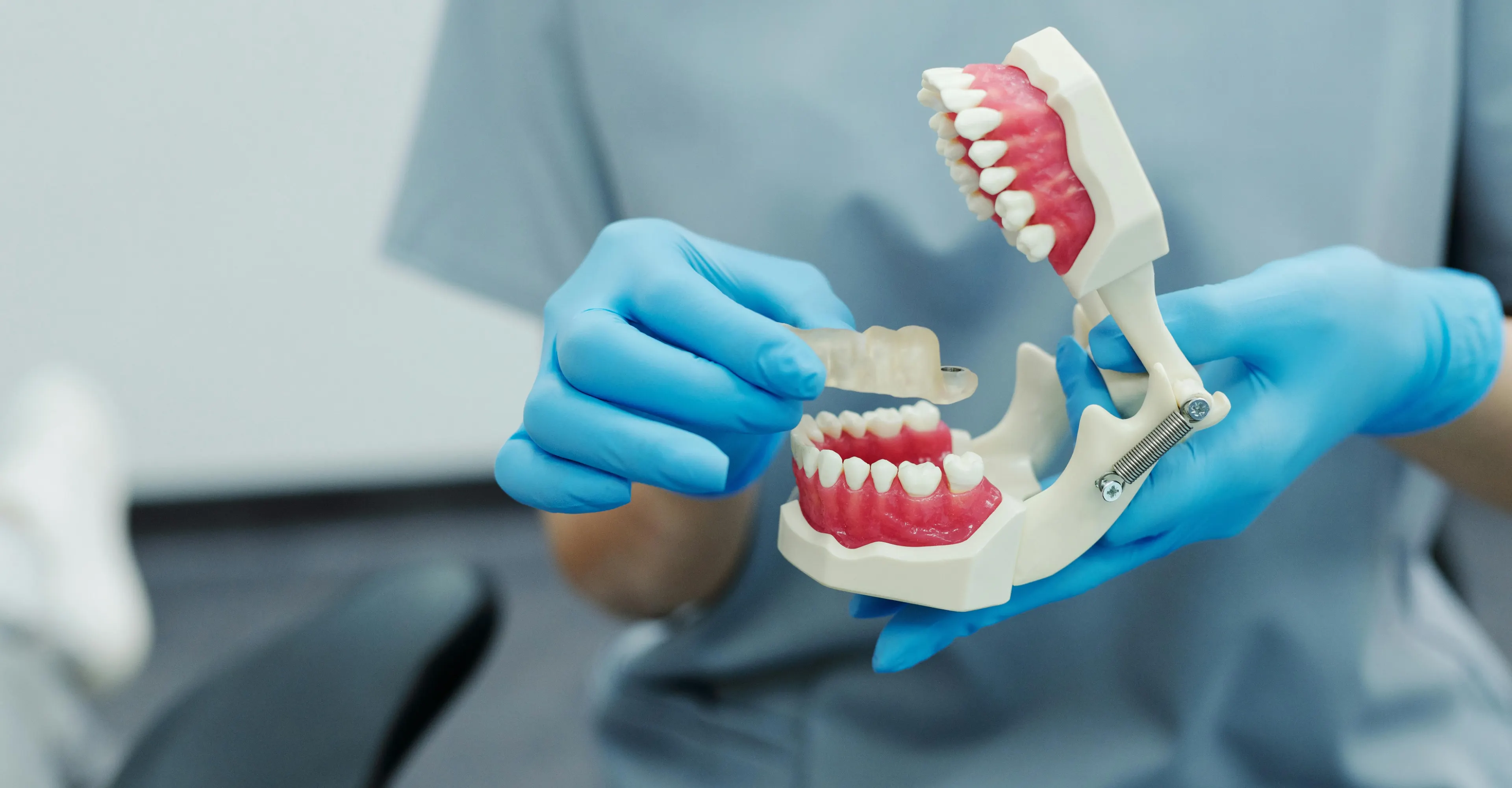
For patients who are appropriate candidates, a custom oral appliance may help hold the lower jaw or tongue in a position that supports airway space during sleep. The correct choice depends on the diagnosis, severity, anatomy, dental health, and treatment goals. Follow-up is important because comfort, bite changes, jaw symptoms, and treatment response should be monitored.
Smile Makers Dental Center also provides educational resources about what sleep apnea is, sleep apnea causes and risk factors, and how to recognize possible sleep apnea symptoms. Readers interested in oral appliance therapy can learn more about a sleep apnea mouth guard and how dental appliances may work.
Sleep apnea can affect health and daily safety when it is untreated. If you experience severe daytime sleepiness, avoid driving or operating machinery until you have spoken with a qualified clinician. Seek urgent medical care for severe trouble breathing while awake, chest pain, fainting, sudden weakness, or other emergency symptoms.
Frequently Asked Questions About Sleep Apnea and Family History
In short: Family history is one risk factor, not a diagnosis. The most useful next step is to combine the family history with your symptoms, anatomy, and health conditions, then ask a qualified clinician whether sleep evaluation is appropriate.
Can sleep apnea skip a generation?
It may appear to skip a generation because inherited risk is not deterministic and relatives can have different anatomy, health conditions, ages, and habits. A person can develop OSA even when parents do not have it, and a child may not develop it even when a parent has been diagnosed.
Should I get tested if my parent has sleep apnea?
Family history alone does not determine whether testing is needed. If you also have loud snoring, witnessed pauses, gasping, daytime sleepiness, morning headaches, or other concerns, discuss them with a qualified clinician. They can decide whether a sleep study or another evaluation is appropriate.
Is sleep apnea inherited from the mother or father?
Inherited susceptibility can come from either side of the family. OSA risk reflects many genes and non-genetic factors rather than a simple maternal or paternal inheritance pattern. Ask about sleep apnea diagnoses among close relatives on both sides of the family.
Can a child inherit sleep apnea?
Children can develop sleep-disordered breathing, and family-linked anatomy may contribute to risk. Enlarged tonsils or adenoids, nasal obstruction, craniofacial features, and other conditions can also matter. Discuss loud snoring, mouth breathing, pauses, restless sleep, or daytime behavior changes with the child's pediatric clinician.
Does a family history mean I will need CPAP?
No. Treatment is based on the type and severity of sleep apnea, symptoms, anatomy, and overall health. Some patients are treated with positive airway pressure, while selected patients with OSA may use a custom oral appliance or another evidence-based approach recommended by their care team.
Can losing weight prevent inherited sleep apnea?
Healthy weight management may lower risk or improve OSA for some people, but it cannot change inherited anatomy or guarantee prevention. People of every body size can have sleep apnea. Do not delay evaluation because you assume weight is the only possible cause.