


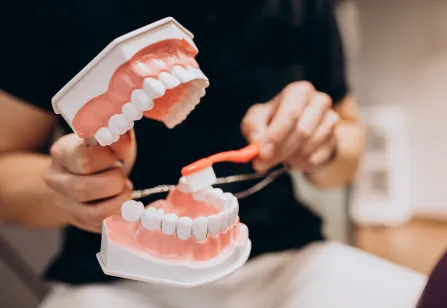

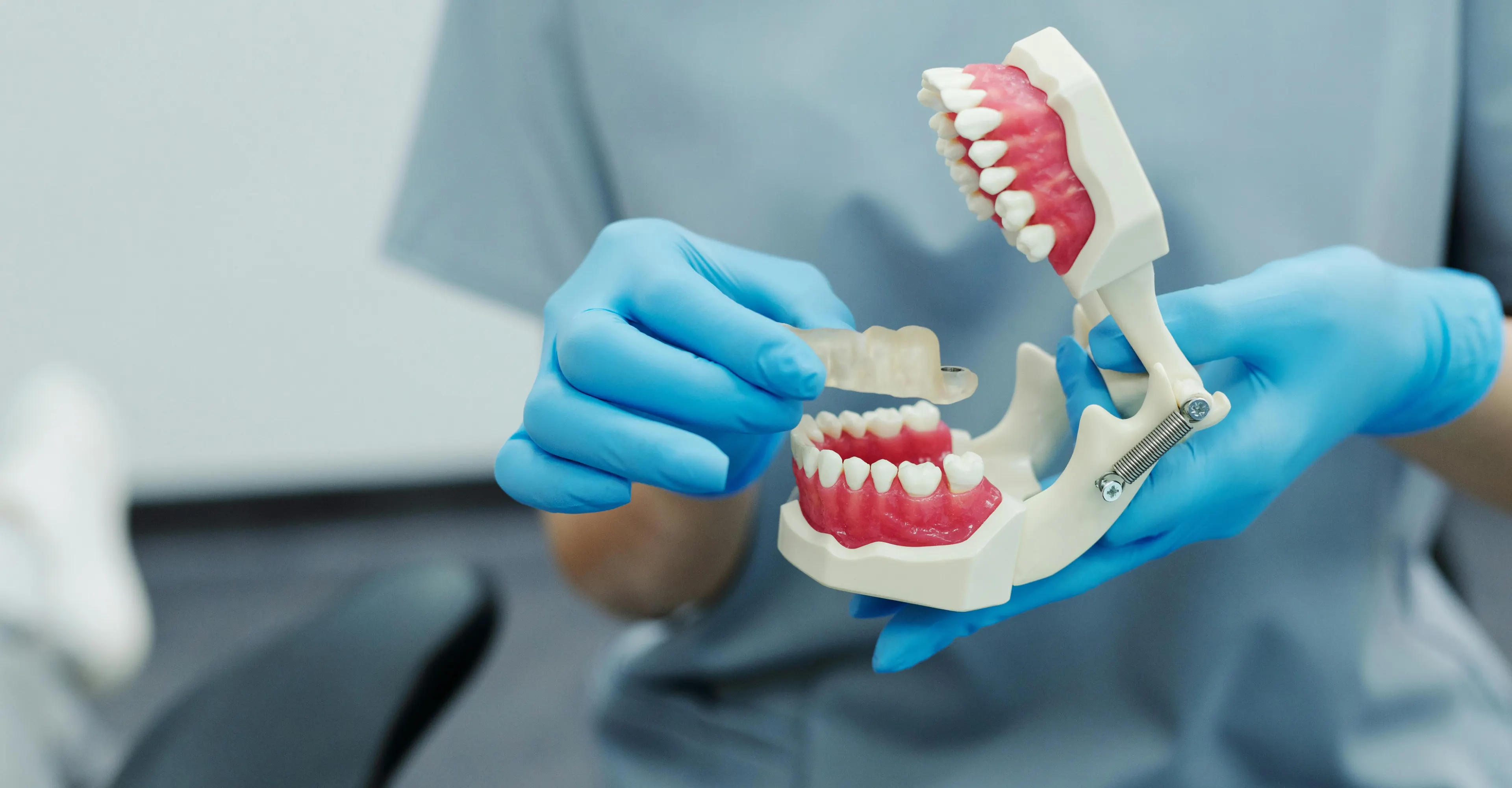
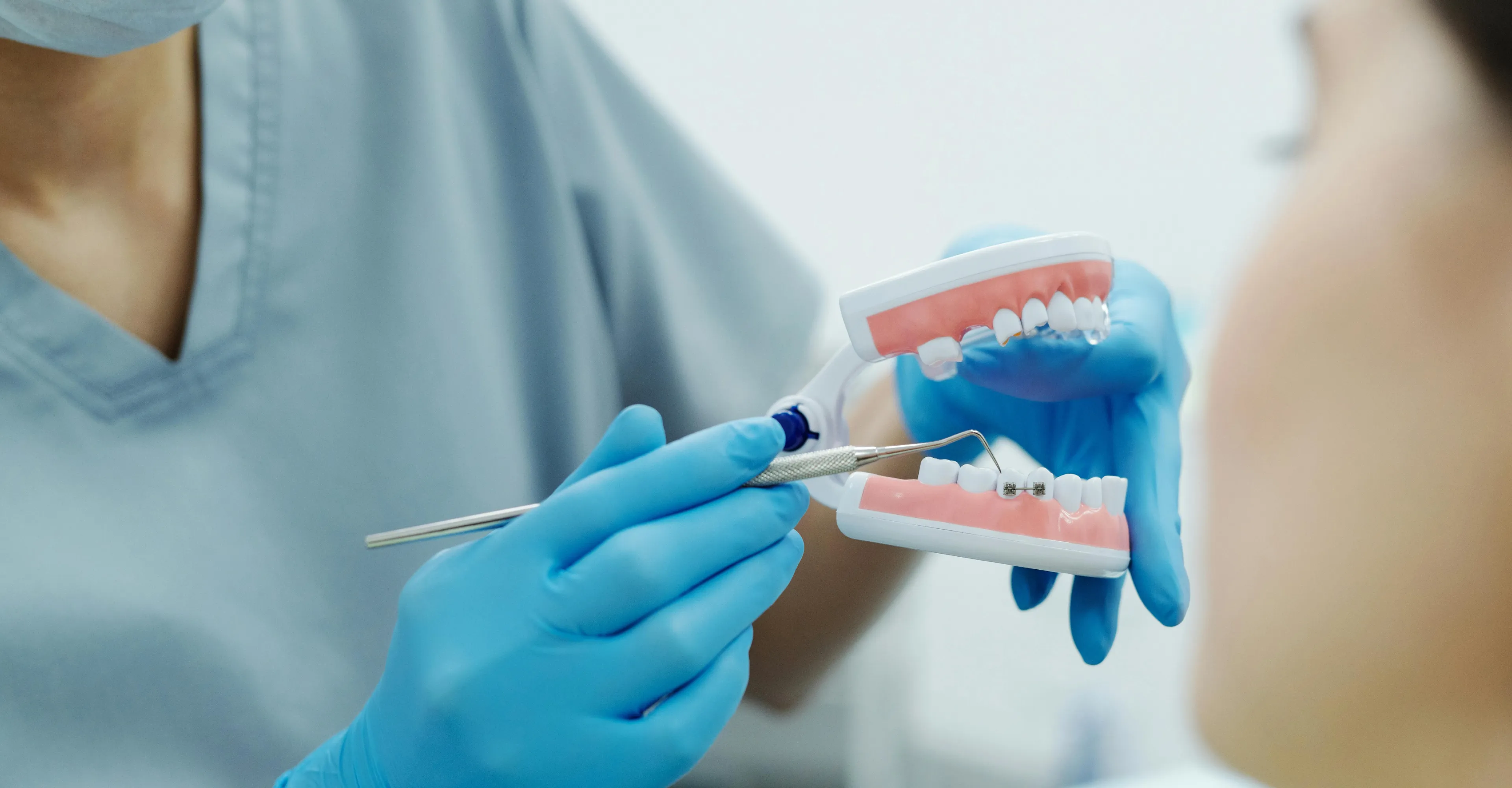



Impacted wisdom teeth symptoms may include tenderness behind the last molar, swollen or red gum tissue, discomfort when chewing, or no noticeable change at all. An impacted tooth cannot emerge fully because its position or available space blocks normal eruption. These signs do not confirm impaction, but persistent or changing symptoms are a good reason to ask a dental professional for guidance.
Book an appointment to discuss your symptoms
What are the signs of impacted wisdom teeth?
Wisdom teeth are the third molars at the back of the mouth. They may emerge partly, remain beneath the gum, or sit at an angle in the jaw. A tooth is described as impacted when it cannot come through normally. Its position is not always obvious by looking in a mirror, and symptoms alone cannot show exactly where it sits.
Possible signs include soreness or pressure at the rear of the jaw, gum tenderness behind the last molar, redness or swelling around a gum flap, discomfort while chewing, and difficulty keeping the area clean. Food may collect near a partly erupted tooth, sometimes with an unpleasant taste. Delaware Health and Social Services notes that wisdom teeth coming in may involve redness, swelling, discomfort, or pain in its wisdom teeth information sheet.
These signs are not unique to wisdom teeth. Gum irritation, decay, or other mouth and jaw concerns can feel similar. Likewise, an impacted tooth may cause no symptoms. A symptom list can help you decide what to report, but it cannot diagnose the cause or establish whether treatment is needed. The dental services overview can help you understand the broader kinds of care available, but a professional must assess your specific concern.
How can a partly erupted tooth feel different from one beneath the gum?
A partly erupted tooth has emerged through the gum but remains partly covered. Tissue can form a small flap over it. That area may be harder to clean than a fully exposed tooth, and debris can gather around it. The gum may feel tender, look puffy, or become sore when food presses against it. These sensations may fluctuate instead of remaining constant.
A tooth that remains beneath the gum or jawbone may produce no obvious change. If discomfort occurs, it might be described as pressure or a dull ache, but those descriptions do not identify the cause. A dentist may need to examine the mouth and consider imaging to understand the position. Learn more about how dental diagnostic technology can support an evaluation.
Wisdom teeth can also be angled in different directions. A tooth may lean toward the neighboring molar, point toward the back of the mouth, or remain tilted in the jaw. Direction and surrounding tissues matter to assessment; the strength of pain does not show the tooth’s position. If you are unsure how to describe the area, note which side is affected and whether discomfort is at the gum, jaw, or both.
| What you notice | Possible interpretation | Practical next step |
|---|---|---|
| Tender gum behind the last molar | Irritation near a partly emerging tooth is one possibility | Clean gently and ask for advice if it persists or returns |
| Redness or swelling around a gum flap | Tissue irritation or trapped debris may be involved | Contact a dental professional, particularly if it worsens |
| No symptoms | A tooth may be healthy, impacted, or still developing | Raise wisdom teeth at routine dental care if you have questions |
| Rapidly increasing swelling or trouble swallowing | Needs urgent assessment; the cause cannot be determined at home | Seek urgent medical help for breathing or swallowing difficulty |
When should you contact a dentist, and when is it urgent?
Arrange a dental evaluation if discomfort behind the last molar persists, keeps returning, or interferes with eating or opening your mouth normally. Contact a dental professional about swelling, gum irritation, drainage, or a persistent unpleasant taste. The goal is to have the area assessed and learn whether symptoms fit a wisdom-tooth concern or another issue. For related urgent-care context, read what may qualify as a dental emergency.
When you call, explain when symptoms began, whether they are improving or worsening, which side is affected, and whether you have noticed swelling or limited jaw movement. Mention relevant health conditions and medicines. If symptoms change after you have already contacted the office, call again and describe what is different. You can use the office locations page to identify a convenient office.
Seek urgent medical care for difficulty breathing or swallowing, rapidly increasing swelling in the face or neck, or feeling seriously unwell. These signs should not wait for a routine appointment. Not every sore spot requires emergency care, but do not assume a worsening problem is harmless by waiting for it to pass. A dental team can advise how quickly you should be seen based on what you report.
For other urgent oral concerns, Smile Makers also shares guidance on tooth abscess signs and care. An article cannot determine whether you have an abscess or an impacted tooth; seek individualized advice for persistent or concerning symptoms.
Request an appointment to discuss your symptoms
What can you do while waiting for dental advice?
Choose gentle care rather than trying to force a tooth to emerge or probing beneath the gum. Brush carefully around the back teeth with a soft toothbrush. If a rinse feels soothing, warm salt water may be an option. Choose foods that are comfortable to chew, and avoid pressing hard on tender tissue or using sharp objects near it.
Over-the-counter pain relievers are not suitable for everyone. Follow the product label and ask a pharmacist or clinician if you have a medical condition, take other medicines, are pregnant, or are unsure what is appropriate. Do not place aspirin directly on the gum, and do not use leftover prescription medicines. For general background on keeping teeth clean, see the practice’s guide to dental cleaning frequency.
It can help to keep a brief symptom record. Note when discomfort began, whether it is constant or comes and goes, what seems to aggravate it, and any visible change. For example, if soreness appears only while chewing and settles afterward, record that pattern rather than assuming it identifies the cause. If swelling appears later, add when it started and whether it is growing. Such details help a professional understand the timeline.
While you wait, avoid repeatedly touching the area to check it. That can irritate sensitive tissue and does not reveal whether a tooth is impacted. If symptoms worsen or new warning signs develop, seek advice again instead of relying on home care alone. If dental visits make you uneasy, these ways to feel more comfortable at the dentist may help you plan questions and talk about your concerns.
What might a dental evaluation involve?
A dentist will ask about symptoms and health history, then examine the back of your mouth. They may look at gum tissue, the last molars, and how comfortably you open your mouth. Depending on what they find and your history, they may recommend dental imaging to assess wisdom-tooth position and nearby structures.
The next step depends on the examination. Some people may be advised to monitor the area; others may need further assessment or care. Symptoms by themselves do not establish a diagnosis or determine treatment. Ask the dentist to explain what was seen, what remains uncertain, and when to follow up. The oral surgery information page provides background on that area of dental care, but does not establish what your own next step should be.
To prepare, write down the start date, the side and location of discomfort, whether it is changing, and anything that makes it better or worse. Bring a list of medicines and relevant health information. If you need help with forms before a visit, see patient forms and scheduling information.
You can ask: Is a wisdom tooth visible or still under the gum? Would imaging help clarify its position? What changes should prompt a call? Is there a recommended way to keep the area clean? When should I return if symptoms continue? Clear answers can help you understand the plan without assuming that every tooth needs the same approach. You can also review information about the dental team before your appointment.
How can you keep the back of your mouth clean?
Continue regular oral hygiene, taking care not to injure tender tissue. Brush twice daily and clean between teeth as your dental professional recommends. If the back of the mouth is difficult to reach, ask a dentist or hygienist to demonstrate a gentle technique that suits your mouth. A tool or motion that works for one person may not be comfortable for someone else.
Routine dental visits also give you a chance to ask about wisdom teeth even when you feel well. If you already have a regular cleaning schedule, mention any concern at the next visit; if symptoms appear or change before then, contact the office rather than waiting for a distant appointment. You may find the general patient information page useful when preparing for care.
It is not necessary to assume every wisdom tooth will cause a problem. The useful approach is to notice patterns, maintain gentle cleaning, and ask for an assessment when symptoms persist or concern you. Do not use absence of pain as proof that a tooth is not impacted, and do not treat pain as proof that it is.
How can you prepare for a conversation about symptoms?
A focused conversation can make an appointment more useful. Start with the change that led you to seek advice, then describe the timeline. Instead of saying only “my jaw hurts,” you might explain that the gum behind the lower left molar became tender several days ago, chewing makes it more noticeable, and you have not had trouble swallowing. Specific observations help the dentist ask relevant follow-up questions.
Consider asking whether the tooth is partly visible, whether surrounding gum looks irritated, and whether another cause should be considered. If imaging is recommended, ask what it is intended to clarify. If the dentist recommends observation or follow-up, ask what changes should lead you to call sooner. If an immediate step is suggested, ask how to carry it out safely and how to reach the office if the situation changes.
It is also reasonable to mention anxiety, difficulty keeping the area clean, or uncertainty about how to describe symptoms. You do not need to arrive with a diagnosis. Your role is to share what you have noticed; the dental professional can interpret that information alongside an examination. For general reading about oral care topics, browse the dental blog.
Frequently asked questions
Can impacted wisdom teeth cause no symptoms?
Yes. A tooth may be impacted without noticeable pain or swelling. A dental examination, with imaging when appropriate, can help clarify its position.
Does pain at the back of my jaw mean my wisdom tooth is impacted?
No. Jaw or gum discomfort can have several causes. If it persists, returns, or concerns you, contact a dental professional rather than diagnosing it from symptoms alone.
Can a partly erupted wisdom tooth become irritated?
Yes. Gum tissue around a partly erupted tooth may be more difficult to clean and can become tender or swollen. A dentist can assess the area and suggest suitable care.
When is wisdom-tooth swelling urgent?
Contact a dentist promptly about worsening swelling. Difficulty breathing or swallowing, or rapidly increasing facial or neck swelling, calls for urgent medical attention.
What information should I share with the dentist?
Describe when symptoms began, where you feel them, whether they are changing, and any swelling or difficulty chewing or opening your mouth. Mention relevant health conditions and medicines.
What is the next step?
If you notice persistent or worsening symptoms, a dental professional can help you understand what evaluation may be appropriate. Smile Makers Dental Center serves Northern Virginia through offices in Leesburg, Tysons, Falls Church, Fairfax, Bailey’s Crossroads, and Woodbridge.


