


A sleep apnea test at home can record breathing-related signals while you sleep in your own bed. It may be a convenient way to gather information, but it is not the right test for every person and it does not replace a clinician’s review. Understanding how testing works, how to prepare, and what results can and cannot tell you can make the next steps easier to navigate.
Schedule an appointment to discuss sleep concerns
What does a sleep apnea test at home measure?
A home sleep apnea test, sometimes called a home sleep apnea test (HSAT), is a portable monitoring device used during sleep. Depending on the equipment, it may record breathing, airflow, oxygen levels, heart rate, and breathing effort. The exact sensors and instructions vary, so follow the directions supplied with your device rather than relying on a general checklist.
Unlike a full sleep study in a sleep laboratory, a home test usually collects a narrower set of signals and is done without an overnight technician watching the recording. You put on the device before bed, sleep at home, then return or upload the equipment and data as directed. A qualified clinician reviews the recording in context. An at-home result by itself is not a complete diagnosis or a treatment recommendation.
Testing can help a healthcare professional assess whether obstructive sleep apnea (OSA) may be present. OSA involves repeated partial or complete blockage of the upper airway during sleep. A test result may report a measure of breathing events over time, oxygen-related information, and whether the recording was adequate. The names and format of the measures can differ by device and report.
The monitor is designed to gather selected signals, not to tell you how you feel or why you woke up. For example, a recording may show a pattern worth discussing, while your own notes explain that you were awake for a long stretch or had trouble keeping a sensor on. The two kinds of information work together: the device supplies measurements, and the clinical conversation connects those measurements with your history and symptoms.
Home testing is used in an appropriate clinical setting, but a laboratory polysomnogram (PSG) remains an important option and is considered the standard diagnostic test in many circumstances. Research reviews describe HSAT as a possible alternative for selected patients rather than a universal replacement for PSG. A review of home sleep apnea testing and polysomnography discusses this distinction. Your clinician can explain which approach fits your symptoms and health history.
If you are learning about sleep apnea more broadly, start with our guides to sleep apnea types and symptoms and common causes and risk factors. These articles can offer background, but they cannot determine whether you have the condition.
Who may be considered for home sleep apnea testing?
Whether home testing is appropriate depends on a clinical assessment, not simply on convenience or a checklist of symptoms. A clinician may consider the pattern of symptoms, relevant medical history, the likelihood of obstructive sleep apnea, and whether the test can answer the question being asked. The decision also depends on the test’s instructions and the clinician’s judgment.
Tell the clinician about symptoms such as loud snoring, witnessed pauses in breathing, waking up gasping, or persistent daytime sleepiness. Also share relevant health conditions, medicines, previous sleep testing, and whether you have trouble sleeping in a typical pattern. This information helps the clinician decide whether a home recording is suitable or whether another kind of evaluation should be considered.
It helps to explain what someone else has observed as well as what you notice yourself. A bed partner might describe snoring or pauses, while you may notice morning fatigue, unrefreshing sleep, or concentration difficulties. These details do not prove a diagnosis, but the timing, frequency, and context can help a clinician understand why testing is being considered. If symptoms vary, mention that too rather than describing only your best or worst night.
A home test may not answer every sleep-related question. It generally records fewer kinds of information than an attended laboratory study, and a recording can be incomplete or difficult to interpret. If symptoms suggest a problem other than obstructive sleep apnea, if the first test does not provide a clear answer, or if your circumstances make home testing unsuitable, a clinician may recommend a different evaluation. Do not assume that a home test is appropriate for you based on another person’s experience.
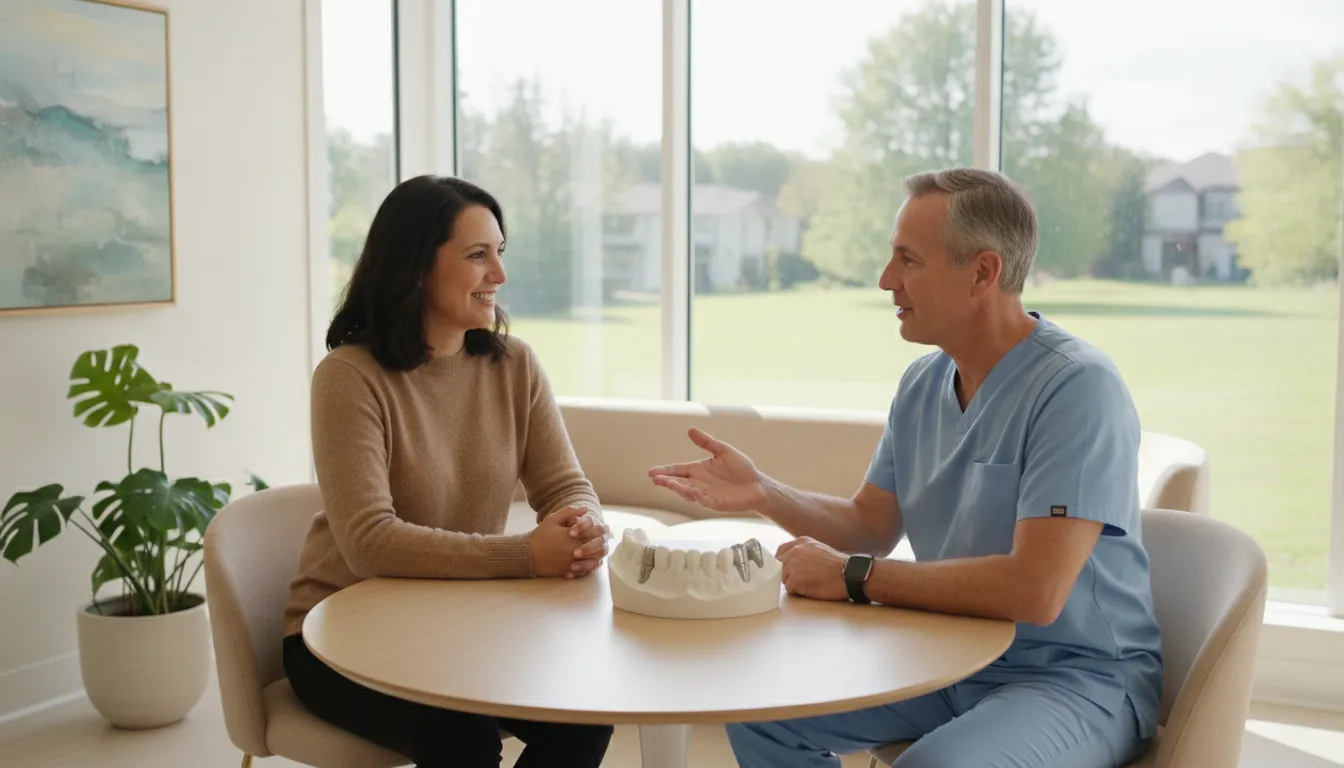
Testing pathways may involve a primary care clinician, sleep medicine professional, or another qualified provider. Dental providers may also discuss oral appliance therapy as one possible part of sleep apnea care when appropriate, but a dental visit does not make an at-home test result self-interpreting. Smile Makers offers TMJ and sleep apnea services; the practice team can help discuss an appointment and direct clinical questions to the appropriate provider.
How do you prepare for a home sleep apnea test?
Preparation is usually straightforward, but the device instructions are the source of truth. The equipment may include sensors that sit near the nose, chest or abdomen, and a finger sensor. The monitor should be fitted as demonstrated. If a sensor feels loose or uncomfortable, check the supplied instructions or contact the testing provider before changing the setup.
- Confirm the plan. Make sure you know when and where to pick up or receive the device, when to use it, and how to return it. Ask who to contact if the equipment is damaged or the instructions are unclear.
- Review every instruction before bedtime. Learn how each sensor is placed, how the monitor is turned on, and what to do if a connection comes loose. If you are unsure, ask the provider for clarification instead of improvising.
- Keep your usual routine unless told otherwise. Follow the clinician’s directions about medicines and bedtime habits. Do not stop or change a prescribed medication on your own for the test.
- Set up the device shortly before sleep. Put on the equipment exactly as instructed. Check that the monitor is recording according to its indicators or directions, and keep the device secure as you settle in.
- Record anything unusual. Note if you slept much less than usual, woke for a long period, removed a sensor, or think the device stopped recording. Share these details when you return the equipment.
- Return the monitor promptly. Follow the specified return method and timeline so the recording can be reviewed. Ask how and when the results will be shared.
You do not need to try to create a “perfect” night. The aim is to follow the directions and sleep as normally as possible. If the equipment changes your sleep or you cannot tolerate a sensor, that is useful information to report. Do not repeat the test or adjust the device unless the testing provider tells you to.
Practical preparation can make the evening feel less unfamiliar. Before bedtime, choose a place to keep the monitor where it will not be pulled off a nightstand or tangled in bedding. If you usually sleep on your side, back, or with a particular pillow, follow your ordinary routine unless your provider says otherwise. You can read the setup instructions in advance, but avoid experimenting with the sensors before the scheduled recording if the provider has not asked you to do so.
Think through common snags before you begin: What should you do if the finger sensor slips? Is there a light or display that confirms the monitor is on? What is the after-hours contact process if the device appears not to work? The answers depend on the equipment, so write them down from the instructions or ask the testing provider. Knowing where to find help is more useful than guessing in the middle of the night.
Before the appointment, write down your questions. For example: What signals does this device record? Who interprets the data? What happens if the recording is incomplete? How will the result be discussed? Asking these questions up front can reduce uncertainty and clarify the follow-up plan.
What can the result tell you—and what can’t it?
The report is one piece of a clinical evaluation. Depending on the device, it can show patterns in breathing-related signals during the recorded period and may indicate whether events consistent with sleep apnea were detected. A clinician considers those findings alongside symptoms, medical history, recording quality, and the reason testing was ordered.
It is tempting to read a number on a report and label the condition yourself. Avoid doing that. Different measures and thresholds may be used, and a device’s recorded time may not precisely equal the time you were asleep. The report also cannot, on its own, explain every cause of tiredness or disturbed sleep. Ask the interpreting clinician to explain the terms, the level of certainty, and what the findings mean for you.
A result suggesting sleep apnea should lead to a conversation about appropriate next steps rather than an attempt to choose treatment from the report alone. A result that does not show sleep apnea does not always settle the question if symptoms remain concerning or the recording was limited. Research comparing home tests and laboratory studies notes that home testing is used for selected clinical circumstances; it should be interpreted within that context. This study on home testing and obstructive sleep apnea likewise describes HSAT as an alternative in an appropriate setting, not as a one-size-fits-all test.
| What the report may show | What it does not establish by itself | Useful follow-up question |
|---|---|---|
| Recorded breathing-related events or patterns | A complete explanation for every sleep or fatigue symptom | How do these findings fit my symptoms and history? |
| Oxygen-related measurements and other signals collected by that device | That every relevant health factor has been assessed | Were all signals clear and usable? |
| A summary indicating whether findings are consistent with sleep apnea | A final interpretation without review by a qualified clinician | Who will review the results with me? |
| A recording that may be technically adequate or limited | That a negative or unclear result rules out all sleep disorders | What happens if the result is inconclusive? |
Use the table as a way to organize a follow-up conversation, not as a tool to score your own report. For instance, if the result lists a measure you do not recognize, ask what it represents and whether the clinician considers it reliable in your recording. If you see a note about signal loss or limited data, ask whether that affects the interpretation. Avoid comparing your number with a friend’s report; different devices, circumstances, and clinical questions can make a direct comparison misleading.
For an overview of how a home sleep apnea study records body functions during sleep, see the VA guide to home sleep apnea studies. It can help you understand the general process, but the instructions from your own provider and your individual interpretation take priority.
Book an appointment to discuss your next steps
What happens after the test?
Once the device is returned or its data are submitted, a qualified professional reviews the recording. The timing and format of results depend on the testing provider. Ask whether you will receive a follow-up visit, a phone call, or written instructions, and whom to contact if you have not heard back within the expected period.
At the follow-up, the clinician can explain whether the recording was usable, what the results suggest, and whether further assessment is appropriate. If the test supports a diagnosis, the next conversation is about care options suited to the individual. These may involve sleep medicine and, in some cases, dental evaluation for an oral appliance. Options depend on the diagnosis and personal circumstances; no single treatment is right for everyone.
If the test is negative but you continue to have symptoms, share that clearly rather than treating the report as the final word. Ask whether the recording quality was adequate and whether another test or evaluation could help. A laboratory sleep study may be considered in some situations. The clinician can explain why a different test might add useful information and what the next step would involve. The home study is not a reason to dismiss ongoing concerns simply because it was more convenient to complete.
Before a follow-up, gather a few details that may help: how the night went, whether you removed or adjusted anything, how often you experience the symptoms that prompted testing, and whether anything has changed since the test was ordered. If a partner noticed breathing changes, ask them to describe what they observed in concrete terms. Bring the report if you have received a copy, but do not worry if you do not understand its terminology; explaining it is part of the clinician’s role.
Keep a copy of the results and any recommendations. If you are referred to another professional, ask what information should be shared so the care team can coordinate. For additional context, you can read about sleep apnea mouth guards and oral appliances and why untreated sleep apnea deserves medical attention. Online information is not a substitute for individualized advice.
How can you prepare for the follow-up conversation?
A short list of questions can help you leave the results visit with a clear plan. Bring the report if you have a copy, note any problems with the device, and describe symptoms that continue to affect daily life. Be specific about what you noticed and when, without trying to interpret the data on your own.
- Was my recording complete and technically adequate?
- What do the main findings mean in light of my symptoms?
- Does this result answer the clinical question, or is further testing worth discussing?
- Who should I contact if symptoms persist or change?
- If sleep apnea is diagnosed, what care options are appropriate for my situation and why?
- Should I discuss an oral appliance or another dental evaluation with a qualified provider?
You can also ask what happens next in practical terms. Will another appointment be scheduled, will a referral be made, or should you contact a particular office? If further testing is suggested, ask what question that test is intended to answer and how its results will be shared. If care options are discussed, ask who will coordinate them and what information the dental or sleep-care professional needs. Clear answers can keep a complex process manageable without requiring you to make decisions from a report alone.
Discuss persistent daytime sleepiness or other symptoms with a healthcare professional, especially if they interfere with work, driving, or daily activities. If you feel sleepy, avoid driving or other tasks that require alertness until you can do so safely. For urgent or severe symptoms, seek appropriate medical care rather than waiting for a routine dental or test follow-up.
If you are considering a dental conversation about sleep apnea care, explore the practice’s TMJ and sleep apnea information and bring your sleep-test report or provider’s recommendations. The dental team can discuss whether an appointment is appropriate and coordinate clinical questions with your broader care team.
Book an appointment to discuss sleep apnea care
Frequently asked questions
Can a home sleep apnea test diagnose sleep apnea?
A home test can provide information used in evaluating obstructive sleep apnea, but it should be ordered and interpreted in a suitable clinical setting. A clinician considers the recording together with your symptoms and health history. Do not use a device reading alone to diagnose yourself.
Is a home test as comprehensive as an overnight sleep study?
No. Home devices generally measure a more limited set of signals than an attended laboratory polysomnogram. Home testing may be appropriate for some people, while a clinician may recommend a laboratory study or another evaluation when more information is needed.
What if I cannot sleep well while wearing the monitor?
Follow the device instructions and do not alter the setup unless the testing provider advises you to. Tell the provider how much you slept and whether a sensor came loose or the monitor seemed to stop. They can decide whether the recording can be interpreted or whether another step is needed.
What if my home test is negative but I still have symptoms?
Contact the clinician who ordered the test and explain which symptoms continue. Ask whether the recording was adequate and whether further evaluation is appropriate. A negative home result does not give you a reason to ignore ongoing concerns.
Can I choose a sleep apnea treatment based on the report?
No. Treatment decisions depend on a clinical diagnosis, the findings, and personal health factors. Review the report with a qualified professional before choosing or changing any care.
Schedule a conversation about sleep apnea testing
A home sleep apnea test can be a practical part of an evaluation, but its usefulness depends on the right test, a reliable recording, and careful follow-up. If you have questions about sleep apnea care or would like to discuss an appointment with Smile Makers Dental Center, the team can help you identify an appropriate next step.
Share your test results and ongoing concerns with a qualified clinician so your next step is based on the full picture.