




Nearly half of all adults in the United States live with some form of gum disease. This condition often starts with minor bleeding but can quickly lead to permanent tooth loss. Knowing the early warning signs is the first step toward saving your smile.
Call Smile Makers Dental Center at (703) 356-0250 to schedule a periodontal evaluation today if you notice any changes in your gum health.
Periodontal disease symptoms are often hard to spot early, but recognizing them can prevent the lasting loss of your bone and natural teeth. Common signs include gums that look swollen, puffy, or dark red, bleed often during brushing, or seem to pull away from your teeth. According to the Cleveland Clinic, nearly half of all adults in the United States now have some form of this disease. Early gingivitis can be fixed with expert help, but untreated infections move deep into the jaw and become periodontitis. Constant bad breath or a foul taste in your mouth are also clear signs that your gums need attention.
If you notice any of these warning signs, it is important to understand how the infection affects your overall oral health. Our guide walks you through every stage and symptom so you can protect your smile from further damage.
What Is Periodontal Disease
Periodontal disease is a serious gum infection that damages the soft tissue around your teeth. Without care, it can also destroy the bone that keeps your teeth in place. Many people know this condition simply as gum disease. It starts when plaque, a sticky film of bacteria, builds up on the teeth and hardens over time. This triggers red, swollen, and bleeding gums that need professional care to heal.
A Common Health Issue
You are not alone if you have concerns about your gum health. Data from the CDC shows that about 47% of adults aged 30 and older in the US have some form of this disease. It is the leading cause of tooth loss for adults. Because it often does not cause pain in the early stages, many people do not know they have it until it is advanced.
Stages of Gum Disease
This condition moves through different stages. It starts as gingivitis, the only stage you can fully reverse. If it gets worse, it turns into periodontitis. Experts group this stage by severity and rate of progression. You can find more tips in our gingivitis treatment guide to learn how to stop the disease early.
Smile Makers Dental Center helps patients manage and treat gum issues at every stage. Our team maintains a 4.7-star average across more than 872 reviews from local patients. We offer a periodontics specialty department to provide expert care without external referrals. With six locations across Northern Virginia, including Tysons and Fairfax, professional periodontal care is close to home.
Common Periodontal Disease Symptoms You Should Not Ignore
The most common periodontal disease symptoms include gums that bleed during brushing, appear red and swollen, or pull away from the teeth. Persistent bad breath, a bad taste in the mouth, loose teeth, and changes in your bite are also key warning signs. Healthy gums should be firm and pale pink , any deviation from this signals a problem that requires professional evaluation.
Periodontal disease is often a silent problem. You may not feel pain until the disease is advanced. Catching these warning signs early can save your smile and your overall health.
Changes in the Look and Feel of Your Gums
Healthy gums are firm and pale pink. When gum disease starts, your gums may look swollen or puffy. You might see the tissue change from pink to bright red or dark purple. These swollen or puffy gums often feel tender to the touch. You may also notice your gums pulling away from your teeth, a sign of gum recession that makes teeth look longer and creates pockets where bacteria thrive.
Bleeding, Breath, and Taste Issues
Bleeding is one of the most common signs of gum problems. You might see blood on your toothbrush or floss. A pink toothbrush after brushing or blood in the sink when you floss means your gums are inflamed and need care. Healthy gums do not bleed during normal cleaning.
Persistent bad breath, known as halitosis, is another key sign of bacterial buildup. You might also notice a bad taste in your mouth that lingers. These breath and taste changes indicate that harmful bacteria are deep in your gum tissue and require professional cleaning to remove.
Shifts in Tooth Strength and Bite
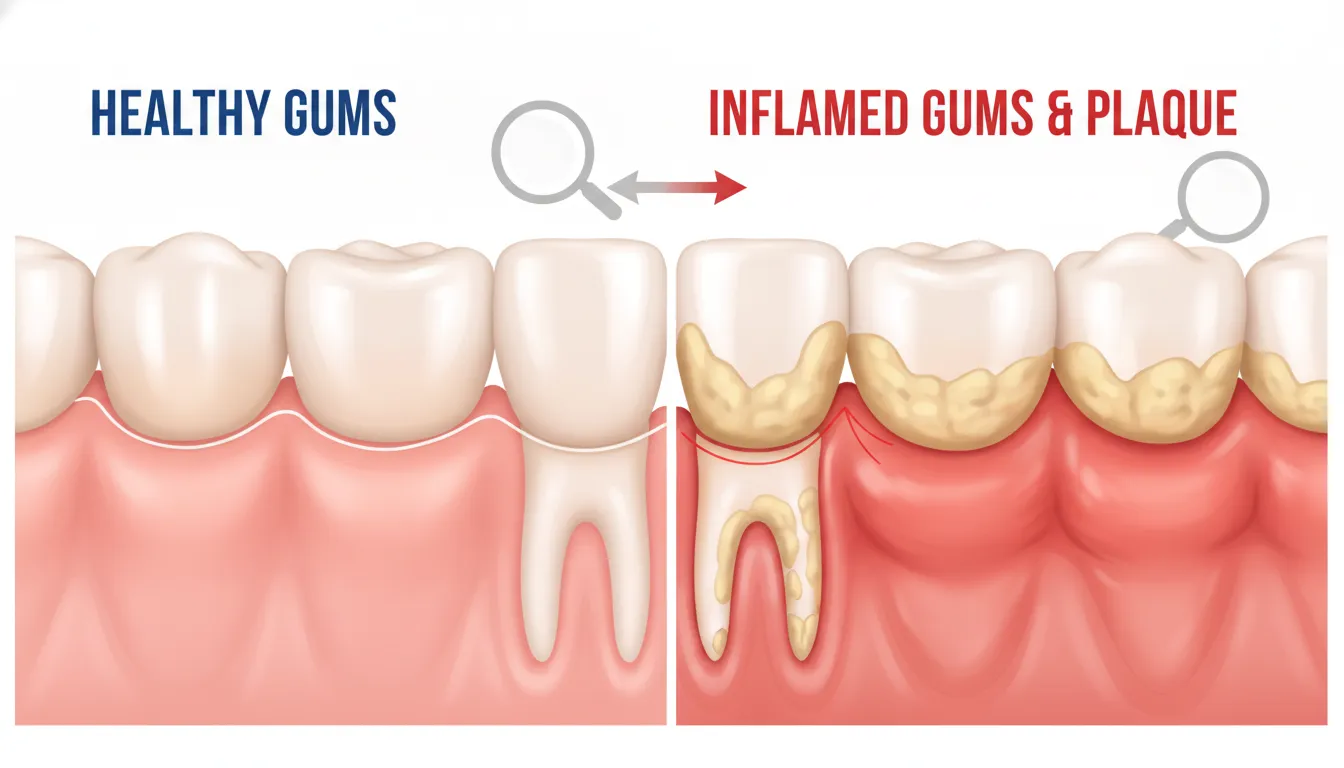
As the disease progresses, it begins to damage the bone that holds your teeth in place. You might feel your teeth become loose or notice movement. This can change how your teeth meet when you bite down. A new gap between teeth that was not there before is a serious warning sign. Pain when chewing means the infection has moved deep into the bone. In some cases, pus appears between the gums and teeth. These advanced periodontal disease symptoms indicate that the bone supporting your teeth is at risk.
From Gingivitis to Periodontitis: How Gum Disease Progresses
Gingivitis is the first stage of gum disease, and it is the only reversible form. With professional care and good daily habits, you can restore your gums to full health. Understanding how the disease advances helps you act before permanent damage occurs.
Gingivitis causes red, swollen gums that bleed during brushing but does not damage bone. Untreated, it progresses to periodontitis, where the gums pull away from teeth forming deep pockets that trap bacteria. These pockets trigger chronic inflammation that breaks down the bone and connective tissue holding teeth in place. This damage is permanent and can lead to tooth loss.
Early Signs of Gingivitis
Plaque is a thin, sticky film of bacteria that builds up on teeth. When it stays near the gum line, the tissue becomes inflamed. You might notice puffy or dark red gums as an early sign. Many people think a little blood in the sink is normal. It is not. Bleeding is a signal that your body is fighting a bacterial infection beneath the gum line. Catching gingivitis early stops the damage before it becomes permanent.
How the Disease Moves Deeper
Without treatment, gingivitis progresses to periodontitis. Plaque spreads below the gum line and releases toxins that trigger a chronic inflammatory response. The body's own immune system begins attacking the soft tissue and bone that support the teeth. This internal battle is what makes the disease destructive without professional periodontal intervention.
Gingivitis vs Periodontitis: A Quick Comparison
| Feature | Gingivitis | Periodontitis |
|---|---|---|
| Reversible | Yes, with treatment | No, damage is permanent |
| Causes bone loss | No | Yes |
| Gum pain | Little to none | Dull ache to sharp pain |
| Treatment approach | Professional cleaning plus home care | Deep scaling, surgery, bone or tissue grafts |
| Effect on teeth | No loosening | Teeth become loose or fall out |
Pockets and Bone Loss
As periodontitis advances, the gums pull away from teeth and form deep gaps called pockets. These pockets trap more bacteria and food particles. It is very hard to clean these areas at home. As the infection deepens, the pockets enlarge and the jawbone begins to deteriorate. According to the Cleveland Clinic, gum disease is the leading cause of adult tooth loss. Dentists use a staging system from stage 1 (initial damage) to stage 4 (major tissue loss) and a grading system from grade A (slow progression) to grade C (rapid progression) to plan treatment. Research shows that gum health is linked to other systemic conditions like heart health and diabetes management.
What Does Periodontitis Pain Feel Like
Periodontal disease often starts silently. In the early stages, you may not feel any pain. But as the infection advances, the discomfort becomes hard to ignore. Understanding the types of pain can help you recognize when it is time to seek care.
Common Painful Sensations
Most people with periodontitis experience a constant, dull ache or deep throbbing in their gums. This ache results from chronic inflammation deep in the gum tissue. Your gums may feel very tender to light touch. The CDC reports that nearly half of American adults have some form of gum disease, yet many ignore the pain until it becomes severe.
Sensitivity and Chewing Pain
As gums recede, the tooth roots become exposed. This creates sharp sensitivity to hot and cold foods. You might feel a zapping sensation when drinking cold water or eating hot soup. Chewing can become painful as the bone and tissue supporting your teeth break down. This pain when chewing often means the disease has progressed significantly. Some patients notice their bite feels different, as though their teeth no longer fit together properly.
Signs of Active Infection
In some cases, pain comes from pus buildup between your gums and teeth. This creates pressure and a foul taste. Recurring sores or small bumps on the gums that hurt when you eat are also common. Our gum disease treatment options guide covers the full range of interventions from non-surgical deep cleaning to advanced surgical techniques.
When to See a Periodontist for Gum Disease Symptoms
Most people visit a general dentist for regular checkups, but certain signs require a specialist. A periodontist focuses on the gums and the bone that supports teeth. If you notice gum recession, persistent bad breath, or any of the warning signs described above, you may need a periodontist evaluation. Catching these signs early can prevent tooth loss and reduce risks to your overall health.
You should see a periodontist if your gums bleed during brushing, appear red and swollen, or are pulling away from your teeth. Other reasons include persistent bad breath, loose teeth, changes in your bite, or a family history of gum disease. A periodontist uses probing measurements and X-rays to assess pocket depth and bone loss, then recommends the appropriate level of treatment.
Warning Signs That Warrant a Specialist Visit
See a periodontist if your gums bleed when you brush. Healthy gums do not bleed during routine cleaning. Other signs include red or puffy gums, gum recession that makes teeth appear longer, loose teeth, or changes in your bite. If you experience these periodontal disease symptoms, schedule an exam promptly.
At Smile Makers Dental Center, we measure pocket depth using a small probe to assess gum health. We also take X-rays to evaluate bone levels. Based on the American Academy of Periodontology guidelines, we classify the disease by stage and grade to develop a personalized treatment plan.
Treatment Pathways for Healthy Gums
For mild cases, we start with scaling and root planing. This deep cleaning removes tartar from below the gum line and smooths the root surfaces so gums can reattach. For advanced disease, surgical options like pocket reduction surgery, gum grafts, or bone grafts may be necessary to repair damage and preserve natural teeth.
Smile Makers Dental Center provides all these treatments in-house. You do not need a referral to see our periodontics specialists. With six locations across Northern Virginia, accessing expert gum care is convenient. Our goal is to help you preserve your natural teeth for life with a customized treatment plan.
How to Prevent Periodontal Disease: Daily Habits That Protect Your Gums
Preventing gum disease starts at home with consistent oral care. Most cases of periodontal disease can be avoided by following a few simple habits that remove plaque and bacteria before they cause inflammation.
Master Your Brushing and Flossing
Brush your teeth at least twice a day for two minutes each time. Use a soft-bristled brush and fluoride toothpaste, focusing on the gum line where bacteria hide. Floss daily to reach the spaces between teeth where a brush cannot go. Removing trapped food and plaque from these gaps prevents the buildup that leads to gum disease.
Use the Right Dental Tools
Adding an antibacterial mouthwash to your routine helps reduce the bacterial load in your mouth. It reaches areas that brushing and flossing may miss. A healthy diet low in sugar slows plaque growth, and drinking water after meals helps wash away debris.
The Role of Professional Care
- Visit your dentist every six months. Regular cleanings remove hardened tartar that home care cannot address. Your dentist can detect early signs of gum disease before symptoms appear.
- Watch for early warning signs. Do not ignore gums that bleed when you brush. Early gingivitis is much easier to treat than advanced periodontitis.
- Know your risk factors. Genetics, diabetes, and smoking all increase your risk for gum disease. Smoking impairs your body's ability to fight oral infections.
- Understand the whole-body connection. Oral bacteria can enter the bloodstream and affect your heart health and blood sugar control. Our article on gum disease and heart health risks explains this link in detail.
- Follow a customized care schedule. If you have a history of gum problems, you may need cleanings every three to four months instead of every six. Your dentist can design a maintenance plan tailored to your needs.
Frequently Asked Questions
Can periodontal disease be reversed?
Gingivitis, the earliest stage, can be fully reversed with professional cleaning and improved home care. Periodontitis causes permanent bone loss that cannot be reversed, but treatment stops further progression and preserves your remaining teeth.
What is the fastest way to treat gingivitis?
A professional dental cleaning to remove plaque and tartar, combined with consistent brushing, flossing, and antibacterial mouthwash, typically resolves gingivitis within one to two weeks. Smile Makers Dental Center offers comprehensive gingivitis treatment at all six locations.
Can gum disease affect my heart health?
Yes. Oral bacteria from infected gums can enter the bloodstream and contribute to arterial inflammation. Managing gum health with regular cleanings and good home care reduces this systemic risk. Read more in our article on gum disease and whole-body health.
How do I know if my gum disease is serious?
Loose teeth, noticeable gum recession, persistent bad breath, pus between gums and teeth, or pain when chewing all indicate advanced periodontitis requiring prompt care. Our periodontics team at Smile Makers Dental Center can assess the stage of your disease and recommend appropriate treatment.
Is gum disease contagious?
The bacteria that cause gum disease can spread through saliva via kissing or sharing utensils. However, developing gum disease depends on your oral hygiene habits, immune system, and genetic predisposition, not merely exposure to the bacteria.
Ready To Protect Your Gums and Your Smile?
Recognizing periodontal disease symptoms early is the best way to prevent permanent damage to your teeth and gums. At Smile Makers Dental Center, our periodontics team provides comprehensive gum care at six convenient Northern Virginia locations. Whether you need a routine evaluation or advanced periodontal treatment, we are here to help you preserve your natural smile for life.
Request an appointment online or call us at (703) 356-0250 to schedule your periodontal evaluation.