





If you are asking, "who treats TMJ?" you are not alone. Jaw pain, tenderness, clicking, locking, headaches, or difficulty chewing can make it hard to know whether to call a general dentist, a TMJ-focused dentist, an oral and maxillofacial surgeon, or another healthcare professional. In most cases, the best first step is a dental evaluation that identifies whether your symptoms involve the temporomandibular joint, the chewing muscles, your teeth, or a related condition.
Schedule a TMJ evaluation with Smile Makers Dental Center.
TMJ is the abbreviation for temporomandibular joint, the paired joints that connect the lower jaw to the skull. TMD, or temporomandibular disorders, is the broader term for conditions affecting those joints and the muscles around them. A clinician can help you move from a vague label to a specific evaluation and a conservative, personalized plan.
Who treats TMJ first?
In short: A general dentist or dentist with experience evaluating TMD is usually a practical first point of contact. This clinician can review your symptoms, examine your jaw and teeth, identify urgent concerns, begin appropriate conservative care, and coordinate referral when a different specialist is needed.
A dentist is often the right starting point because the evaluation can look at several structures at once. Your jaw symptoms may relate to the joint, chewing muscles, tooth wear, clenching, a cracked or infected tooth, an injury, or a combination of factors. Starting with the first plausible specialist does not mean you are committing to a major procedure. It means you are getting the problem organized.
Some dental practices describe this service as TMJ care, TMD care, jaw-pain care, or orofacial pain evaluation. Titles vary, so ask what the provider actually evaluates and treats. A useful first appointment should include a health and symptom history, questions about jaw function, an examination of the jaw and muscles, and a discussion of reasonable next steps. Imaging is not automatically needed for every patient, and treatment should be based on the findings rather than a label alone.
For background on the terminology, read what TMJ and TMD mean. Understanding the difference can make it easier to describe what you are experiencing when you call a dental office.
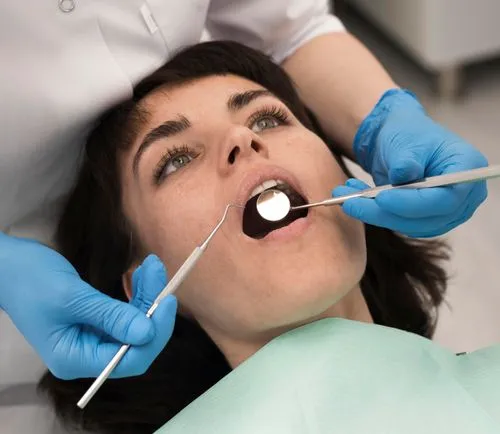
What does a dentist evaluate during a TMJ visit?
In short: A TMJ evaluation looks at pain, movement, muscle tenderness, joint sounds, bite function, tooth wear, and related symptoms. The goal is to understand how the jaw is functioning and whether the symptoms point toward dental care, a specialty referral, or a broader medical evaluation.
Your dentist may ask when the discomfort started, whether it is constant or comes and goes, and whether chewing, yawning, talking, stress, or waking up makes it worse. Bring information about recent dental work, facial trauma, new medications, arthritis or autoimmune conditions, frequent headaches, and any history of clenching or grinding.
The physical examination may include:
- Observing how far and how smoothly you open and close your mouth.
- Checking whether the jaw deviates or feels restricted during movement.
- Feeling the jaw joints and chewing muscles for tenderness or tension.
- Listening for joint sounds while you open, close, and move the jaw.
- Looking for tooth wear, sensitivity, fractures, gum concerns, or other dental explanations for pain.
- Discussing headaches, ear-area discomfort, neck symptoms, sleep concerns, and changes in chewing.
These findings help distinguish a joint or muscle problem from symptoms that may be coming primarily from a tooth, sinus, ear, nerve, or another source. The National Institute of Dental and Craniofacial Research overview of TMD notes that these disorders include many different conditions and can be difficult to diagnose. That is one reason a careful evaluation matters more than choosing a provider based only on the words "TMJ specialist."
Which dental specialist treats complex TMJ problems?
In short: The right dental specialist depends on the suspected cause and the level of complexity. Orofacial pain specialists focus on jaw, face, mouth, head, and neck pain. Oral and maxillofacial surgeons evaluate structural problems and surgical options. Prosthodontists or orthodontists may contribute when restorative or bite-related concerns are part of a broader plan.
| Provider | How they may help | When referral may make sense |
|---|---|---|
| General dentist with TMD experience | Initial history, examination, dental screening, conservative care, and care coordination | Most people who have new or ongoing jaw symptoms and need a starting point |
| Orofacial pain specialist | Focused evaluation and management of complex pain involving the jaw, face, mouth, head, or neck | Persistent, complicated, or unclear pain that needs specialized diagnosis |
| Oral and maxillofacial surgeon | Evaluation of structural joint disease, trauma, pathology, and procedures when indicated | Severe structural findings, significant injury, or consideration of surgery |
| Prosthodontist | Restorative planning for worn, missing, or damaged teeth when function and rehabilitation are involved | A complex restorative case that overlaps with jaw function |
| Orthodontist | Assessment of tooth and jaw relationships when orthodontic concerns are present | A separate alignment need is identified, not simply because the jaw clicks |
These roles can overlap, but they are not interchangeable. A provider who treats facial pain does not necessarily perform jaw surgery, and an oral and maxillofacial surgeon is not automatically the best first visit for routine jaw muscle soreness. A thoughtful referral should be based on the clinical question that still needs to be answered.
It is also important to avoid assuming that a bite adjustment, orthodontics, or a device is a universal answer for every TMD. The appropriate plan depends on the diagnosis, duration, severity, and effect on function. Ask what problem a proposed treatment is intended to address, what lower-risk options exist, and how progress will be measured.
When should you see an oral and maxillofacial surgeon?
In short: An oral and maxillofacial surgeon may be involved when examination or imaging suggests a structural joint problem, significant trauma, a lesion, advanced disease, or a need to discuss a surgical option. Most people with jaw pain should not assume surgery is the next step.
Oral and maxillofacial surgeons are dental specialists with advanced training in procedures involving the mouth, jaw, face, and related structures. For selected TMJ conditions, they may evaluate the anatomy of the joint, review imaging, and discuss procedures ranging from minimally invasive options to more involved surgery. The referral question might be, "Is there a structural problem that requires surgical expertise?" rather than simply, "Does this patient have jaw pain?"
A referral may be considered when symptoms follow a major facial injury, the jaw repeatedly locks, there is a significant limitation in movement, a known joint disorder needs specialized management, or conservative care has not answered an important structural question. Referral can also be appropriate when the initial examination finds swelling, a mass, a concerning asymmetry, or another finding that needs prompt evaluation.
Published guidance emphasizes matching treatment intensity to the condition. For chronic TMD pain, a clinical practice guideline indexed by PubMed discusses shared decision-making and evidence for noninvasive approaches such as education, reassurance, supervised exercises, manual therapy, and behavioral support. A specialist can help determine whether your case belongs in that conservative pathway or needs a different level of care.
Can a physical therapist or medical specialist help with TMD?
In short: Yes. TMD care can involve more than one profession when symptoms include muscle dysfunction, neck or posture concerns, headaches, inflammatory disease, ear symptoms, or persistent pain. A dentist can help coordinate referrals to the clinicians whose expertise matches those concerns.
A physical therapist with experience in the jaw and neck may assess movement, muscle function, posture, and habits that influence symptoms. Treatment may include education, exercises, manual techniques, and a gradual return to comfortable movement. Physical therapy is most useful when it is based on an appropriate evaluation and coordinated with the rest of the care plan.
Your primary care clinician may be helpful when jaw symptoms overlap with broader pain, sleep, medication, or inflammatory concerns. A rheumatologist may be involved when a systemic joint or autoimmune condition is suspected. An ear, nose, and throat specialist may help evaluate symptoms that appear to be primarily ear-related, especially when the dental examination does not explain them. A neurologist or pain specialist may be considered for certain headache, nerve, or persistent pain patterns.
This does not mean every patient needs a large team. Many people can begin with one dental visit, receive a clear explanation, and improve with simple measures and monitoring. A coordinated approach becomes more useful when symptoms persist, the diagnosis is uncertain, or the jaw problem is connected with another condition.
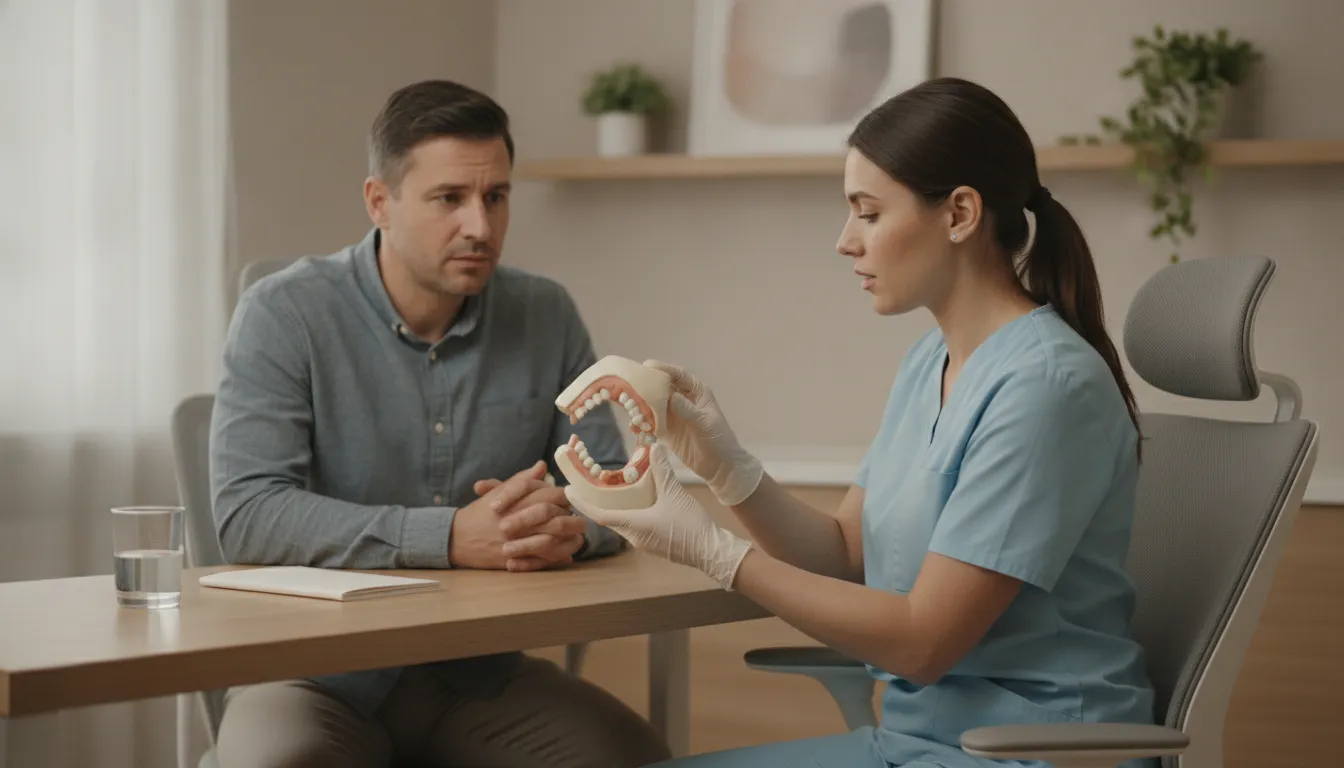
Smile Makers Dental Center provides access to dental evaluation and TMJ and sleep apnea services across Northern Virginia. You can learn more about the practice's TMJ and sleep apnea specialty care before deciding what type of appointment to request.
Book an appointment to discuss jaw pain, clicking, or limited movement.
How do you choose the right TMJ provider?
In short: Choose a provider who listens carefully, explains the working diagnosis, starts with an appropriate level of care, and can refer you when the case falls outside that provider's scope. The best choice is based on training and fit, not a title alone.
When calling a dental office, ask focused questions such as:
- Do you evaluate temporomandibular disorders or jaw pain?
- Who performs the evaluation, and what training or experience do they have with TMD?
- What symptoms should I bring to the appointment?
- How do you decide whether imaging or a referral is needed?
- What conservative options might be considered before an invasive treatment?
- Which specialist do you refer to when a case needs orofacial pain, surgical, physical therapy, or medical expertise?
- Can the appointment address both my jaw symptoms and possible dental causes of pain?
Be cautious of promises that one device, one adjustment, or one procedure will cure every TMJ problem. TMD is a broad category, and two people with similar symptoms may have different contributing factors. A trustworthy provider should be comfortable discussing uncertainty, alternatives, expected follow-up, and when another opinion is appropriate.
It can help to keep a short symptom record before your visit. Note the location of pain, triggers, duration, jaw locking, changes in eating, sleep disruption, headaches, recent injuries, and treatments you have already tried. Bring a medication list and any relevant dental or medical records. Clear information helps your provider spend more time on the questions that matter most.
What happens at the first TMJ appointment?
In short: A first appointment usually focuses on listening, examination, explanation, and next-step planning. You may leave with a working diagnosis, home-care guidance, a follow-up plan, or a referral. A first visit does not automatically mean you will receive a procedure.
The clinician will usually begin by reviewing your symptoms and goals. If your main concern is pain, explain how it affects eating, speaking, sleeping, work, or daily activities. If your main concern is a click or pop, mention whether it is painful or associated with locking. A painless sound can have a different meaning from painful limitation, so the details help.
The examination may be followed by a discussion of whether additional records, imaging, or referral are appropriate. If conservative care is reasonable, your provider may discuss habits such as avoiding extreme jaw movements for a period, choosing comfortable foods temporarily, using only clinician-approved measures, and observing changes over time. Do not start or stop medication, use a device, or perform aggressive jaw exercises based only on an online article.
For more information about symptoms to note before an appointment, review these TMJ warning signs. If you have already been evaluated and want to understand treatment planning, you can also read Smile Makers' guide to long-term TMJ treatment expectations. These educational pages do not replace an examination, but they can help you prepare better questions.
Seek urgent medical or dental attention for severe facial swelling, fever with dental or jaw pain, a serious injury, uncontrolled bleeding, sudden inability to open or close the mouth, trouble breathing or swallowing, or rapidly worsening symptoms. When symptoms are severe or potentially life-threatening, call emergency services rather than waiting for a routine dental appointment.
Frequently asked questions about who treats TMJ
In short: Most people can begin with a dentist who evaluates TMD and can coordinate specialty care. The appropriate referral depends on whether the main issue involves jaw muscles, the joint, teeth, facial pain, trauma, or another medical condition.
Is a dentist or doctor better for TMJ?
For new jaw pain, painful clicking, limited movement, tooth wear, or suspected clenching, a dentist is often a practical first contact because the visit can examine both the jaw and teeth. A physician may be important when symptoms overlap with systemic disease, headaches, medication concerns, or other medical issues. The two roles can complement each other.
What kind of dentist treats TMJ?
A general dentist with TMD experience can evaluate common concerns and coordinate care. An orofacial pain specialist has focused training for complex pain involving the jaw, face, mouth, head, and neck. The phrase "TMJ dentist" can describe different levels of training, so ask what the provider evaluates and when they refer.
Should I see an oral surgeon for TMJ?
An oral and maxillofacial surgeon may be appropriate for suspected structural joint disease, significant trauma, a concerning finding, persistent locking, or discussion of surgery. Many cases begin with noninvasive evaluation and care, so a general dentist or orofacial pain specialist may be a better first step unless you already have a surgical referral.
Can a physical therapist treat TMJ?
A physical therapist with jaw and neck experience may help with movement, muscle function, posture, and exercise-based care. Physical therapy is often one part of a coordinated plan rather than a replacement for dental evaluation when tooth or joint causes have not been assessed.
Does every jaw click mean I need a TMJ specialist?
No. A painless click or pop does not always mean a disorder or require treatment. Pain, swelling, locking, limited movement, changes in chewing, or symptoms that interfere with daily life are stronger reasons to arrange an evaluation. A clinician can help interpret the sound in context.
How soon should I make a TMJ appointment?
Arrange a routine evaluation when symptoms persist, recur, affect eating or sleep, or worry you. Seek urgent care for severe swelling, fever, major trauma, inability to open or close the jaw, or trouble breathing or swallowing. Early evaluation can clarify the next step without assuming that invasive treatment is necessary.
Schedule your TMJ evaluation with Smile Makers Dental Center.
This article is for general education and does not diagnose or treat an individual condition. A dental or medical professional can recommend care based on your history and examination.
Sources: National Institute of Dental and Craniofacial Research, Temporomandibular Disorders; Busse et al., clinical practice guideline indexed by PubMed; Clinical update on myogenous temporomandibular disorders, PubMed Central.