




Waking up with a tight, aching jaw can turn your morning routine into a painful struggle. That constant facial pain is often the first sign of a deeper problem.
TMJ symptoms typically include dull pain or tenderness in your jaw joint, stiffness in the chewing muscles, and clicking sounds when you chew. According to the National Institute of Dental and Craniofacial Research, these painful issues belong to a group of over thirty conditions affecting your jaw. You may also feel pain that spreads to your neck, notice that your jaw locks up, or find that chewing becomes a daily struggle. These persistent symptoms often go beyond simple joint clicking and can lead to frequent tension headaches, sleep loss, or intense ear pain. While many mild jaw joint issues will go away on their own, constant pain means you should have a dentist check your jaw.
If you deal with jaw clicking or muscle tightness, you might wonder what these signs mean for your daily health. To help you find answers, we will explore the ten most common warning signs in the next section, starting with what exactly defines TMJ symptoms and TMD.
What Are TMJ Symptoms and TMD?
If you feel a dull ache in your jaw or stiffness when you chew, you may have TMJ symptoms. These signs often point to a clear problem with your jaw joints. Many people use the terms TMJ and TMD to mean the exact same thing. Knowing the difference between them can help you talk with your dentist to get the right care.
The difference between TMJ and TMD
The letters TMJ stand for the temporomandibular joint. You have two of these joints, one on each side of your face. They sit right in front of your ears and act as the main pivot for your mouth. These joints connect your lower jaw to your skull so you can move it.
These joints work like sliding hinges to let you talk, chew, and yawn. You can easily feel them work on your own. Simply place your fingers in front of your ears and open your mouth.
When something goes wrong with these joints or muscles, you have TMD. This stands for temporomandibular disorder. The National Institute of Dental and Craniofacial Research defines TMDs as a group of over 30 conditions. In fact, pain in your chewing muscles or jaw joints is the most common symptom of these disorders.
A group of jaw joint disorders
These jaw disorders fall into three main types. Some of them affect the joints themselves, such as a damaged disk or arthritis. Other types affect the muscles that you use to chew. A third type causes headaches that stem from your jaw.
You should know that you can have more than one of these classes of TMD at the same time. This is why joint issues are often hard to treat on your own. You might feel joint pain and have tight muscles together, which makes finding the root cause tricky.
Who gets TMD
Anyone can get a jaw disorder, but some people are at a much higher risk. For example, TMDs are twice as common in women as in men. This is most true for women between the ages of 35 and 44. Experts think that differences in joint structure or hormones may play a key role.
If you are dealing with jaw pain, it is helpful to find out what makes it worse. Many daily habits can serve as triggers that worsen TMJ symptoms. For example, clenching your teeth, chewing gum, or bad posture can strain your joints. If you need help, our team at Smile Makers Dental Center in Northern Virginia is ready to assist you.
The 10 TMJ Symptoms You Should Never Ignore
Your jaw joints work hard every day. They let you talk, chew, yawn, and smile. These joints connect your lower jaw to your skull, and they move many times an hour. When these joints or the muscles around them have issues, you may have a temporomandibular disorder, or TMD. Knowing the signs can help you get care before the pain gets worse. Many people ignore early signs, hoping they will go away on their own. But some habits or triggers that worsen TMJ symptoms can make the issue more painful over time. Spotting these signs early is the first step toward finding relief.
How jaw symptoms start
Jaw joint issues, also known as TMJ symptoms, often start slowly. You might only feel a little tightness when you wake up in the morning. Over time, that tightness can grow into a constant ache. The jaw is a complex system of bones, muscles, and joint disks. A small change in one part can cause issues in other areas.
Ten common warning signs
The signs of jaw joint issues can vary from person to person. Some people feel a mild ache, while others have severe pain that makes daily life hard. Here are the ten most common symptoms grouped into six key areas you should watch for.
- Jaw pain and sore muscles: Pain in your chewing muscles or jaw joint is the most common sign of temporomandibular disorders. You might feel a dull ache in your cheek or a sharp pain when you use your jaw. This soreness can affect one side of your face or both sides.
- Clicking or popping: You might hear clicking, popping, or grating sounds when you chew or open your mouth. It is helpful to know that clicking without pain is common and often normal. But you should talk to a dentist if it starts to hurt or feel tight.
- Jaw stiffness and locking: A stiff jaw is a classic sign of joint issues. Your jaw might feel tight, making it hard to open your mouth wide. In some cases, the jaw can even lock in an open or closed position. This can be scary but is treatable.
- Headaches and facial pain: Pain from the joint can travel. It often causes constant, dull headaches or deep aches across your face. This pain can feel like a sinus headache or a migraine. This makes it hard to find the real source of the issue.
- Ear pain, ringing, or dizziness: Because your jaw joint is close to your ear canal, you may feel pain in or around your ears. Some people also have ringing in their ears, minor hearing loss, or dizziness. These signs can easily be mistaken for an ear infection.
- Difficulty chewing and neck pain: When your jaw does not move smoothly, chewing becomes hard and painful. This muscle strain can also spread quickly, causing dull aches in your neck and shoulders. You might even feel tension down your upper back.
Why these signs overlap
As these symptoms show, jaw joint issues do not just stay in your jaw. Because the joint is connected to many muscles and nerves, the pain can spread quickly. You might think you have a migraine or an ear infection when the real cause is your jaw.
Paying attention to how these signs overlap can help you get the right care. When you track your symptoms, you can help your dentist find the root cause of your pain. A dentist who knows jaw joint health can check your joint and help you find relief.
Why TMJ Symptoms Are Easy to Miss
Many people live with jaw pain for months without knowing the cause. This happens because the early signs of joint trouble are often hard to spot. You might feel pain in your neck or ears rather than your jaw. Spotting these signs early can help you get the right care before the problem gets worse.
Normal jaw joint noises
Many people hear a sound when they chew or open wide. You might worry if your jaw makes a clicking or popping noise. But the National Institute of Dental and Craniofacial Research notes that clicking or popping without pain is common and normal.
These joint noises do not need treatment unless they hurt. Since they are painless, you might ignore them. This makes it easy to miss other signs of joint wear. You might wait until the joint locks up or feels tight before you seek help.
Referred pain and neck strain
Jaw pain does not always stay in the jaw joint. The nerves in your face are close together, so pain can easily spread. You might feel a dull ache in your neck, face, or ears instead. Facts on MedlinePlus show that poor posture can also strain these same muscles.
For instance, leaning your head forward to look at a screen all day can cause severe joint strain. This bad habit is one of many triggers that worsen TMJ symptoms over time. You might think your sore neck is just from a bad office chair. But your jaw joint could be the real cause.
When you strain these muscles, they can develop tight knots. These knots can send pain signals to your temples, feeling like a bad headache. Many people treat the head pain with pills instead of fixing their jaw.
Other signs can seem to have nothing to do with your teeth. You might also have a ringing sound in your ears, hearing loss, or dizziness. Because these issues feel like ear problems, you might not blame your jaw.
Doctors call this referred pain, and it often delays a proper checkup. You might spend time on ear tests that find no issues. A dentist who knows TMJ can check your bite and joint instead. This can find the real source of your pain.
Co-occurring health issues
Your jaw joint problems can also hide behind other chronic health issues. You might have a sore back. You might also have bad headaches or poor sleep. But TMD often occurs at the exact same time as these other daily struggles.
It is even linked to chronic pain like fibromyalgia and irritable bowel syndrome. When you cope with many aches at once, you might miss the jaw link. These health issues seem to affect separate parts of your body, but they often share a pain link. An exam with an expert dentist can help connect the dots.
TMJ Symptoms vs. Signs of a Dental Emergency
Jaw Structure and TMJ Symptoms
Most jaw joint issues are mild. They are not dental emergencies. The National Library of Medicine notes that TMJ problems often stem from physical stress on the structures around the joint. This stress can affect your cartilage disk, muscles, nerves, or teeth.
You might feel a dull ache. Your jaw may click when you eat. These common tmj symptoms are often easy to manage at home. They do not mean you need to see a dentist in the middle of the night.
Your temporomandibular joint is a complex hinge. It connects your lower jaw to your skull. Physical stress in this area can cause painful tmj symptoms. This stress often targets the cartilage disk and strains the muscles of your face or neck.
Signs of a Dental Emergency
But some symptoms point to a real problem. A dental emergency needs quick care to prevent infection or lasting damage. You should reach out for professional care quickly if you have a high fever, severe facial swelling, or extreme pain.
Sudden trauma to the mouth is also an emergency. If you cannot open or close your mouth at all, do not wait. Knowing the difference between these issues helps you avoid triggers that worsen TMJ symptoms.
Symptom Comparison
This table outlines the differences. It shows when you can treat symptoms at home and when you should seek urgent care. You can use these clues to make a safe choice.
| Symptom | Routine TMJ Issue | Dental Emergency |
|---|---|---|
| Jaw Pain | Mild ache that comes and goes. | Severe, constant, and throbbing pain. |
| Swelling | No visible swelling on your face. | Large swelling in your face or neck. |
| Jaw Movement | Slight stiffness or occasional clicking. | Sudden locking where the jaw cannot move. |
| Fever | No fever or general illness. | High fever and signs of oral infection. |
Most jaw problems are simple to treat. If you are in doubt, a quick check can give you peace of mind. Our team is always here to help you feel safe.
When Should You See a Dentist for TMJ Symptoms?
Many jaw problems are minor. In fact, many TMDs last only a short time and go away on their own. But some jaw issues do not clear up and can become chronic. If your pain persists, a checkup can help you find relief.
Signs that need an expert checkup
You should seek care when TMJ symptoms start to disrupt your daily life. For instance, limited movement or locking of the jaw means you need a prompt exam. It can be scary. Stiffness that makes it hard to chew or open your mouth is also a key warning sign.
Constant pain in your face, temple, or neck is another reason to see a dentist. Some people feel a clicking joint that starts to hurt. While quiet clicking can be normal, painful joint noises are not. If your jaw drifts to one side when you speak or eat, a dentist can find the cause.
How lifestyle and habits affect your jaw
Your daily habits play a major role in how your jaw feels. For example, poor diet and a lack of sleep can make triggers that worsen TMJ symptoms more intense. Slouching in front of screens all day also strains your neck. This strain spreads to your face, making your jaw stiff.
When you lack rest, your body cannot heal as fast. Eating hard foods can also keep your jaw joint from resting. If you chew gum often or bite your nails, you may make the joint sore. Adjusting these small daily choices can help you find some relief.
Why a dental checkup is the right first step
Many people worry that a dental checkup will be painful or high-stress. But a TMJ checkup is truly very gentle. Your dentist will gently check your mouth and jaw joints. They will look at how your teeth fit together and how your jaw moves.
During the visit, your dentist can spot the exact structures that are under stress. They look at everything. This joint stress often affects your cartilage disk, jaw muscles, and face nerves. A dentist is well trained to inspect all of these parts at once.
Our team at Smile Makers Dental Center in Northern Virginia knows how much jaw pain can drain your strength. We can help. We offer calm and kind dental care in Leesburg, Tysons, and our other local clinics. Our gentle dentists are ready to help you get your jaw back on track.
How Smile Makers Treats TMJ Disorders
At Smile Makers Dental Center, we know how jaw pain can disrupt your life. Our team is here to help you find relief with advanced, gentle care. When you visit us, we focus on finding the root of your pain. We look at your teeth, jaw joints, and muscles to build a plan made just for you.
We serve patients in Leesburg, Tysons, Falls Church, Fairfax, Bailey's Crossroads, and Woodbridge. Our goal is to make your dental care as calm and stress-free as we can.
Your initial TMJ exam
Finding the cause of your pain is the first step. According to MedlinePlus, the cause of a jaw issue is often unknown, but symptoms often come from physical stress on the joint. To find what is wrong, our dentists look closely at how your jaw moves, check for clicking, and feel for tight muscles. This careful test helps us see which areas need support.
We also look at how stress affects your daily life. For some people, the stress of jaw issues comes from the pain itself, rather than being the main cause. This means that easing your physical pain is a key way to ease your mind and lower your daily stress levels.
Custom mouthguards and jaw splints
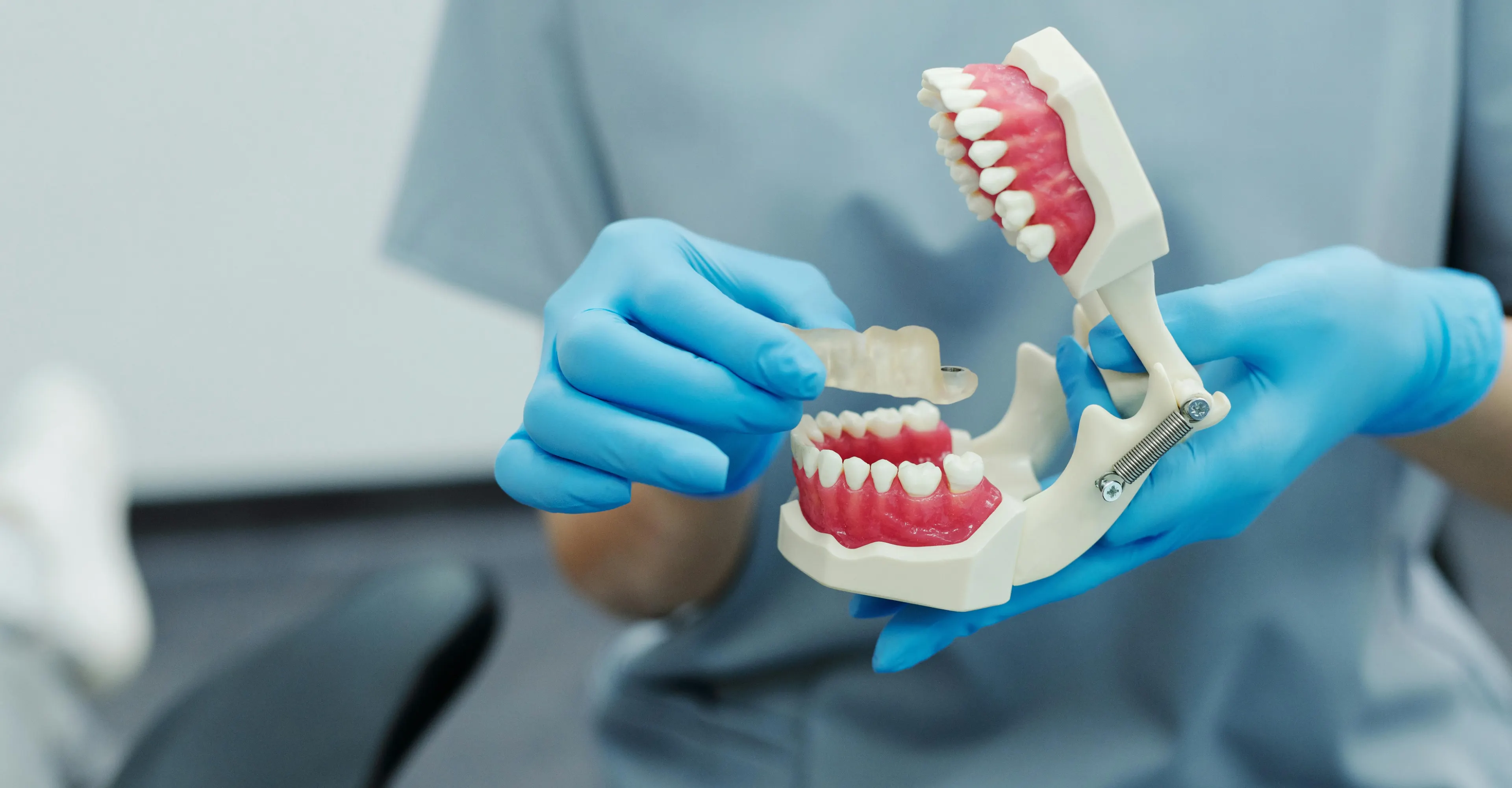
Once we find the source of your TMJ symptoms, we can start your care. For many patients, the most helpful tool is a custom mouthguard. Unlike simple store-bought guards, our guards are made to fit your teeth just right. This custom fit keeps your jaw in a relaxed state while you sleep.
Using custom mouthguards for jaw clenching lowers the physical strain on your joints. Over time, this ease lets your tight jaw muscles heal and protects your teeth from damage. These custom guards are strong and easy to clean. They prevent your upper and lower teeth from grinding against each other, which stops jaw pain before it can start.
Therapy and sleep support
Our team also helps you with physical therapy and stress care. Gentle jaw stretches and warm heat can relax tight muscles. We can also help you look at how sleep issues affect your jaw. Often, jaw clenching and sleep problems go hand in hand.
If you struggle with sleep, we offer expert TMJ and sleep apnea treatment to help you rest and feel better. By treating both issues at once, we help you find lasting relief. Our therapy is made to teach you simple habits that you can use at home every day. We guide you step by step so you can take control of your healing.
What You Can Do at Home for TMJ Symptoms
Many jaw issues do not last long. In fact, most jaw joint issues go away on their own, though some can become chronic. While you wait to see a dentist, you can use simple methods at home to find relief and help your jaw heal.
Daily Habits for Jaw Comfort
You can start by changing some of your daily habits. One of the best ways to rest your joint is to eat soft foods like soup or yogurt. Avoid hard or chewy foods like raw carrots, nuts, and tough meats, as they put extra pressure on your joint. Choosing soft dishes that do not need much chewing will give your jaw joint a break.
Learning about simple TMJ home treatments can help you manage your discomfort. For example, apply warm packs to your face for ten minutes, and avoid wide yawning or chewing gum. You can also use cold packs to numb sharp pain or reduce swelling when your jaw is sore. These simple changes can give your jaw a much-needed break.
The Role of Diet, Sleep, and Posture
Your daily lifestyle choices also affect how your jaw feels. In fact, things like a poor diet and a lack of sleep can make your TMJ symptoms worse. When you do not get enough rest, your body holds more stress, which can cause teeth clenching at night. Eating healthy foods and sleeping on your back will help protect your jaw muscles.
Your posture is another key factor. For instance, holding your head forward while looking at a screen can strain the muscles in your face and neck. This strain can lead to jaw pain, so try to sit up straight and keep your screen at eye level. Gentle jaw stretches can also help relax tight muscles and improve how far your jaw can open.
You can read more about how to keep your teeth healthy. Check out more dental health articles on our blog. Our team is always here to help you learn about the best ways to care for your smile. Staying informed is a great way to take charge of your wellness.
Book an appointment at Smile Makers Dental Center today.
Frequently Asked Questions
Is ear pain a common symptom of TMJ?
Yes, ear pain is a very common sign of TMJ issues. The jaw joint sits right next to your ear canal. Because of this, jaw pain can easily feel like an earache. According to the National Institute of Dental and Craniofacial Research, TMJ pain often spreads to the face and neck. This can make your ear feel clogged, full, or sore, even if the ear itself is healthy.
Can TMJ symptoms go away on their own?
Yes, many TMJ issues last only a short time and clear up without treatment. For minor pain, simple changes like resting your jaw and eating soft foods can help. However, some cases do not go away and can turn into long term problems. If you have jaw stiffness or locking, the National Library of Medicine suggests seeing a dentist to find the cause and get relief.
How do I know if my TMJ symptoms are serious?
TMJ symptoms are serious if they do not go away or if they make it hard to eat, speak, or open your mouth. A locked jaw that is stuck open or closed is a clear warning sign. The National Institute of Dental and Craniofacial Research notes that severe stiffness or limited movement means you should get a checkup. You should see a dentist if pain affects your daily life.
What are the early warning signs of TMJ?
The earliest sign of a TMJ problem is often a dull ache in your jaw joint or chewing muscles. You might also notice a tired feeling in your face or a tight jaw. Clicking, popping, or grating sounds when you open or close your mouth are also early signs. But the National Institute of Dental and Craniofacial Research notes that these sounds are normal if they do not cause pain.
Ready to Get Lasting Relief from Your TMJ Symptoms?
Jaw joint issues do not usually go away on their own. Leaving jaw pain and stiffness alone can lead to much worse pain over time. If you do not act now, normal joint wear can get worse and make simple things like eating or speaking very hard. On the other hand, getting a proper checkup early can keep your jaw working well and save you from years of chronic pain. We view these checkups as essential health maintenance, not just reactive treatment. Our team of warm and gentle experts is ready to help you find relief at one of our comfortable locations near you.
Book your TMJ evaluation today We view these checkups as essential health maintenance and will help you find relief at a location near you.