

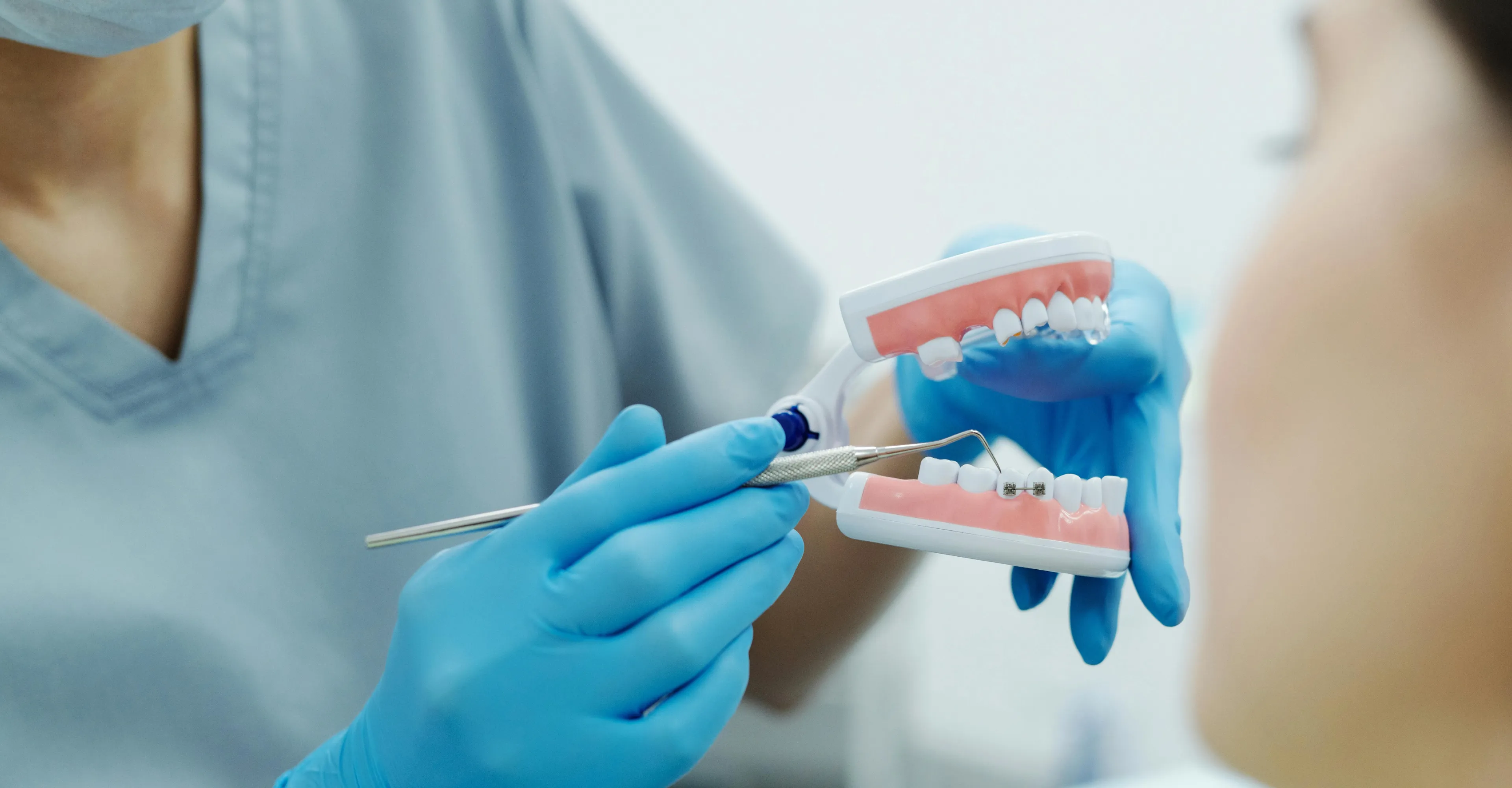



Jaw discomfort can make ordinary activities like chewing, speaking, or yawning feel unexpectedly difficult. It can also raise a common question: is every jaw click a sign of a problem? The answer starts with understanding the anatomy and the language clinicians use.
So, what is tmj? TMJ stands for temporomandibular joint, the movable joint connecting the lower jaw to the skull. TMD, or temporomandibular disorders, is the broader term for more than 30 conditions that can affect the jaw joints and the muscles that control movement, according to the National Institute of Dental and Craniofacial Research. A painless click or pop can be common and does not necessarily mean treatment is needed.
With that distinction in place, it becomes easier to understand what the jaw joint does, what may disrupt its function, and when symptoms deserve a professional evaluation.
What Is TMJ? Start With the Joint, Not the Disorder
TMJ stands for temporomandibular joint, the paired joints that connect your lower jaw to your skull and help you open, close, speak, and chew. The term names a normal part of the body. It does not, by itself, mean that something is wrong or that you have a disorder.
There are two temporomandibular joints, one on each side of the jaw. Together, they coordinate the movement of the mandible, or lower jaw. Each joint works as both a hinge and a sliding joint. The jaw rotates as the mouth begins to open, then glides forward as it opens wider. This combined motion allows everyday movements such as biting into food, forming words, yawning, and swallowing.
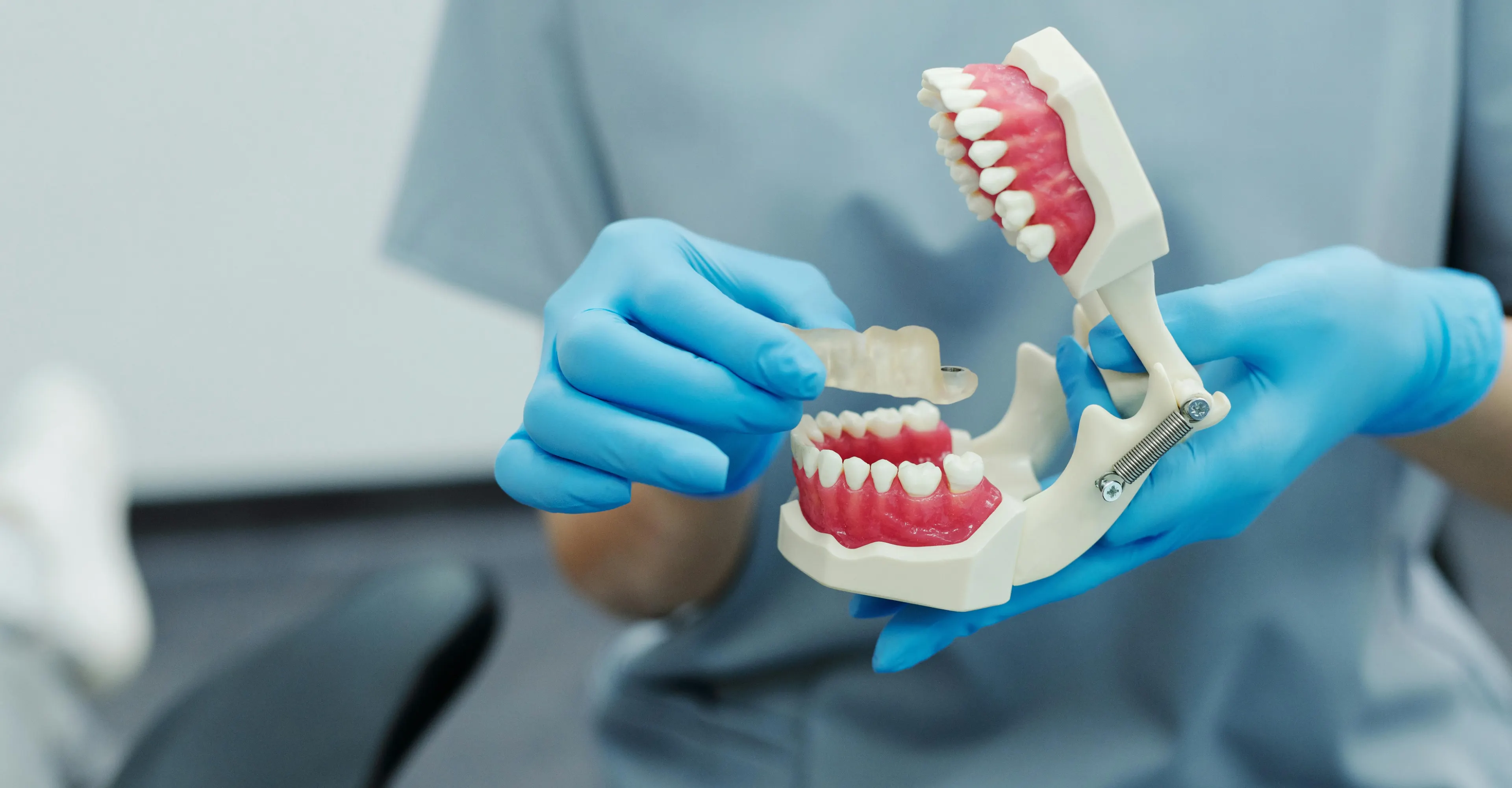
The joint is more complex than a simple hinge. It includes the head of the lower jaw, the base of the skull, ligaments, muscles, and nerves. A small disc within each joint helps the moving surfaces work together during opening and closing. Because the right and left joints are connected through the same lower jaw, movement on one side can influence how the other side feels and functions. UT Dentistry describes the TMJ as a complex joint made up of these coordinated structures. Learn more about TMJ anatomy from UT Dentistry.
TMJ is the joint; TMD is the disorder
These abbreviations are often used interchangeably in casual conversation, but they have different meanings. TMJ refers to the temporomandibular joint itself. TMD means temporomandibular disorders, a group of more than 30 conditions involving the jaw joints, the muscles that control jaw movement, or both. The National Institute of Dental and Craniofacial Research explains that TMD can cause pain and dysfunction. But it is not one single disease with one universal cause or treatment. Review the NIDCR overview of TMD.
This distinction matters when interpreting symptoms. A painless click or pop can occur in a TMJ and, according to NIDCR, is common and generally does not require treatment. A sound alone does not establish a diagnosis. Pain, restricted movement, tenderness, or ongoing changes in jaw function deserve a thoughtful clinical evaluation, especially when they interfere with eating, speaking, or daily comfort. Understanding the anatomy is a useful first step, but it cannot determine what is causing an individual symptom.
What Is TMJ Disorder and What Does It Feel Like?
Answer: Temporomandibular disorders, or TMD, are a group of conditions that affect the jaw joints and the muscles that control jaw movement. They may feel like jaw pain, facial tenderness, stiffness, or difficulty opening and closing your mouth. Clicking without pain can be common and does not automatically mean a disorder.
When people ask, "what is TMJ," they are often describing symptoms of TMD. TMJ is the name of the temporomandibular joint itself. TMD is the broader term for more than 30 conditions involving the joint, the surrounding muscles, or both. A person can also have more than one TMD condition at the same time. The National Institute of Dental and Craniofacial Research explains the distinction and encourages people with suspected TMD to discuss it with a dentist or doctor.
Common ways TMD can affect jaw function
Symptoms may be noticeable during ordinary activities such as chewing, yawning, speaking, or eating a firm food. You might experience aching around one or both jaw joints, soreness in the chewing muscles, or tenderness near the cheek and temple. Some people notice stiffness, a feeling that the jaw does not move smoothly, or difficulty opening the mouth as usual. Pain can be intermittent, or it may become more noticeable after extended chewing or periods of jaw tension.
These symptoms are not a checklist for self-diagnosis. Jaw discomfort can have several possible explanations, and the same symptom may feel different from person to person. TMD is estimated to affect about 5% of adults in the United States, although estimates vary depending on who is studied and how the condition is assessed. That variation is one reason a thoughtful clinical evaluation matters more than trying to label the problem from a single symptom.
What about clicking, ear, or facial symptoms?
Clicking or popping deserves context. According to NIDCR, joint sounds without pain are common, considered normal, and generally do not require treatment. Clicking that occurs with pain, limited movement, tenderness, or a change in function is more useful information to share during an evaluation. A sound by itself does not establish that the joint is damaged.
Some people also report discomfort that seems to involve the face, temple, or area around the ear. Because jaw muscles and joints sit close to other structures, these sensations can be confusing. They should not be assumed to prove TMD or attributed to it without an examination. Keep track of when symptoms occur, what movements bring them on, and whether they affect eating or opening your mouth. That history can help a dentist understand the pattern and decide what evaluation is appropriate.
What Causes TMJ Problems?
Answer: TMJ problems, more precisely called temporomandibular disorders (TMD), can have several contributing factors. Clenching or grinding, an injury, muscle tension related to stress, inflammation, and certain medical conditions may all play a role. The cause is not always the same from one person to the next, and one factor does not explain every case.
Because the jaw depends on both a joint and a coordinated group of muscles, strain in one area can affect how the whole system feels and functions. Repeatedly clenching the teeth or grinding at night may overwork the chewing muscles and place additional pressure on the joint. Some people notice jaw fatigue, tenderness, headaches, or difficulty opening after periods of increased clenching. If this pattern sounds familiar, our guide to teeth grinding and TMJ causes offers more detail about bruxism and related symptoms.
Clenching, grinding, and stress-related tension
Stress does not automatically cause TMD, but it can influence behaviors that increase jaw load. A person may hold the teeth together during the day, tighten the jaw while concentrating, or grind during sleep without realizing it. Stress-related muscle tension can also make existing discomfort feel more noticeable. Identifying these patterns is more useful than assuming that stress is the sole explanation. A dental evaluation can help distinguish muscle soreness from a problem involving the joint or another source of facial pain.
Injury and changes within the joint
A blow to the jaw, face, or head can affect the joint, surrounding tissues, or the way the jaw moves. TMD may also involve inflammation or changes in the joint structures. The UT Dentistry overview of TMJ pain notes that associated conditions can include rheumatoid arthritis, fibromyalgia, juvenile idiopathic arthritis, psoriatic arthritis, and Ehlers-Danlos syndrome. These associations do not mean that everyone with one of these conditions will develop TMD, but they are relevant medical history for a clinician to consider.
Less common complications may be associated with infection, radiation, or a numbing injection used during dental work, according to the same academic source. Pain after an injury or procedure deserves attention, especially when it persists or affects normal jaw movement.
In short, TMD is often multifactorial. The National Institute of Dental and Craniofacial Research describes TMD as a group of more than 30 conditions affecting the jaw joint and the muscles that control movement. A careful history and examination are therefore more reliable than trying to identify one cause from symptoms alone.
How Is TMJ Diagnosed?
Answer: TMJ-related problems are evaluated through a clinical history and examination of the jaw, facial muscles, teeth, and bite. Imaging is not automatic. A dentist or doctor may recommend it when the findings call for a closer look or when symptoms do not improve with conservative care.
Because temporomandibular disorders can involve the joint, jaw muscles, or both, diagnosis is more thoughtful than checking for one isolated symptom. The National Institute of Dental and Craniofacial Research (NIDCR) recommends consulting a dentist or doctor if you think you may have a TMD. A typical evaluation may follow these steps:
- Discuss your symptoms and history. Your clinician may ask when discomfort began, where you feel it, and whether it changes with chewing, speaking, yawning, or waking up. Mention clicking, popping, locking, headaches, ear-area discomfort, limited opening, clenching, grinding, recent injury, and any dental treatment that preceded the symptoms. The goal is to understand the pattern, not to assume that every jaw sound represents a disorder.
- Observe jaw movement. You may be asked to open and close your mouth, move the jaw from side to side, and describe any pain or catching. The clinician observes the path of movement, how widely the mouth opens, and whether both sides move in a coordinated way. This can help distinguish a movement problem from a painless sound that may not need treatment.
- Check the joints and muscles for tenderness. Gentle pressure around the jaw joints, cheeks, temples, and other chewing muscles can identify areas of soreness or tension. The clinician may also listen for joint sounds while you move. These findings are considered alongside your symptoms rather than interpreted in isolation.
- Review the dental context. The teeth, bite, tooth wear, restorations, and surrounding tissues may be assessed because dental and jaw findings can overlap. This does not mean a particular bite automatically causes TMD. It means the full oral context can help guide a safe, individualized plan.
- Order imaging only when indicated. X-rays, CT, or MRI may be considered when an examination suggests a structural concern, symptoms persist despite conservative care, or a procedure is being considered. UT Dentistry notes that MRI may help assess the joint when conservative treatment has not worked or acute surgery is under consideration. Imaging should answer a clinical question, not replace an examination.
You may see online advice about placing three fingers between your upper and lower teeth as a jaw-opening test. At most, this is a rough observation of opening range. It cannot assess muscle tenderness, joint function, dental context, or the many conditions grouped under TMD. A result that seems normal does not rule out a problem, and a result that seems unusual is not a diagnosis. If jaw pain, restricted movement, or locking continues, arrange a professional evaluation and bring notes about when symptoms occur.
Sources: NIDCR information on TMD diagnosis and UT Dentistry guidance on TMJ evaluation and imaging.
TMJ Treatment Options: From Conservative Care to Referral
Answer capsule: Treatment for temporomandibular disorders (TMD) usually begins with conservative, reversible care and is adjusted according to your symptoms, examination findings, and goals. Medication, oral appliances, therapy, and procedures should be considered with a clinician rather than chosen from an online checklist.
| Care stage | What it may include | How decisions are made |
|---|---|---|
| Self-management | Learning about your condition, reducing behaviors that strain the jaw, and following individualized home-care guidance. | Often an initial step when symptoms are mild or recently noticed. |
| Clinician-guided care | Behavioral support, physical care, medication advice, or an oral appliance when appropriate. | Selected after an evaluation and monitored for comfort, function, and response. |
| Referral or procedure | Additional imaging, specialist input, or a procedure for a specific clinical indication. | Considered when symptoms persist, function is significantly affected, or findings warrant escalation. |
Begin with reversible changes
Conservative care can include learning about the specific type of TMD involved, noticing clenching or other jaw-loading habits, and following practical guidance from your dental team. Physical or behavioral care may also be useful. The National Institute of Dental and Craniofacial Research (NIDCR) describes cognitive behavioral therapy as an approach that can address unhelpful thought patterns and build coping skills. That does not mean jaw symptoms are imaginary. Stress, muscle tension, pain, and protective habits can interact, and care should address the whole pattern.
A clinician may discuss an oral appliance if it fits your findings. NIDCR advises that an appliance should not be designed to permanently change your bite. A device that causes new pain, changes how your teeth meet, or makes movement more difficult deserves prompt review. Do not assume that a device made for one person is appropriate for someone else.
Use medication and procedures carefully
Medication decisions belong with a qualified clinician who can consider your health history, current medicines, allergies, and the likely cause of your symptoms. NIDCR notes that some medicines used in TMD care can lead to addiction or other serious side effects. Ask what a medicine is intended to do, how long to use it, and which warning signs require follow-up. Avoid starting, stopping, or combining treatments based only on advice from a social post or product advertisement.
Procedures are not a default next step. Depending on the findings, advanced care may involve imaging or referral for another opinion. UT Dentistry reports that conservative treatment often improves symptoms, while noting that outcomes and timing vary by patient. MRI may be considered when conservative care has not helped or surgery is being evaluated. More involved options, such as procedures inside or around the joint, should be selected only after a clinical assessment and a clear discussion of potential benefits, limits, and alternatives.
Smile Makers offers TMJ and sleep apnea care for patients seeking an evaluation in Northern Virginia. The right pathway depends on what your examination shows, not simply on what a symptom is called.
When Should You Schedule a TMJ Evaluation in Northern Virginia?
Answer: Consider scheduling an evaluation when jaw discomfort persists, symptoms are getting worse, or jaw movement begins to interfere with eating, speaking, yawning, or daily comfort. You do not need to wait for severe pain. A timely visit can help clarify whether the concern involves the temporomandibular joint, the surrounding muscles, teeth, or another source.
An occasional jaw sound without pain or limited movement may not require treatment. However, repeated or worsening symptoms deserve attention, especially when they affect how your jaw functions. Contact a dental office if you notice ongoing jaw soreness, tenderness near the ears or temples. Headaches that seem connected to jaw use, difficulty opening or closing your mouth, or changes that make chewing uncomfortable. These signs do not identify a specific condition by themselves, so an evaluation is more useful than trying to diagnose the problem from a symptom checklist.
It is also reasonable to seek guidance when symptoms are mild but persistent. Clenching, grinding, stress-related muscle tension, dental changes, injury, and joint inflammation can have overlapping effects. Discussing the pattern, timing, and activities that bring on discomfort gives the dental team a better starting point. Bring up nighttime symptoms, morning jaw fatigue, interrupted sleep, or any history of an injury. If you have already tried to change a habit or use an over-the-counter product, mention that as well rather than assuming it is relevant or irrelevant.
Book an appointment for a comfortable, personalized evaluation.
For Northern Virginia patients, Smile Makers Dental Center has six offices in Leesburg, Tysons, Falls Church, Fairfax, Bailey's Crossroads, and Woodbridge. Choosing a convenient location can make it easier to follow through when symptoms need observation or further care. The practice includes TMJ and sleep apnea care among its specialty services. The evaluation itself should be guided by your history and findings rather than by an assumed diagnosis.
Dental visits can feel stressful, particularly when you are already experiencing facial discomfort or are unsure what an examination involves. Let the team know about your concerns before the visit so comfort and communication can be part of the plan. You can also review these tips for a calmer dental visit before scheduling. Seeking information early is a practical step, not an overreaction, and it gives you a chance to understand your options with professional support.
Book an appointment before reading the FAQs.
Frequently Asked Questions
What is TMJ?
TMJ stands for temporomandibular joint, the joint connecting your lower jaw to your skull. You have one on each side of your jaw, and together they help you speak, chew, and open your mouth. Learn more about TMJ anatomy.
What is TMJ disorder?
TMJ disorder is commonly called TMD, short for temporomandibular disorders. TMD describes a group of more than 30 conditions that can affect the jaw joints and the muscles that control jaw movement. Pain, stiffness, or difficulty opening the mouth may signal a problem, but painless clicking alone is common and generally does not require treatment, according to the National Institute of Dental and Craniofacial Research.
What causes TMJ?
There is not one cause for every patient. Jaw injury, clenching or grinding, arthritis, inflammation, and tension may contribute, and some people may have more than one related condition. A dental or medical evaluation can help separate a joint problem from muscle pain or another source of facial discomfort.
How is TMJ diagnosed?
A clinician reviews your symptoms and history, examines jaw movement and tenderness, and listens for joint sounds. Imaging is not needed in every case. An MRI may be considered when conservative care has not helped or surgery is being considered, according to UT Dentistry. Online self-tests cannot replace a clinical evaluation.
How do I get TMJ to go away?
The right plan depends on the specific cause. Many people begin with conservative care, such as changing habits that strain the jaw, targeted exercises or therapy when appropriate, and clinician-guided treatment. If an oral appliance is recommended, NIDCR advises that it should not be designed to permanently change your bite. Talk with a dentist or doctor about persistent, worsening, or movement-limiting symptoms.
Ready to Discuss Your Jaw Symptoms?
A thoughtful evaluation can help clarify whether your symptoms relate to the temporomandibular joint, jaw muscles, or another dental concern. Smile Makers Dental Center can help you understand the next appropriate step without relying on guesswork or self-diagnosis.