


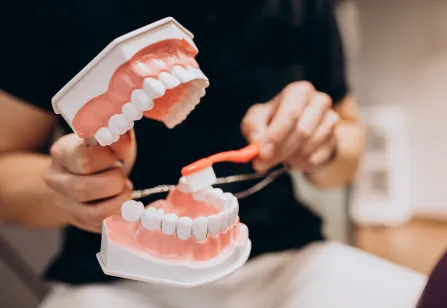






How long does Invisalign take? There is no single timeline for everyone. Treatment time depends on the planned tooth movements, how consistently aligners are worn, and how the teeth respond as care progresses. A dentist or orthodontic provider can estimate timing after evaluating your teeth, bite, and goals. Treat a general estimate as a starting point for questions, not a promise or deadline.
Book an appointment to discuss clear aligners
Why is there no one timeline for Invisalign?
Clear aligner treatment uses a planned series of removable trays to move teeth gradually. Each set represents a stage in the plan. A person with a limited spacing concern may need a different sequence from someone addressing crowding, bite alignment, or several kinds of movement at once. The number of trays alone does not explain how involved the plan is or how long it may take.
Estimates can also refer to different things. One provider may describe the initial tray series, while another may discuss active treatment including progress reviews and possible refinements. Ask what the estimate includes and what could change it. Treatment duration and the time needed for appointments or follow-up are related, but not identical, parts of the process.
Invisalign is one type of clear aligner care. Compare it with fixed braces in this guide to Invisalign versus braces. The appropriate option depends on your dental needs, preferences, and a provider’s evaluation. No article can determine which treatment fits your situation. You can also learn about orthodontic care and the technology used in dental care before an appointment.
What parts of a treatment plan shape the estimate?
The movements being planned
Teeth may need to move in different directions or by different amounts. Rotations, vertical movement, space closure, and coordinating the bite all require planning. If several teeth need different movements, the sequence may be more involved than a plan for one limited concern. Ask the provider to explain which goals are included and how they affect the estimate.
Your starting dental condition
The provider considers the position of your teeth and bite, as well as the health of your mouth. An exam and treatment records help inform planning. If a dental concern needs attention before aligner treatment, the start date or sequence may change. Only an in-person evaluation can clarify what applies to you. If you have questions about broader care, Smile Makers lists its dental services online.
How teeth respond as treatment proceeds
Tooth movement does not follow a perfectly predictable calendar. At reviews, the provider checks whether teeth are following the plan and whether aligners fit as intended. If a movement needs more time or the plan needs adjustment, the next steps may change. Keeping scheduled visits gives the dental team a chance to assess progress and address questions.
Whether additional refinement is appropriate
After an initial series, the provider assesses whether the planned movements have been achieved. If further adjustment is appropriate, additional trays or steps may be discussed. Refinement is not something to assume either way before treatment. Ask whether the estimate refers only to the first series and how decisions about additional steps are made.
How does daily wear affect treatment timing?
Removable aligners depend on the wear schedule provided for your plan. Taking them out more often than instructed, forgetting to put them back, or changing trays early can disrupt the planned sequence. Follow your own provider’s directions; do not adopt a wear schedule or tray-change pace from another person’s experience.
Small routines can make consistent wear easier. Keep the case with you when eating away from home, set a reminder if you often forget, and return the trays after meals and oral hygiene as directed. If a meal, workday, or trip disrupts your routine, ask your dental team what to do rather than deciding on your own to skip ahead or double up.
- Use the wear instructions made for your treatment plan.
- Store trays in their case when they are not in your mouth.
- Bring current trays to checkups if requested.
- Contact the provider if a tray is lost, damaged, or does not seem to fit.
Consider a routine example: you remove the aligners for lunch at work and then return to a meeting. A case at your desk or in your bag can help prevent the trays from being wrapped in a napkin or left behind. If you later discover they are missing, contact the practice for instructions. Do not decide to wear the next set early to compensate.
These habits support following the plan, but they do not guarantee a particular duration. If you miss wear, your clinician can advise what to do based on the tray you are using and your progress. Do not force an aligner that feels wrong or move to the next one without guidance. If dental visits make you uneasy, this guide to feeling more comfortable at dental visits may help you prepare to raise concerns.
What happens from consultation through the last active tray?
A consultation is a chance to discuss what you hope to change and learn whether clear aligners may be suitable. The provider reviews your goals, evaluates your teeth and bite, and explains options. You can ask how the estimate was developed, what check-ins involve, and which factors could shift the schedule. Before the visit, review patient information or check the practice’s office locations to plan your appointment.
- Assessment: Share your concerns and have your teeth and bite evaluated. Ask whether any issue should be addressed before aligner treatment.
- Planning: The provider decides whether aligners are appropriate and describes the movements and expected sequence.
- Starting instructions: If you proceed, you receive trays and guidance on wear, cleaning, and when to change aligners.
- Progress reviews: The provider checks fit and progress, answers questions, and discusses any change to the plan.
- Completion and retention: Ask what is recommended after active movement to help maintain the result and what follow-up is expected.
Before the consultation, write down your goals and practical constraints. If work, school, travel, or family routines may make consistent wear difficult, mention them. The provider can explain how the plan fits those circumstances and what to do when routine changes. For families considering orthodontic care for younger patients, see when to consider a braces evaluation for kids and ask how readiness and daily adherence are assessed.
How should you compare treatment estimates?
A useful comparison is about more than which estimate sounds shortest. Ask whether both providers are describing the same treatment goals and whether the timeline includes only the initial series or possible refinement. A shorter estimate is not automatically better if it does not address the movements you need. Understand the plan, review schedule, and what happens if progress differs from expectations.
| What to compare | Why it matters | Question to ask |
|---|---|---|
| Planned movements | The type and amount of movement shape the sequence. | Which tooth or bite concerns are included? |
| Timeline scope | Estimates may describe different portions of treatment. | Does this include possible refinements? |
| Wear schedule | Following instructions is part of the treatment plan. | How should I wear and change my trays? |
| Progress reviews | Check-ins help assess fit and progress. | When should I return for a review? |
| After active treatment | Retention is a separate part of planning. | What is recommended after the last active tray? |
It can help to bring the estimate or questions from another consultation, if you have them, and ask the provider to clarify differences in scope. You are not expected to interpret a treatment plan by counting trays. Ask what each estimate includes, what assumptions it makes about wear, and how the provider will determine whether the plan is progressing as intended.
For general information about orthodontic treatment, consult the American Dental Association. Use general educational material as background, not as a personal timeline or substitute for an examination.
If you compare two estimates, make a short checklist rather than focusing only on the number of months. For example, one estimate might describe the first tray series while another includes anticipated review points or discusses what happens if movements need more time. Ask each provider to define the start and end points. Also ask whether the estimate assumes you can follow the prescribed wear routine, and how the office wants you to report a lost tray or fit concern. These questions make the comparison more useful without treating an estimate as a guarantee.
Schedule a clear aligner consultation
What can delay treatment or change the plan?
Inconsistent wear is one practical issue that can interfere with the planned sequence. Lost or damaged trays, an aligner that does not seem to fit, or discomfort that makes it hard to follow instructions are reasons to contact the provider. Do not force an ill-fitting tray or skip ahead without advice. Your dental team can tell you what to do based on your stage of treatment.
Clinical reviews may also lead to adjustments. The provider may decide that teeth need more time, that the sequence should change, or that a new dental concern affects the plan. This is why an estimate should be treated as an expectation based on current information, not a guaranteed completion date. The goal is to follow an appropriate plan, not to meet an arbitrary deadline.
Changes in routine can matter, too. A move, extended travel, a new work schedule, or a change in access to appointments may affect when you can attend reviews or obtain guidance. Tell the practice about a significant scheduling change instead of quietly allowing check-ins to lapse. If an appointment must be moved, ask whether the timing of the next visit changes what you should do with your current trays.
People sometimes worry that asking about a delay means they have done something wrong. A review is an opportunity to understand what is happening and what the next step should be. Explain when a tray stopped fitting as expected, when it was lost, or when your routine changed. Specific details help the provider give instructions for your situation rather than relying on guesswork.
How can you prepare for an individual estimate?
Bring a clear description of what you hope to change. You do not need to know the technical names for tooth movements. Pointing out the areas that concern you and explaining what matters most can help frame the consultation. Share any prior orthodontic treatment and mention routines that could affect wear, such as frequent travel or a schedule with irregular meal breaks.
Use the appointment to get a realistic view of both the plan and its boundaries. A practical conversation covers the expected sequence, how often progress is checked, and what might lead to a change. Ask how to contact the practice if a tray is lost or fit changes between visits. If you have several goals, ask which are included in the proposed plan and whether any need separate attention.
- Which concerns are you planning to address?
- What treatment options should I consider, including braces if appropriate?
- What does the time estimate include, and what could extend it?
- What wear and tray-change instructions should I follow?
- What should I do if I lose a tray or cannot wear it as instructed?
- How often will you review progress, and what happens if a tray does not fit?
- What is recommended after active aligner treatment?
Ask the provider to explain unfamiliar terms in plain language. If an estimate is given as a range, ask what factors place a person toward one end or the other. You can take notes or bring someone to help remember the discussion. At the end, repeat the key instructions in your own words: which tray to use, when to change it, and who to contact if something seems off. This simple recap can help you leave with a clear plan for daily wear.
Frequently asked questions
Can Invisalign treatment take only a few months?
Some plans may be more limited than others, but timing depends on the movements required and individual progress. A provider must evaluate your teeth and goals before estimating your own treatment time. Another person’s experience is not a reliable prediction for you.
Will wearing aligners longer each day make treatment faster?
Follow the schedule your provider gives you. Do not wear trays beyond instructions or change them early as a shortcut unless your provider specifically directs you to do so. Ask the practice what to do if your routine has been disrupted.
Does everyone need refinement trays?
No single process applies to every patient. The provider reviews progress and decides whether the planned movements have been achieved or whether adjustments should be discussed. Ask how refinements are handled and whether they are included in the estimate’s scope.
Does treatment end when I finish the last tray?
The end of the active tray series is not the only milestone to discuss. Ask about retention, follow-up, and the care recommended after active tooth movement so you know what comes next.
How do I get a personal timeline?
Arrange an evaluation with a dental provider. Share what you hope to change and ask what the estimate includes. The provider can explain whether clear aligners are an option and discuss timing based on your individual needs.
What is the next step?
How long Invisalign takes depends on your treatment plan, consistent wear, and progress reviews. A consultation can help you understand the factors that may shape your own estimate and decide what questions to address before starting.