

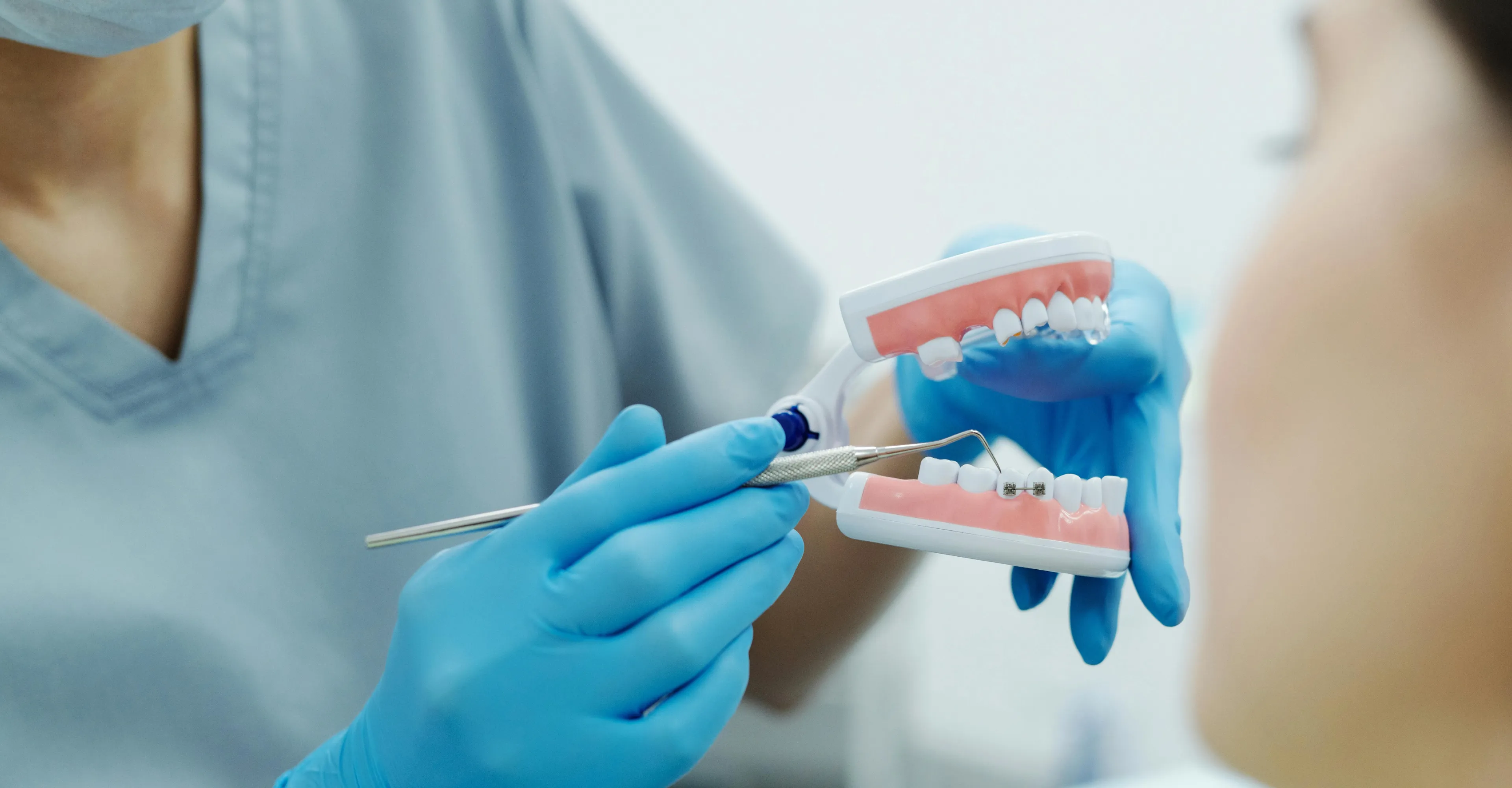



Replacing a missing tooth is a meaningful health decision, and it is normal to have questions about candidacy, timing, healing, and long-term care. Dental implants use a post placed in the jawbone to support a replacement tooth, bridge, or denture. The right plan depends on your oral health, jawbone, medical history, and personal goals.
For Woodbridge-area patients, a dental implant consultation can help determine whether treatment fits your needs and what steps may be involved. A clinician may review your gums, available bone, general health, and smoking history before recommending a personalized approach. Candidacy and treatment timing cannot be confirmed without an evaluation.
Understanding the factors that shape candidacy can make that conversation more productive and help you prepare thoughtful questions about your options.
Who May Be a Candidate for Dental Implants in Woodbridge?
Dental implants may be considered for adults with one or more missing teeth who want a stable replacement option. Candidacy is not decided by age alone. A fully developed jaw and the condition of the mouth matter more than reaching a particular birthday, so older adults may still be evaluated thoughtfully for treatment.
The foundation for an implant is healthy oral tissue and enough jawbone to provide support. If bone is thin or soft, a bone graft may be considered before implant placement rather than treating the situation as a permanent barrier. A clinician will also review your medical history, including conditions or medications that could affect healing, and discuss whether you can comfortably commit to a treatment process that may involve multiple stages.
Smoking deserves an open, judgment-free conversation. Research associates smoking, previous periodontal disease, bruxism, and radiation therapy with a higher risk of implant failure, but these factors do not automatically answer the question for every patient. The review in PubMed notes that there are few absolute contraindications to implant placement. Your evaluation should account for your overall health, oral tissues, bone, habits, and goals together.
For Woodbridge-area patients, Smile Makers' office at 14416 Richmond Highway offers a local starting point for discussing implants, a bridge, dentures, or other tooth replacement options. No online checklist can permanently disqualify you or promise eligibility; an individualized clinical assessment is the appropriate next step.
What Happens at a Dental Implant Consultation?
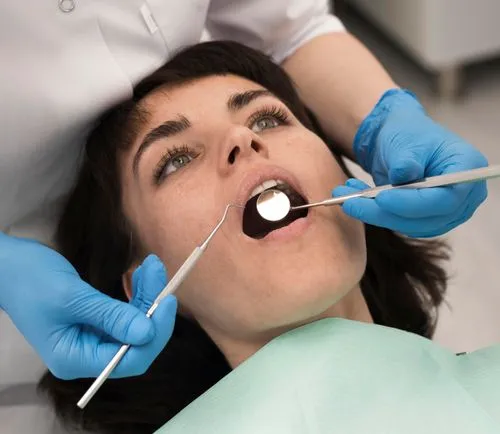
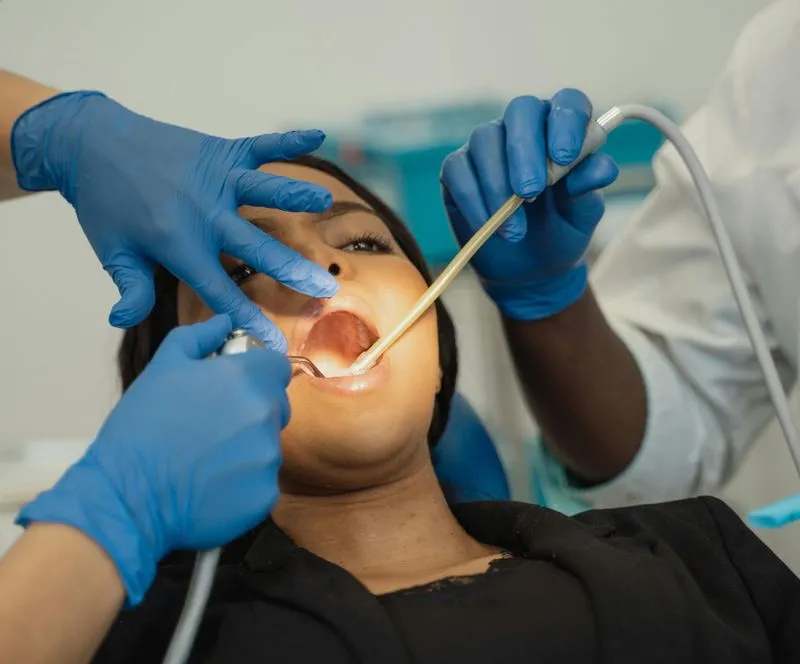
A dental implant consultation is a conversation and evaluation designed to understand your needs before anyone recommends a treatment path. Your visit may begin with an oral exam, a review of missing or damaged teeth, and imaging to assess the jawbone and surrounding structures. The condition of the jawbone helps determine how treatment may proceed, so imaging can be an important part of planning.
Your dental team may also review your medical and dental history. Be prepared to discuss previous gum disease, smoking, teeth grinding, radiation therapy, medications, and health conditions that could affect healing or make treatment more complex. A review published in PubMed notes that there are few absolute contraindications to implant placement, while identifying several factors associated with increased risk. This does not determine your eligibility on its own. It helps your clinician make a careful, individualized assessment.
Questions and restorative goals
The consultation should leave room for your questions. You may want to ask how an implant could support a crown, bridge, or denture, what alternatives may be available, and which parts of care could require coordination with another restorative or surgical specialty. Share what matters most to you, whether that is chewing comfortably, improving the function and aesthetics of your smile, or understanding the expected sequence of visits.
Smile Makers develops treatment plans around clinical needs and patient preferences. The plan may outline recommended evaluations, possible preparatory care, restorative goals, and follow-up. The Woodbridge dental office at 14416 Richmond Highway can serve as a local starting point for discussing your needs. A local consultation does not mean every implant stage will take place at that office; the recommended care pathway depends on your evaluation and coordinated treatment plan.
What Are the Main Stages of Dental Implant Treatment?
Dental implant treatment is planned around your oral health, the location of the missing tooth, and the type of restoration you need. The sequence can vary, especially when bone grafting or other preparation is recommended. In general, the process moves through these stages:
| Stage | What it addresses |
|---|---|
| Planning | Health history, imaging, goals, and the proposed restoration |
| Preparation | Any needed care for the gums or jawbone before placement |
| Placement and healing | Implant positioning and time for the surrounding bone to heal |
| Restoration and follow-up | Fitting the replacement tooth and monitoring long-term comfort and function |
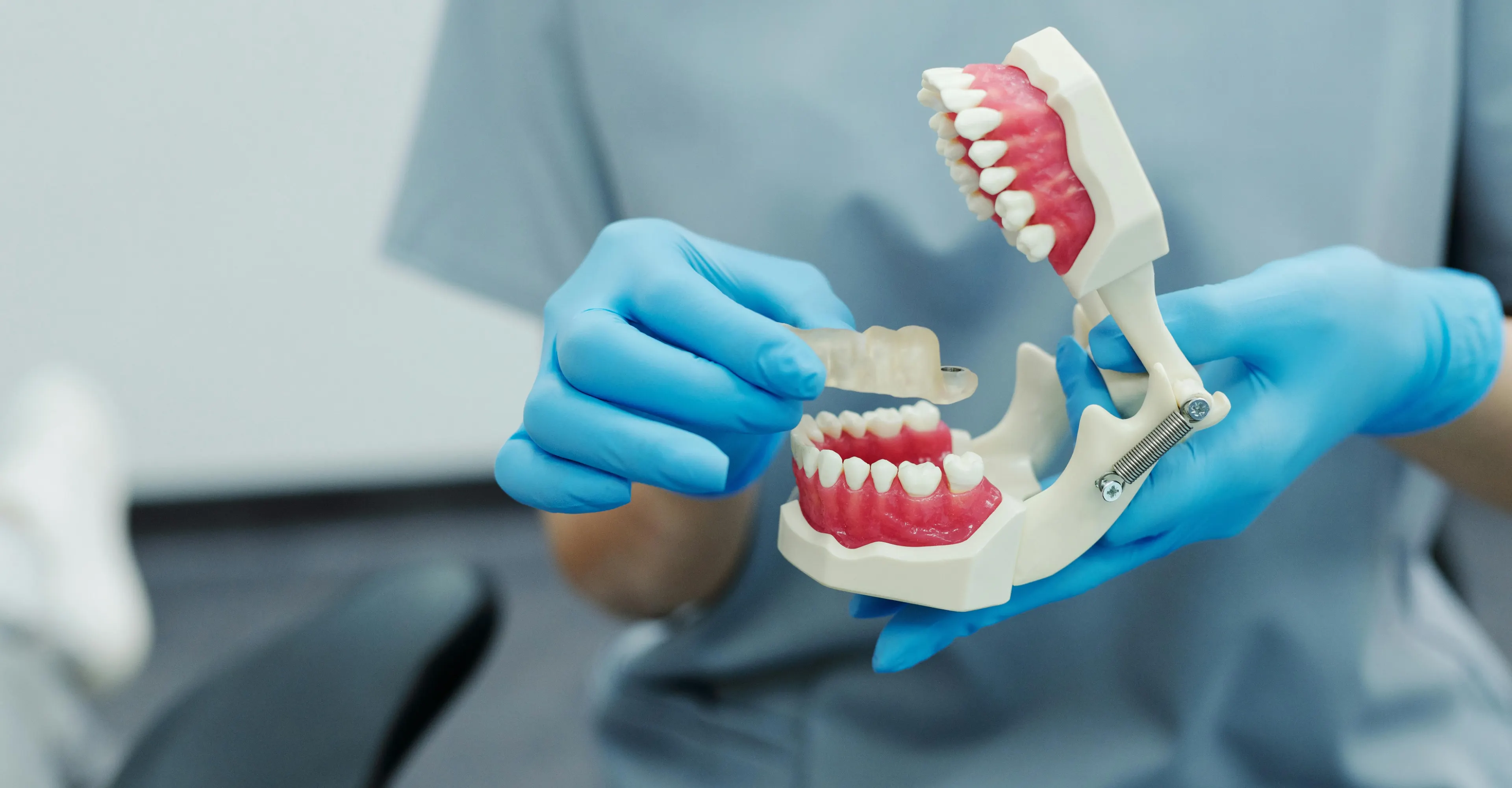
- Consultation and planning. Your dental team evaluates the missing tooth area, reviews your health history, and discusses your goals. The plan identifies whether an implant-supported crown, bridge, or denture is the appropriate type of restoration. A dental implant is a titanium, screw-shaped component placed in the jawbone to support that replacement tooth or prosthesis, as described by Cambridge University Hospitals (CUH's dental implant guide).
- Preparation when needed. If the jawbone is not thick enough or is too soft, bone grafting may be recommended before implant placement. A graft can create a more solid base, but the transplanted bone may need time to develop enough new bone to support the implant. Not every patient needs this step.
- Implant placement. The implant is surgically positioned in the jawbone, where it serves as the root for the missing tooth. Depending on your plan, other procedures may be coordinated around this stage. Your clinician will explain the planned approach and what to expect before treatment begins.
- Healing and integration. The implant remains in the jaw while the surrounding bone heals around it. This healing is essential for stable support, and it can take many months. Your care team will provide recovery instructions and arrange follow-up as appropriate.
- Restoration. Once the implant and surrounding tissues are ready, the final crown, bridge, or denture is fitted and adjusted. The restoration is designed to replace one or more missing teeth or, in some cases, help support a loose denture.
- Follow-up and ongoing care. Follow-up visits help your team assess comfort, fit, and oral health. Regular home cleaning and professional dental care remain important after treatment is complete.
For a brief explanation of the components and mechanics, read more about how dental implants work.
Schedule an implant consultation
How Long Does Dental Implant Healing Take?
Healing after implant placement is not identical for every patient. The timeline depends on the number and location of implants, the condition of the jawbone and gums, the type of restoration planned, and how your body responds to treatment. Your clinician can explain the expected sequence after reviewing your exam and imaging, rather than assigning a universal date in advance.
As a general clinical example, Cambridge University Hospitals explains that an implant may be left to heal in the bone for about three to six months, but the period can be longer. This is the stage in which the implant integrates with the surrounding bone before the final restoration is completed. The range is a reference point, not a promise. Some patients need a different schedule based on their individual treatment plan. You can also review our dental implant recovery timeline for a broader look at what recovery may involve.
How grafting can affect the schedule
If there is not enough bone to support the planned implant, a bone graft may be recommended as part of the treatment plan. Because the graft needs time to heal, it can extend the overall process. Whether grafting is appropriate, and how it affects your timing, requires an evaluation of your bone structure and restorative goals.
What early recovery may feel like
In the first few days after surgery, some discomfort and swelling can occur. Mild discomfort may also continue during the following week or so. Your care team will provide instructions for protecting the surgical area and will tell you what changes should prompt a call. A review appointment may be arranged around one week after surgery to check healing and remove stitches if needed. Later visits help determine when it is appropriate to continue to the next treatment stage.
For Woodbridge-area patients, a consultation is the best way to discuss a realistic timeline for your specific case and any questions about recovery.
What Can Make Implant Treatment More Complex?
People often ask what disqualifies someone from dental implants. In practice, few factors automatically rule out treatment. Instead, certain health and lifestyle considerations may call for additional assessment, preparation, or coordination before an implant plan is finalized. A review of implant contraindications and risk factors reports that a history of periodontal disease, bruxism, smoking, and radiation therapy can be associated with increased implant failure risk: review of implant safety and risks.
Gum health and previous periodontal disease
A history of gum disease can affect the tissues that support an implant. The clinical team may first need to evaluate whether inflammation is controlled and whether your gums and surrounding bone are healthy enough for the next step. This is not a permanent judgment about eligibility. Treating active oral health concerns and establishing a consistent home-care routine may be part of individualized planning.
Bruxism and smoking
Bruxism, or habitual clenching and grinding, can place extra force on teeth and restorations. Your clinician may ask about jaw soreness, worn teeth, nighttime grinding, or a current night guard when assessing how to protect an implant restoration. Smoking is another important part of the conversation because tobacco use is associated with implant risk and can affect healing. Be open about your habits so the team can discuss practical steps and appropriate timing.
Bone, radiation therapy, and medical history
The available jawbone helps determine how treatment proceeds. If bone is thin or insufficient, grafting or another preparatory approach may be considered rather than treating the implant as an immediate next step. Previous radiation therapy involving the jaws, along with medical conditions that may affect bone healing or overall surgical safety, also deserves careful review.
Bring an updated medication list and relevant medical history to your consultation. Smile Makers can use that information to build a plan around your clinical needs and preferences, with the right evaluation and coordination for your situation.
How Do You Maintain Dental Implants Long Term?
Long-term implant care combines consistent home cleaning with professional monitoring. Once treatment is complete, implants still need regular care so the implant, surrounding gums, and replacement tooth can continue functioning well.
Make daily cleaning part of your routine
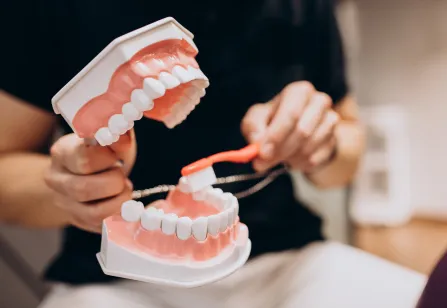
Clean around the implant as carefully as you clean your natural teeth. Brush gently but thoroughly, and follow your dental team's instructions for cleaning between teeth and around the restoration. The right tools may vary depending on whether you have an individual crown, bridge, or implant-supported denture.
Cleaning is not only about keeping the visible crown looking fresh. Inadequate cleaning can contribute to swollen or bleeding gums and infections in the bone around an implant. Cambridge University Hospitals notes that inflammation around the gums, called mucositis, and loss of bone around the implant, called peri-implantitis, can occur when implants are not cleaned properly. Learn more about implant maintenance and aftercare.
Keep regular professional follow-up visits
Your dentist or hygienist can monitor the implant, assess the surrounding tissues, check the restoration, and provide professional cleaning when needed. Cambridge University Hospitals advises long-term visits every three to six months for monitoring and professional cleaning, although your recommended schedule should reflect your oral health and treatment needs.
Do not wait for a routine appointment if you notice bleeding, persistent swelling, tenderness, a change in how the replacement tooth fits, or any movement. These changes do not automatically mean that treatment has failed, but they deserve timely evaluation. Bring up changes early so your clinical team can assess what is happening and recommend the next step.
Maintenance also includes following post-treatment instructions, attending planned reviews, and telling your dental team about relevant health changes or habits such as teeth grinding. If you are comparing care approaches, our guide to implant-supported denture options may help explain how daily care can differ by restoration type.
Schedule an implant maintenance appointment
Why Consider Smile Makers for Dental Implants in Woodbridge?
For Woodbridge-area patients, choosing an implant provider often involves more than finding a convenient office. It also means finding a dental team that can evaluate the health of your mouth, discuss realistic replacement options, and shape a plan around your needs and preferences.
Smile Makers Dental Center's Woodbridge office is located at 14416 Richmond Highway. The practice offers implants as part of its broader restorative care, along with access to advanced specialties such as prosthodontics and oral surgery. That range can be helpful when your evaluation suggests that more than one area of dental expertise should inform your care.
Implant treatment is not identical for every patient. Your plan may depend on the number and location of missing teeth, the condition of your gums and jawbone, your medical history, and the type of restoration that fits your goals. A careful evaluation can help clarify which steps are appropriate and whether additional treatment or specialist input should be considered. It also gives you an opportunity to discuss comfort, timing, maintenance, and questions about the function and aesthetics of your smile.
Although the Woodbridge office provides a local starting point for evaluation and planning, not every implant stage should be assumed to take place there. The appropriate location and sequence depend on your individual plan. You can learn more about Smile Makers' restorative and specialty offerings on its dental services page, then discuss your situation with the team serving the Woodbridge community.
Frequently Asked Questions
What can make someone a less suitable candidate for dental implants?
There are few absolute reasons someone cannot receive an implant. Gum disease, teeth grinding, smoking, radiation therapy, limited bone, and certain medical conditions may increase risk or require additional assessment. A clinician reviews your oral and general health before recommending a treatment plan. Read the clinical review of implant risk factors.
Can older adults get dental implants?
Age alone does not determine candidacy. Older adults may be considered when their jawbone, oral tissues, medical history, and ability to maintain daily care support treatment. The consultation should also consider comfort, goals, healing considerations, and whether an implant-supported restoration fits the patient's needs.
How long does dental implant healing usually take?
Healing after implant placement commonly takes about three to six months, although it may take longer in some cases. A bone graft can extend the healing period. Your clinician will provide case-specific instructions and monitor progress rather than relying on a fixed schedule. Cambridge University Hospitals explains implant healing.
What should I expect after implant surgery?
Some discomfort and swelling are common during the first few days, and some discomfort may continue during the following week. A review appointment is often arranged around one week after surgery to check healing and remove stitches if needed. Contact your clinical team if symptoms concern you or do not follow your instructions.
How do I care for dental implants long term?
Clean your implants and surrounding teeth every day, follow your dental team's instructions, and attend professional monitoring visits. Cambridge University Hospitals advises long-term dental or hygienist visits every three to six months, with the exact interval based on your needs. Review long-term implant care guidance.
Ready to Explore Dental Implants in Woodbridge?
A consultation can help clarify whether dental implants fit your oral health, goals, and preferred treatment plan. Smile Makers Dental Center can review your questions and explain appropriate next steps based on your individual needs.