



Dental implants provide a permanent fix for missing teeth. Healing happens in clear stages as your body accepts the new titanium root. Most patients return to their normal lives within days and enjoy a fully restored smile in three to six months.
Schedule a dental implant consultation at Smile Makers Dental Center to discuss your recovery plan with an experienced prosthodontist. Our team guides you through every phase so you can heal with confidence.
You may feel anxious about how long recovery takes. Understanding each stage helps you prepare and rest easy. Here is what happens after your procedure and how your mouth begins to heal.
How Long Does the Dental Implant Healing Process Take?
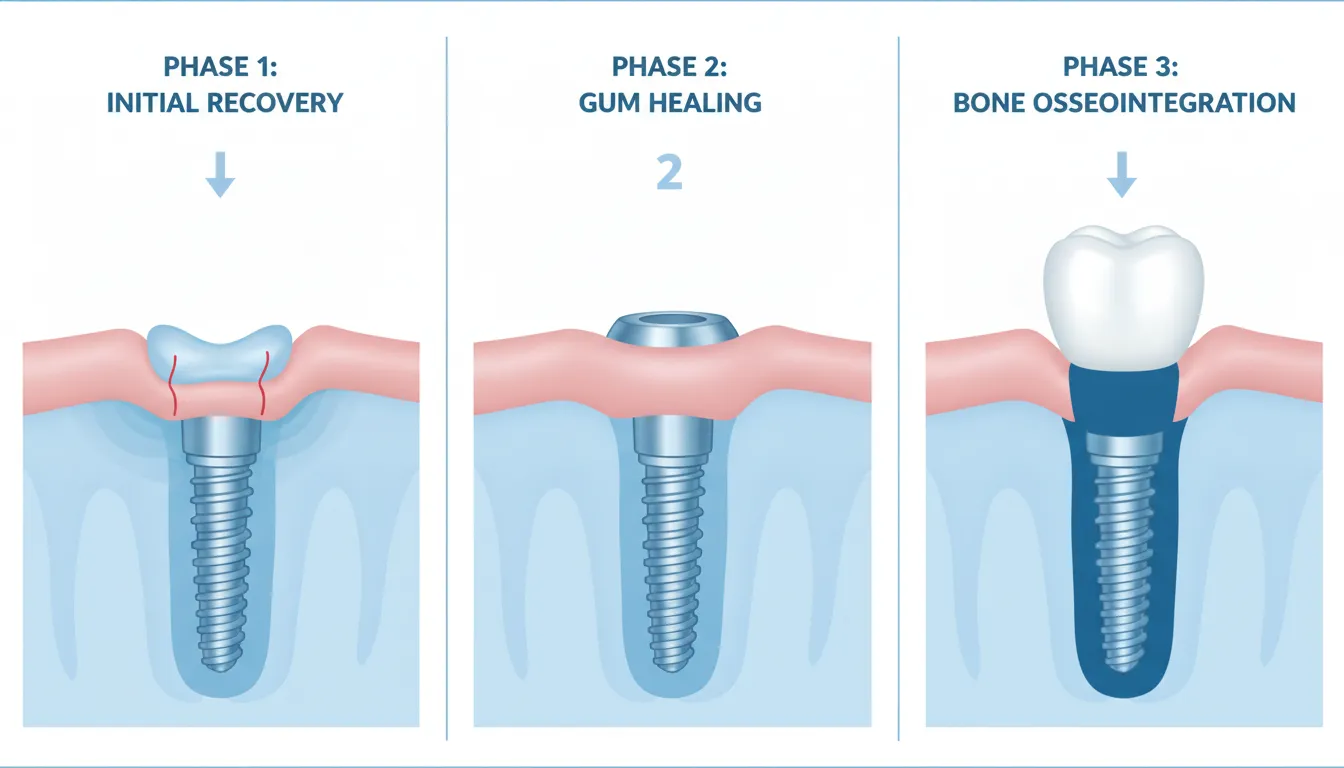
A standard dental implant recovery timeline involves three main phases and usually takes three to six months to complete. The body first recovers from surgery over a few days. Gums heal around the site over the next two weeks. The longest phase is osseointegration, where the jawbone grows tightly around the titanium post over three to six months. Creating a permanent bond that keeps the new tooth from slipping.
The process is not just about your gums feeling better. It is about how your body bonds with a new part. A dental implant procedure uses metal posts that look like screws to replace missing tooth roots. According to the Mayo Clinic, these posts provide solid support for new teeth and need healthy bone to succeed.
Three phases of healing
Healing happens in clear steps. First, you recover from the surgery itself, which takes a few days. Next, your soft tissue heals over several weeks. Last, the bone fuses with the metal post over several months. Each step is essential for ensuring your new teeth stay in place long term.
How bone bonds with the implant
The most critical phase is osseointegration. Your jawbone grows tightly around the titanium post, building a foundation that acts like a natural tooth root. Since the bone heals firmly around the metal, the implant does not slip or shift. This deep bond is what makes implants a strong and lasting choice for your smile.
Your Dental Implant Recovery Timeline: What to Expect Week by Week
A dental implant acts as a sturdy new root for your tooth. Healing follows a steady progression through clear stages. At Smile Makers Dental Center, we guide you through each phase. Most patients find the path to a new smile is straightforward when they understand the weekly milestones ahead.
Explore our tooth replacement options to see how implants compare with bridges and dentures across the full treatment timeline.
Days 1 to 3: immediate rest and recovery
The first 24 to 72 hours are the most important for your comfort. Plan for full rest during this window to help your body begin healing. Mild soreness is normal and easy to manage with basic care. Most people can return to desk work within one to three days. Resting helps control swelling and protects the surgical site.
Weeks 1 to 2: gum and soft tissue healing
During the first two weeks, your gums begin to close and heal around the post. You will need to eat soft foods during this period to avoid pain at the site. Careful oral hygiene is essential now to keep the area clean. Most patients see redness and swelling fade by the end of the second week.
Months 2 to 6: bone bonding and osseointegration
While your gums may look healed on the surface, a critical process continues below. Your jawbone must bond tightly around the metal post. This bone integration usually takes three to six months to complete. You will visit your dentist for periodic checkups to confirm the bone is firm before moving to the next step.
Final months: completing your new smile
Once the bone has fully bonded with the implant, your dentist places the custom crown that looks and functions like a natural tooth. The total journey takes a few months, but the result is a durable, lifelong solution. The Mayo Clinic confirms that this timeline ensures the new tooth can withstand the force of normal chewing.
What Should You Do in the First 24 to 72 Hours After Implant Surgery?
During the first 24 to 72 hours after dental implant surgery, focus on rest, ice therapy, soft foods, and avoiding smoking. Apply an ice pack to the outside of your face for 20 minutes on and 20 minutes off during the first 48 hours. Stick to a soft-food diet for one to two weeks. Do not use a straw for at least 72 hours, as the suction can disturb the blood clot essential for healing.
The first few days after your dental implant procedure are the most critical for setting your recovery up for success. While you may feel some soreness, the pain is typically mild and easy to manage. Most patients find that returning to light activities within a few days is safe if they follow their care plan closely.
Key recovery steps for the first three days
- Prioritize rest and calm. Plan to take it easy for the first 24 to 72 hours. Avoid heavy lifting or strenuous exercise, as these can increase blood flow and cause bleeding. Keeping your head elevated with extra pillows reduces swelling.
- Control swelling with ice. Apply an ice pack to the outside of your face near the surgical site. Use it for 20 minutes on and 20 minutes off during the first 48 hours. This is one of the most effective ways to minimize discomfort.
- Stick to a soft-food diet. Good choices include smoothies, yogurt, applesauce, and mashed vegetables. Do not use a straw for at least 72 hours. The suction can dislodge the blood clot needed for proper healing.
- Avoid smoking and irritants. Smoking restricts blood flow to the gums and significantly slows healing. Avoid spicy or very hot foods that could irritate the surgical site.
- Follow all post-operative instructions from your dental team. Your dentist will provide guidance on rinsing, medications, and activity levels. Adhering to these instructions is the best way to ensure a smooth recovery.
Keeping the surgical site protected
Your main goal during this period is to let the area rest without pressure or disturbance. According to the Mayo Clinic, solid support for new teeth depends on the bone healing tightly around the post. By being careful now, you give your body the best chance to form this strong bond. Patience in the short term leads to a tooth replacement that can last a lifetime.
What to Expect During Weeks 1 to 2 of Soft Tissue Healing
During weeks 1 to 2 after dental implant surgery, your gums close and seal around the implant post. Continue eating soft foods and using gentle salt water rinses instead of brushing the surgical site directly. Swelling and redness fade significantly by the end of week two. Most patients return to desk work within the first few days but should avoid heavy exercise for the first full week.
After the first few days of rest, your mouth enters the soft tissue healing phase. This part of the tooth replacement options journey focuses on your gums closing and healing around the implant. While the bone underneath takes longer to bond, visible gum healing typically completes within one to two weeks.
Returning to daily activities
Many people can return to desk work within one to three days after the procedure. Avoid heavy lifting or intense workouts for the first full week to prevent bleeding or discomfort. If your job involves extensive talking, consider taking an extra rest day to let the gum tissue settle. Any mild pain at this stage is usually manageable with over-the-counter medication as directed by your dentist.
Diet and oral hygiene during tissue healing
Continue a soft-food diet for one to two weeks. Gradually transition from liquids to soft solids like eggs, pasta, or flaky fish as you feel ready. For oral care, use gentle salt water rinses several times daily instead of brushing the surgical site directly. The Mayo Clinic emphasizes that your jaw needs this recovery time to heal properly around the post.
What Happens During the Osseointegration Phase?
Osseointegration is the phase where your jawbone grows tightly around the titanium implant post, creating a permanent bond that functions like a natural tooth root. This process takes three to six months to complete. Most patients feel no symptoms during this phase and return to normal eating and activity. Regular checkups at week one, month three, and month six confirm the bone is integrating properly.
After your gums heal, you enter the most important phase of recovery. Osseointegration is when your jawbone fuses with the metal post to provide a solid foundation for your new tooth. Based on the Mayo Clinic, bone healing takes several months. Committing to this timeline is essential for long-term implant success.
Our team offers prosthodontic services to monitor bone integration and prepare for your final restoration.

What osseointegration feels like
You may wonder what this deep healing feels like. In most cases, you will not experience any symptoms at all. Once the soft tissue heals in the first two weeks, you can resume your normal routine. You will eat, talk, and smile as before. However, even though you feel fine, the bone is still working hard to grip the post. Avoid placing hard pressure on the site during these months.
Regular checkup schedule
Staying on track requires a few brief visits with your dental team. We typically schedule checkups at week one, month three, and month six after surgery. These visits allow us to verify that the bone is healing as expected. Catching any issues early ensures your path to a complete smile remains smooth and safe.
Final Restoration: Receiving Your Crown After Full Healing
After several months of healing, you are ready for the best part of your dental implant recovery timeline. This phase transforms the integrated titanium post into a bright, functional smile. At Smile Makers Dental Center, our multi-specialty team manages every step within a single practice.
The abutment and your final crown
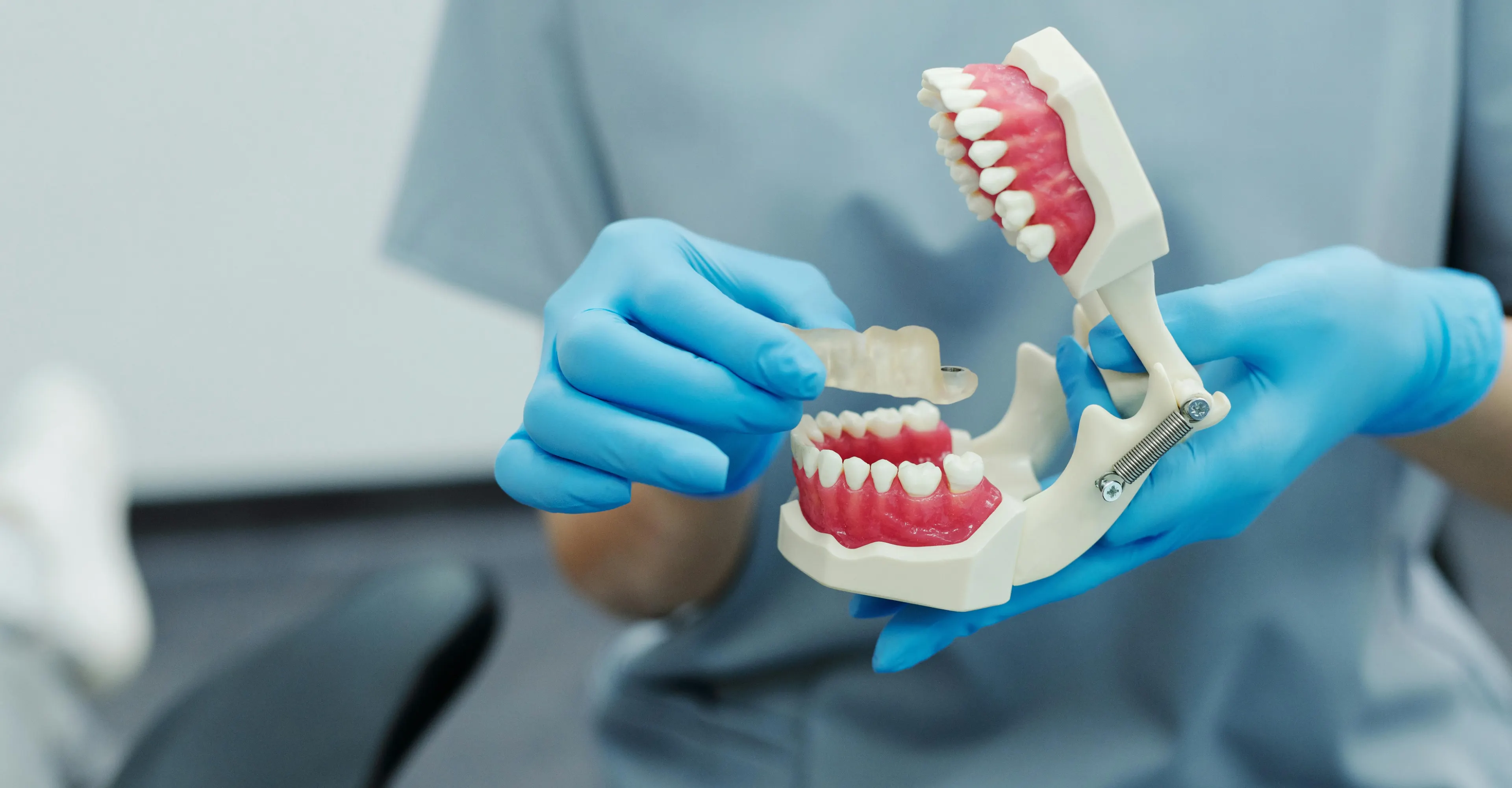
Once the post is securely bonded with your bone, your dentist attaches a small connector piece called an abutment. This component sits on top of the post and holds your new tooth. Your dentist will take a digital scan or impression of your mouth to create a crown that fits your bite precisely and matches your surrounding teeth.
This stage demonstrates why patients must wait for several months before receiving their final restoration. The healing period ensures your new tooth rests on a solid foundation. Once the laboratory fabricates your crown, you return for the final fitting. Your dentist checks your bite and confirms you are satisfied with the appearance.
Function and appearance restored
Your new tooth functions much like a natural one. The titanium post fuses with your jawbone so it does not slip or shift. This is a significant advantage compared to traditional bridges or removable dentures. Unlike natural teeth, the crown itself cannot develop decay, which helps your smile stay healthy over time.
Many patients choose implant-supported dentures when replacing multiple teeth at once. These appliances provide the same stability as individual crowns and allow you to eat and speak with full confidence.
Care within a single practice
Smile Makers Dental Center uses a multi-specialty model that keeps your entire treatment in one location. You do not need to visit multiple offices for your surgery, abutment placement, and crown fitting. This coordinated approach simplifies your recovery and saves you valuable time.
What Factors Can Affect Your Dental Implant Recovery Timeline?
Several factors influence how quickly you heal after dental implant surgery, including smoking, overall health, bone density, oral hygiene, and age. Smoking significantly slows healing and increases failure risk. Chronic conditions like diabetes can delay bone integration. Low bone density may require grafting, adding months to the timeline. Managing these factors before surgery helps keep your recovery on track.
| Factor | Effect on Recovery | Action to Take |
|---|---|---|
| Smoking and tobacco | Slows healing and raises risk of implant failure. | Stop use at least 4 to 6 weeks before surgery. |
| Chronic health conditions | Conditions like diabetes can slow bone bonding. | Manage health issues with your primary care doctor. |
| Bone density | Low density may require bone grafting before implant placement. | Get a 3D scan to evaluate bone health and volume. |
| Oral hygiene | Poor care can lead to infection at the surgical site. | Brush and floss twice daily as directed by your dentist. |
| Age and skeletal maturity | Implants require a fully developed jawbone. | Confirm skeletal growth is complete before proceeding. |
Every patient follows a unique path to a new smile. While most people heal along a standard timeline, your individual health and habits play a significant role in how long the full process takes. Planning ahead helps ensure your dental implant recovery timeline stays on course and ends successfully.
The role of bone health and grafting
Success starts with a strong foundation. To support the implant post, you must have adequate bone or be a candidate for bone grafting. If your natural bone is too thin or soft, your dentist may add grafting material to strengthen the site. This step is common but can extend the total timeline by several months while the graft heals.
Your jaw must also have stopped growing. This is why dental implants are typically recommended for adults. A fully mature jawbone provides the stable environment needed for the post to integrate successfully.
Health habits and medical history
Your daily habits can accelerate or slow your healing. For example, you should not smoke tobacco before or after your procedure. Smoking limits blood flow to your gums, which can prevent the bone from bonding with the implant. Patients who smoke face a significantly higher risk of implant failure.
General health also matters. Healthy oral tissues are essential for optimal results. Some medical conditions can slow bone healing and extend your recovery. Discuss your complete health history with your dental team when choosing a dental specialist to manage your care. They can develop a customized plan to help you heal safely and efficiently.
Frequently Asked Questions
How long does it take for dental implants to heal?
The total healing time depends on your body and overall health. Initial gum healing takes about one to two weeks. The bone integration phase, known as osseointegration, takes three to six months. According to the Mayo Clinic, full bone healing requires several months. Most patients achieve complete results within three to six months.
What helps dental implants heal faster?
You can support faster healing by resting for the first few days, sticking to soft foods, and maintaining good oral hygiene. Avoid smoking, as tobacco significantly slows bone integration. Following the guidance from your team at Smile Makers Dental Center helps you return to your normal routine sooner while staying comfortable.
How many days should you rest after dental implants?
Most patients should plan for 24 to 72 hours of rest immediately after surgery. This window allows your body to begin the repair process without added stress. Avoid heavy lifting or intense exercise during these first few days. Resting minimizes swelling and keeps you comfortable as the initial gum healing begins.
Can I eat normally after dental implant surgery?
You will need to eat soft foods for one to two weeks after surgery. Safe options include smoothies, yogurt, applesauce, scrambled eggs, and mashed vegetables. Gradually reintroduce solid foods as the surgical site becomes less tender. Avoid crunchy, sticky, or very hot foods during the initial healing phase. Do not use a straw for at least 72 hours after your procedure.
What are the signs of implant complications?
Contact your dentist immediately if you experience worsening pain after the first few days, persistent bleeding, fever, or visible swelling that does not improve. These symptoms could indicate an infection or other complication that requires prompt attention. Regular follow-up visits help catch and address issues early.
Ready to Start Your Dental Implant Journey?
Understanding your dental implant recovery timeline is the first step toward a confident, lasting smile. At Smile Makers Dental Center in Northern Virginia, our experienced team guides you through every stage of the process, from your initial consultation to your final restoration. We offer comprehensive implant care, including surgical placement, bone grafting when needed, and custom crown fabrication, all within a single practice.
Call Smile Makers Dental Center today to schedule your implant consultation and take the first step toward restoring your smile with expert care and personalized support.