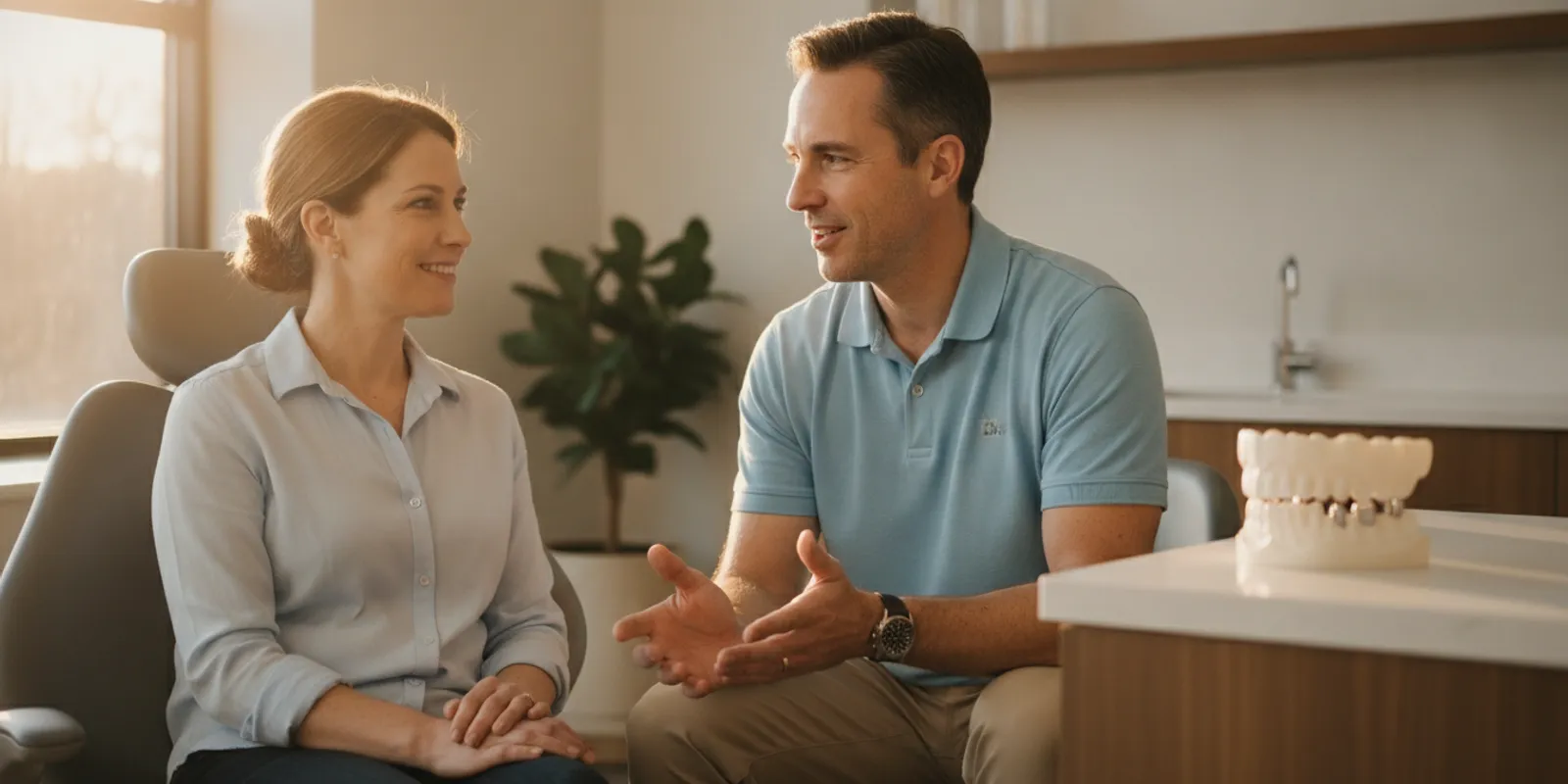



Dental implant bone graft recovery is the healing period after graft material is placed to support or rebuild bone where an implant may later be considered. Recovery differs from person to person, so your own clinician's instructions and follow-up plan should guide your care; this overview can help you know what to expect and what to ask.
Book an appointment to discuss your care
What does bone graft recovery involve?
A dental bone graft adds material to an area where bone support may need to be improved. The material and the reason for grafting vary. Some grafts are done as part of planning for a future implant, while others address a different clinical need. A graft does not mean that an implant is automatically appropriate; a dentist evaluates the area and your overall situation before discussing next steps.
Healing is a process rather than a single event. The first days are focused on protecting the treated area and managing expected soreness or swelling according to the instructions you receive. Over time, the site continues to heal, and the dental team may assess progress at follow-up visits. The exact timeline depends on the procedure, the graft, and individual healing. Ask your clinician what milestones they will use in your case rather than relying on a general calendar.
For an overview of the practice's oral surgery services, see the service information. You can also read about implant-supported tooth replacement options to understand broader implant terminology, while keeping in mind that those options are not a substitute for a personal evaluation.
What may happen during the early healing period?
People often want to know whether they will feel normal right away. The answer varies. Your dental team may explain what discomfort or swelling can be expected for your specific procedure and how to care for the area. Follow their written instructions closely, including guidance about medicines, eating, cleaning, and activities. Do not change a prescribed plan based on a general online article.
For the first part of recovery, your priorities are usually simple: keep the site protected as directed, choose foods and activities that fit your instructions, and avoid disturbing the area. If you are unsure whether an action is appropriate, contact the practice rather than guessing.
- Read your aftercare directions before leaving the office and ask for clarification about anything unclear.
- Use medications only as directed by your clinician or the medication label.
- Follow the specific instructions you receive about brushing, rinsing, and keeping the area clean.
- Choose foods that are comfortable and consistent with your care instructions.
- Keep follow-up appointments, even if the area seems to be healing without problems.
Everyday dental care remains important, but the treated site may need special handling temporarily. The practice's guide to routine dental cleaning and preventive care offers general context; your post-procedure instructions take priority during recovery.
How can you support healing at home?
Good home care begins with following the plan made for you. Instructions can differ based on where the graft was placed and the details of the procedure. Ask the dental team to explain how to clean around the site, what to do if food collects nearby, and when you can return to your usual routine.
It can help to prepare before the appointment. Arrange a comfortable place to rest, have foods on hand that fit the directions, and keep the practice's contact information accessible. If you take regular medication or have a health condition that may affect care, share that information with the dental team beforehand.
Consider keeping a short note of changes you notice. A simple record of discomfort, swelling, or questions can make it easier to describe what is happening at a check-in. Avoid repeatedly touching or inspecting the surgical area, since that may disturb it. If you are worried about a change, ask the practice for guidance.
Patients who feel nervous about dental visits may find it helpful to plan questions in advance. Smile Makers also provides information about what to expect with twilight sedation. Whether any comfort approach is suitable is a matter for a conversation with your clinician; this article does not recommend a specific option.
What factors can influence the recovery timeline?
There is no single recovery schedule that applies to everyone. The site being treated, the nature of the graft, the procedure performed, and a person's health and healing response can all matter. Your clinician can explain which factors are relevant to you and when they expect to reassess the area.
It is useful to distinguish between feeling better and being ready for a later treatment step. Symptoms may settle before the team has completed its assessment of the site. If an implant is being considered, the dental team determines when it is appropriate to discuss that next step. Avoid using reduced soreness alone as a sign that healing is complete.
| Recovery stage | What the stage is for | Useful patient action |
|---|---|---|
| Immediately after care | Protect the treated area and understand instructions | Review written guidance and ask questions before going home |
| Early healing | Follow the site-specific care plan | Use medicines and home-care steps only as directed |
| Follow-up | Allow the dental team to assess progress | Attend the visit and share changes or concerns |
| Planning next steps | Discuss whether further care is appropriate | Ask how the clinician will decide timing in your case |
The table is a planning aid, not a promise about timing. For more background on the connection between bone and implant planning, review the practice's periodontal care information and endodontic services as examples of the range of dental care questions that may be discussed across a team. Your own treatment pathway should come from the clinician evaluating you.
Request an appointment to discuss your questions
How do you prepare for the procedure and aftercare?
Recovery planning starts before you leave for the appointment. Ask what written directions you will receive and whether someone should accompany you or help afterward. The answer depends on the care planned and any medicines or comfort measures involved, so do not assume the same arrangements apply to every patient.
Before treatment, make a brief list of current medicines, supplements, allergies, and relevant health conditions. Share it with the dental team and confirm whether anything needs to be adjusted. Do not stop or change a medicine without direction from the clinician who prescribed it or the dental professional coordinating your care.
Use the visit to settle practical details. Ask whom to contact with questions, what number to use outside regular office hours, and when the first follow-up is expected. If instructions are provided verbally, ask whether you can also receive them in writing or have a support person listen with you. This can reduce the chance of forgetting a detail once you are home.
Some patients find it useful to organize their first day around rest and easy access to supplies recommended by the clinician. Prepare a place where you can relax, keep the written instructions nearby, and choose foods that match those directions. You do not need to create a complicated recovery routine; follow the clinician's specific guidance and ask before adding products or changing your usual oral-care steps.
If you are comparing possible tooth replacement approaches, the practice's prosthodontic information and dental services overview can help you identify topics to discuss. These pages provide general service context, not a recommendation about what you personally should receive.
When should you contact your dental team?
Follow the contact instructions given by your practice. If a symptom is worrying, worsening, or different from what you were told to expect, contact the dental team for advice. Seek urgent medical help for severe symptoms or an emergency. Do not wait for a routine follow-up if you believe you need prompt attention.
It can be useful to tell the practice when the procedure took place, what has changed, and whether you have followed the aftercare plan. If you have a question outside normal office hours, use the contact guidance supplied by the practice. The team can advise what next step is appropriate based on your situation.
For an authoritative overview of bone health research and educational resources, the National Cancer Institute's bone cancer resources describe their own subject area; they are not a guide to dental graft healing. Because this source does not address dental bone graft recovery, please rely on your clinician and the practice's instructions for recovery advice.
If you are uncertain whether a change is expected, describe it plainly rather than trying to diagnose its cause. Mention whether it is getting better, staying the same, or becoming more concerning. The dental team can decide whether you should continue monitoring, come in for assessment, or seek another form of urgent care.
What should you ask at a follow-up visit?
A follow-up is an opportunity to understand how the site is progressing and what the next decision points may be. Bring your questions and mention any changes since the procedure. You might ask:
- What signs of healing are you checking today?
- Which home-care instructions should I continue, and for how long?
- Are there activities or foods I should still avoid?
- When should I contact you between visits?
- If an implant is being considered, what needs to be assessed before discussing timing?
Clear answers can make recovery feel more manageable. If you are seeking a second explanation or need to arrange a visit, use the locations page to find an office, review patient forms and scheduling information, or learn about the practice's specialty services.
Frequently Asked Questions
How long does dental implant bone graft recovery take?
There is no universal timeline. The graft and procedure details, the healing site, and individual factors all affect recovery. Your clinician can describe the expected course and follow-up schedule for your case.
Does a bone graft mean I will receive a dental implant?
No. A graft may be part of planning, but it does not guarantee that an implant is appropriate or will be placed. A dental professional evaluates the area and discusses options with you.
Can I use general online advice instead of my aftercare instructions?
No. General information cannot account for your procedure or health history. Follow the instructions from your own dental team and ask them when you need clarification.
When can I return to normal eating and activities?
That depends on the instructions for your procedure and how you are healing. Ask your clinician what changes are suitable and when to make them rather than relying on a fixed schedule.
What is the next step?
Dental implant bone graft recovery is best understood as an individual healing process guided by your dental team, not a fixed timetable. If you have questions about a graft, aftercare, or possible next steps, arrange a conversation with a dental professional who can review your circumstances.