






Fluoride toothpaste children amount is a practical question with a simple starting point: use a rice-grain-sized smear for a child younger than 3 and a pea-sized amount for ages 3 through 6. An adult should dispense the paste, help with brushing, and encourage the child to spit it out. The amount is small; careful brushing matters more than making a thick foam.
How much toothpaste should children use?
The age-based guide is a useful everyday starting point. A rice-sized smear is a thin film, not a mound. A pea-sized portion is about the size of a small pea. Place the paste across the bristles rather than squeezing a long ribbon along the whole brush. These small measurements help keep toothpaste use controlled while children learn brushing skills.
| Age or stage | Amount to apply | Caregiver's role |
|---|---|---|
| Under 3 | Rice-grain-sized smear | Dispense the paste and brush or closely assist |
| 3 through 6 | Pea-sized amount | Supervise, guide brushing, and encourage spitting |
| Older child | Use an age-appropriate small amount; ask the dental team if unsure | Check technique and follow individualized advice |
Age is a guide, not a substitute for advice tailored to a child. A child who cannot reliably spit, tends to swallow paste, or has particular oral-health needs may need more hands-on support. The child's dentist can clarify the routine. For a general overview of dental services for families, see the practice service page and bring specific questions to an appointment.
The American Dental Association is a professional source for general oral-health information. Follow the toothpaste label and your dental team's directions if they differ for your child's situation.
Why does the amount matter?
Fluoride helps protect teeth from decay. At the same time, young children are still learning to spit and may swallow some toothpaste while brushing. Using a small measured quantity limits how much paste is available to swallow. It also helps teach that toothpaste is a brushing product, not a food or treat.
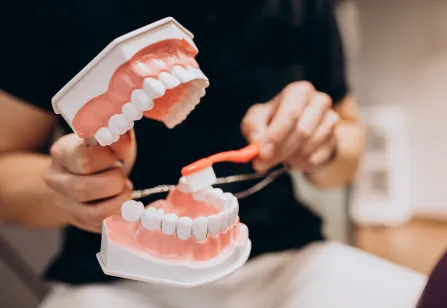
More paste does not mean cleaner teeth. A large blob can create extra foam and make it harder for a child to manage brushing, but it does not replace careful coverage of the teeth. Aim the brush along the teeth and clean the outside, inside, and chewing surfaces with gentle, repeated strokes. An adult can demonstrate the motion or take turns brushing so the child gets a chance to practice while still receiving help.
Keep toothpaste closed and stored out of a child's reach between brushings. Children may be drawn to a pleasant flavor or colorful packaging. Let an adult dispense the paste, then return the tube to storage. This simple step makes the amount more consistent and prevents unsupervised use.
How can you measure the amount in real life?
It can be hard to judge a tiny smear when a tube dispenses quickly. Set up the routine first, then use the same measuring approach each time:
- Get the brush ready before opening the tube. Have the child at the sink and the toothbrush in hand. This reduces the chance that a curious child squeezes the tube while waiting.
- Dispense the paste yourself. For a child under 3, press out a thin rice-sized smear. For ages 3 through 6, use a small pea-sized dab, not a full-length stripe.
- Place the paste on the bristles. Keep the amount visible so you can check it before brushing. If the tube releases too much, wipe off the excess rather than spreading it across the brush.
- Brush in a repeatable order. Guide the brush to the front, back, and chewing surfaces. Move to the next area only after the first has been cleaned.
- Finish with spitting practice. Give a calm reminder to spit out the remaining paste. Keep the instruction brief and avoid turning a learning moment into a struggle.
If a child is eager to squeeze the tube, make that a later skill. Let the child hold the toothbrush or choose between suitable brushes while you control the toothpaste. When the child is ready to practice dispensing, supervise closely and correct the amount each time. If paste often lands in a large blob, consider guiding the child's hand or dispensing it yourself until control improves.
How should caregivers support brushing at different ages?
Children develop brushing ability gradually. A child may be able to hold a brush before being able to clean every tooth surface well. Stay involved and judge the routine by what the child can do consistently, not just by age or confidence. A quick adult check can help spot areas the child routinely misses.
Babies and toddlers
Ask the child's dental professional when to begin brushing and which routine fits the child's teeth and development. Once brushing with toothpaste is part of the routine, use the recommended tiny smear for children under 3. Sit or stand where you can see the teeth, apply the paste yourself, and guide the brush. A short, calm session may feel easier than trying to complete every step while a toddler is upset. If the child turns away, pause, reset, and try again with a steady, reassuring approach.
Preschoolers
Children ages 3 through 6 can practice brushing with a pea-sized amount while an adult supervises. Give one simple direction at a time: brush the front, turn to the back, then clean the chewing surfaces. A caregiver can check the result and help with places the child misses. Encourage spitting, but keep the focus on learning rather than perfection. You can let the child begin and then take a turn to finish the areas that need attention.
School-age children
Older children may take a larger role, but an occasional check can confirm they are brushing thoroughly and using a modest amount. If the child still swallows toothpaste or has difficulty reaching certain areas, continue helping and discuss it at a visit. Personalized guidance is especially useful when a child has recurring dental concerns or a care plan that makes general age guidance less clear. Families can also review information about children's orthodontic evaluations if they have questions about another aspect of oral care.
What should a complete brushing routine include?
Toothpaste amount is one part of the routine. A predictable sequence can make it easier for a child to brush consistently and for a caregiver to notice when help is needed:
- Choose a comfortable child-sized toothbrush. A brush that fits the child's hand and mouth is easier to guide toward back teeth.
- Brush at regular times. Link brushing to familiar parts of the day, such as getting dressed in the morning and preparing for sleep.
- Work through every surface. Use the same order—outside, inside, chewing surfaces—so the same areas are not skipped each time.
- Use a gentle touch. Small controlled movements are easier to manage than hurried scrubbing.
- Spit rather than swallow. Remind the child to spit out remaining toothpaste after brushing.
- Supervise and finish where needed. Adults can help until the child reliably cleans all surfaces independently.
Children often respond to routines that feel predictable. A short song, a timer, or choosing a toothbrush can make brushing more engaging. These ideas support cooperation, but should not turn toothpaste into a reward or encourage using extra paste. Keep the measured amount the same, even when the child is excited or wants to brush independently.
It can help to divide responsibility clearly: the child holds the brush and practices, while an adult handles the toothpaste and checks the result. Later, the adult can let the child try dispensing a measured amount under supervision. If mornings are rushed, keep the brush and tube in a consistent place and use a simple order. At bedtime, a calmer pace may allow extra time for practice. The useful routine is the one your family can repeat while keeping an adult involved as needed. Consider two common situations. If a child brushes only the front teeth, use a simple route that starts on one side, travels across the front, then moves to the inner and chewing surfaces before switching sides. The caregiver can name each area as the child reaches it, then check the back teeth. If a child rushes because brushing feels boring, keep the same short sequence and offer a choice about the toothbrush or song, not about skipping a surface or adding extra toothpaste. These small adjustments give children a role without leaving the amount or coverage to guesswork.
It can also help to notice the moment when the child needs support. If paste is swallowed before brushing begins, place the brush in the adult's hand until the paste is on the bristles and the child is ready. If the child can brush but loses focus halfway through, let them complete one section and then guide the rest. Keep corrections neutral: “Let's get the back teeth too” gives a clear next step without criticism. A consistent adult check makes it easier to adjust help as the child's coordination and spitting skills change.
For more family-care context, parents can read why families may choose a family dentist. Families preparing for a visit can review patient information and forms and find Smile Makers office locations. These resources do not replace advice about a child's specific routine, but can help with planning questions.
What if a child swallows toothpaste?
A small amount swallowed during an ordinary brushing session is not the same as a child eating toothpaste directly from the tube. If a child swallows a large quantity, or you do not know how much is missing, contact Poison Control or seek prompt professional guidance. Do not try to make the child vomit. Keep the toothpaste package available so you can share the product name and any relevant details with the person helping you.
If your child repeatedly swallows toothpaste, tell the dental team. They can talk through supervision, positioning, and ways to practice spitting. Until the child can spit consistently, stay close, apply the paste yourself, and keep the tube out of reach outside brushing time. If you are concerned after a specific ingestion, seek immediate advice rather than waiting for a routine visit.
Spitting can be practiced as a separate skill. If it is appropriate for the child's age and ability, demonstrate how to spit into the sink and use brief, neutral reminders. Avoid filling the mouth with water or paste; the goal is a manageable routine. If practice is frustrating or the child has developmental or sensory needs, ask the dental team for another approach. A child who cannot spit yet still needs calm, close adult supervision and an amount appropriate to age and professional guidance.
When should you ask a dentist for individualized advice?
Ask for guidance if you are unsure when to begin using toothpaste, how much to use, or whether your child is swallowing too much. It is also reasonable to ask when brushing is difficult, when the child cannot spit, or when an existing care plan makes general age guidance less clear. Bring the toothpaste tube or a photo of its label if you want help reviewing what you use at home.
Prepare a few practical details before the conversation: your child's age, how often brushing happens, whether the child spits, and which part of brushing is difficult. That context helps the dental team discuss a routine that fits your family. You can also ask how to position the brush, how much adult help is appropriate, and what signs would show that the child is ready to do more independently.
A useful example: if a preschooler brushes eagerly but swallows paste, explain that the child can manage the brush but has not mastered spitting. Ask how to keep the child involved while an adult controls the amount and completes the brushing. If a toddler resists the brush, describe when the resistance happens and what has helped the child settle. Specific observations make the conversation more practical than simply asking whether the child is brushing “well.”
For visit planning, review patient forms and scheduling information, or learn about Smile Makers. If you are ready to talk with the practice, use the appointment page.
Frequently asked questions
Can a baby use fluoride toothpaste?
Ask your child's dental professional about starting a brushing routine. When toothpaste is used for a child under 3, the commonly recommended amount is a thin smear about the size of a grain of rice, applied by an adult.
When should I switch to a pea-sized amount?
The general age guide is a pea-sized amount from age 3 through 6. Continue to supervise, guide brushing, and encourage spitting rather than swallowing.
Does more toothpaste clean better?
No. Use the measured amount for your child's age and focus on brushing all tooth surfaces. Extra paste is not a substitute for careful technique.
What if my child cannot spit yet?
Stay with your child, dispense the toothpaste yourself, and ask the dental team for advice suited to the child's age and ability. Keep the tube stored out of reach between brushings.
Should children rinse after brushing?
Follow your dental professional's instructions and the product label. If you are uncertain what to do for your child, ask at a dental visit rather than changing the routine based on a general rule.
What is the next step?
Measure a small amount, stay involved during brushing, and ask your child's dental team whenever the routine or your child's ability to spit leaves you unsure.


