


The best sleep apnea oral appliance is not one specific brand or design for everyone. For many adults who have been diagnosed with obstructive sleep apnea, a custom-fitted mandibular advancement device may be an option to discuss with a sleep physician and a qualified dentist. The right choice depends on your diagnosis, health, jaw and dental condition, comfort, and how well the device works for you over time. An oral appliance is not a substitute for a sleep evaluation or follow-up testing.
Schedule a conversation about your sleep concerns
What does "best sleep apnea oral appliance" mean?
When people search for the best sleep apnea oral appliance, they often want a simple product recommendation. In practice, "best" is better understood as the device and care plan that are appropriate for a particular person and can be used and monitored safely. A device that feels comfortable but does not adequately address the sleep problem is not a good fit. A device that may work in theory but is difficult to wear consistently may not be a practical fit either.
Sleep apnea is a medical condition that requires evaluation by a qualified clinician. This article focuses on general information about oral appliances, not diagnosis or personalized treatment advice. If a clinician suspects sleep apnea, a sleep evaluation can establish what is happening and guide the treatment discussion. A dentist can then assess whether an oral appliance is appropriate for your mouth and jaw and coordinate care with the sleep physician.
Research reviews describe oral appliances as one treatment approach for obstructive sleep apnea, while also noting that treatment choices and results vary. A review of oral appliance treatment discusses differences between oral appliance therapy and CPAP, including CPAP's greater reduction of measured sleep apnea parameters in head-to-head trials; patient preference and actual use also matter in real-world decisions. (Review of oral appliance treatment for obstructive sleep apnea.)
How do oral appliances work for sleep apnea?
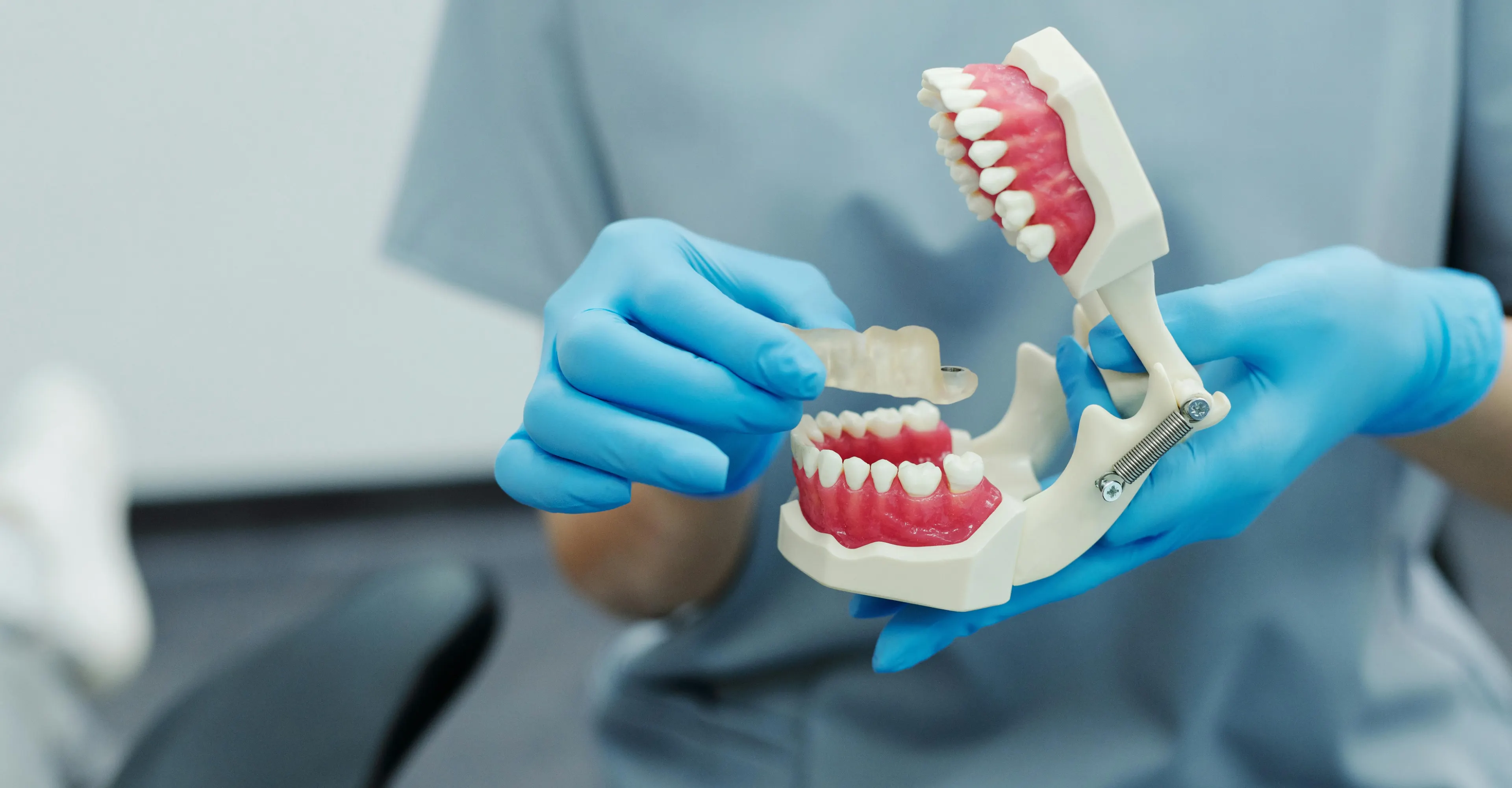
A commonly used sleep apnea oral appliance is a mandibular advancement device, or MAD. It is worn in the mouth during sleep and is designed to hold the lower jaw slightly forward. That position may help maintain space in the upper airway for some people with obstructive sleep apnea. A dentist evaluates fit and makes adjustments; the device is not simply a standard sports mouthguard or a one-size-fits-all product.
Some devices are designed to hold the tongue forward rather than reposition the lower jaw. Your clinician can explain whether a specific design is relevant to your situation. The phrase "oral appliance" covers more than one style, so it is useful to ask what a proposed device is intended to do, how it will be fitted, and how the care team will assess whether it is helping.
Oral appliance therapy is different from positive airway pressure treatment, commonly called CPAP. CPAP uses a machine and mask to deliver pressurized air during sleep. These approaches have different equipment, routines, and considerations. A research review notes that CPAP is more effective than oral appliances in reducing sleep apnea measures in study settings, while oral appliances may be preferred by some patients. That is one reason the best option should be discussed with a sleep clinician rather than selected from an online list. (Review of oral appliances for sleep-disordered breathing.)
For background on the condition itself, see our guide to what sleep apnea is and the article on possible causes and risk factors. Those resources provide general education; they cannot determine whether you have sleep apnea or which therapy is right for you.
Which factors help determine whether a device is a good fit?
There is no single feature that makes an appliance the best choice for every patient. An evaluation should consider clinical information as well as practical fit. The following topics can help you prepare for a discussion with the sleep physician and dentist.
- Your sleep evaluation: The diagnosis and findings from your sleep assessment guide whether an oral appliance is appropriate. Share relevant reports with the treating clinicians, and ask what follow-up will be used to assess the treatment.
- Your dental and jaw health: Teeth, gums, bite, jaw comfort, and existing dental work can affect whether a device can be fitted and used. The dentist will assess your mouth rather than relying on a general online checklist.
- Comfort and wearability: A device must be tolerable enough for you to use as directed. Ask what adjustment visits may involve and whom to contact if the appliance feels uncomfortable or seems to affect your bite.
- Fit and adjustability: A custom-fitted device is made for the individual mouth, and some designs can be adjusted by the clinician. Ask how fit is checked and whether changes are made gradually under professional guidance.
- Coordination and monitoring: The dentist and sleep physician each have a role. Ask who coordinates care, what objective follow-up is planned, and what to do if symptoms continue.
- Your daily routine and preferences: Consider travel, cleaning, storage, and whether you can follow the recommended wear schedule. Be candid about what is realistic for you.
It can help to separate a device's advertised features from the care plan around it. For example, an adjustable design may allow a clinician to make changes, but adjustability by itself does not establish that the device is suitable or effective for you. Ask who will make any changes, how you will report discomfort, and how the sleep clinician will determine whether further adjustment or a different approach is needed. Avoid self-adjusting the appliance or treating a product description as a clinical assessment.
Consider your starting point, too. Someone who has already tried CPAP and has questions about tolerability should explain those experiences to the sleep clinician rather than stopping treatment on their own. Someone newly diagnosed may need a clear comparison of appropriate options. In either case, tell the clinicians whether comfort, travel, equipment, or follow-up matters most to you. That context helps them address practical concerns while keeping treatment monitoring central.
A review of oral appliance treatment discusses patient preference alongside measured treatment effects and reinforces why an individual's experience is part of the decision, not a replacement for clinical assessment. (Position papers on oral appliances and sleep disorders.) If you have jaw discomfort or questions about dental suitability, raise those concerns before starting a device rather than trying to adjust or modify one yourself.
How do oral appliances compare with other options?
The table below is a starting point for questions, not a recommendation. The sleep clinician can explain which options are clinically appropriate based on your evaluation. Treatment availability and suitability vary by person.
| Option | How it is used | What to ask about |
|---|---|---|
| Custom mandibular advancement device | A dental appliance worn during sleep that positions the lower jaw forward. | Is this appropriate for my diagnosis and dental health? How will it be fitted, adjusted, and checked? |
| Other oral appliance designs | Some devices use a different approach, such as positioning the tongue. | Is this design suitable in my case? What follow-up will show whether it is helping? |
| CPAP or another prescribed positive airway pressure approach | A machine and mask deliver pressurized air during sleep. | What are the expected benefits, setup steps, and ways to address comfort or adherence concerns? |
| Other clinician-directed care | Depending on the evaluation, the clinician may discuss other treatment or supportive measures. | Which options are appropriate for my specific findings, and how will they be monitored? |
Published reviews report that CPAP can reduce measured obstructive sleep apnea parameters more than oral appliances, but some patients prefer an oral appliance. Preference alone does not establish that a device is adequately treating sleep apnea. Discuss both effectiveness and the likelihood that you can use a recommended treatment as directed. Your care team can explain how these considerations apply to you.
One useful comparison is to ask what the routine would look like in a typical week. With an oral appliance, ask about insertion, cleaning, storage, replacement or repair procedures, and the schedule for dental and sleep follow-up. With CPAP, ask how equipment setup, mask comfort, cleaning, and support are handled. The purpose is not to rank one routine as universally easier, but to identify questions that may affect your willingness and ability to follow the plan. Share barriers early; clinicians may be able to discuss reasonable next steps or alternatives.
Smile Makers offers dental care related to TMJ and sleep apnea services. A dental appointment can address dental questions and next steps, but sleep apnea evaluation and treatment planning should be coordinated with the appropriate medical provider. You can also review the practice's broader dental services and care team information.
Book an appointment to discuss dental questions
What should you expect when exploring oral appliance therapy?
The exact process depends on the clinicians involved and your needs. These steps describe a common decision pathway, not a guarantee that an oral appliance will be recommended.
- Start with a medical sleep evaluation. If you have concerns about sleep apnea, talk with a qualified medical professional. A clinician can determine whether sleep testing is appropriate and interpret the results. Do not use an over-the-counter device as a way to diagnose or rule out a sleep disorder.
- Review the findings and options. Ask the sleep physician what the evaluation shows, which treatments may be suitable, and whether dental appliance therapy should be considered. If you already use a treatment, explain what is and is not working for you.
- Have your dental and jaw health assessed. A dentist can examine your teeth, gums, bite, and jaw and discuss whether an oral appliance may be feasible. Bring your sleep evaluation information and a list of questions or current concerns.
- Discuss the device, fit, and care. If the care team recommends a dental appliance, ask how it will be selected and fitted, how to use and clean it, and what symptoms or fit changes to report. Follow the clinician's instructions; do not bend, trim, or otherwise alter the appliance yourself.
- Complete follow-up. Follow the sleep physician's plan for checking the treatment response. Do not assume that a quieter night or a change in snoring proves that sleep apnea is controlled. The clinician can tell you whether additional assessment is needed.
When discussing the plan, confirm who owns each next step. Ask whether the dentist will share information with the sleep physician, whether you need a separate follow-up, and whom to contact about soreness. Keep copies of the sleep evaluation, treatment recommendation, and follow-up instructions. If you are unsure whether a symptom needs attention, ask the treating clinician rather than waiting.
If you are trying to understand the role of an oral device versus a general mouthguard, our article about a sleep apnea mouth guard offers additional background. A standard store-bought mouthguard is not automatically equivalent to a professionally selected and fitted sleep apnea appliance.
What questions should you ask before choosing an appliance?
Bring practical questions to your appointments. Clear answers can help you understand the recommendation and know how care will be coordinated.
- What did my sleep evaluation show, and what does it mean for the options I can consider?
- Why are you recommending this approach for me rather than another option?
- Is my dental and jaw health suitable for an oral appliance right now?
- What kind of device are you proposing, and how will it be fitted and adjusted?
- How should I clean, store, and travel with the device?
- What should I do if it causes soreness, changes how my teeth meet, or is hard to wear?
- Which clinician should I contact with questions, and how will my dentist and sleep physician communicate?
- How and when will we evaluate whether the treatment is effective?
- What is the plan if the device is not comfortable or the follow-up assessment shows that more care is needed?
Make the conversation specific by sharing a real-life concern. Ask about storage if you travel, jaw considerations if you have discomfort, or next steps if a previous routine was difficult to follow. Concrete examples help clinicians address practical barriers while keeping the plan grounded in your evaluation.
These questions keep the focus on both comfort and appropriate monitoring. A device should not be judged only by its appearance, advertised features, online reviews, or a promise of a particular result. Avoid choosing a treatment based solely on a product listing or another person's experience.
How can you prepare for a dental conversation?
A little preparation can make an appointment more useful. Write down what prompted your concern, the questions you want answered, and any information from a sleep evaluation or current care plan that you can share. Mention dental sensitivity, jaw symptoms, dental work, or difficulties using any existing sleep equipment. This does not establish a diagnosis; it gives the clinician context for a careful discussion.
It may also help to note your priorities. For example, you may want to understand whether an appliance is an option, what wearing it involves, or how follow-up works. If you are unsure which office is convenient, see Smile Makers locations. To learn more about the practice's tools and approach to dental care, visit the technology page.
Sleep-related symptoms can have different causes, and dental care alone cannot establish whether a person has sleep apnea. If you have not been evaluated, ask a qualified medical professional what next step is appropriate. If you have already been diagnosed, keep your sleep clinician involved when considering any change to treatment.
Schedule an appointment to discuss your questions
Frequently Asked Questions
Is a custom sleep apnea oral appliance better than an over-the-counter mouthguard?
They are not automatically interchangeable. A sleep apnea appliance should be considered in the context of a clinical evaluation and, when appropriate, fitted and managed by qualified professionals. A general mouthguard is not a way to diagnose or treat sleep apnea without guidance. Ask your dentist and sleep physician what device, if any, fits your situation.
Can an oral appliance replace CPAP?
Do not stop or replace a prescribed treatment without discussing it with your sleep physician. Oral appliances and CPAP work differently, and research reviews report different effects on measured sleep apnea outcomes. The clinician can explain whether an oral appliance may be appropriate and what monitoring would be needed.
How do I know if an oral appliance is working?
Comfort or a change in snoring alone cannot confirm that sleep apnea is adequately managed. Follow the plan from your sleep physician, who can determine what follow-up assessment is appropriate. Tell the care team about ongoing concerns or difficulty using the device.
Who should I see about a sleep apnea oral appliance?
Start with a qualified medical professional for evaluation of possible sleep apnea. If an oral appliance is being considered, a dentist can assess your dental and jaw health and coordinate with the sleep physician. Smile Makers can discuss dental questions and appointment options, but an online article cannot provide a diagnosis or individual treatment recommendation.
The best sleep apnea oral appliance is the one selected through appropriate medical and dental guidance, fitted to your needs, and followed by a plan to assess its use and effectiveness. If you have questions about dental suitability, schedule a conversation with the Smile Makers team and keep your sleep clinician involved in decisions about care.