



When you search online for how much does a full set of teeth implants cost, you’ll see a huge range of numbers, from twenty thousand to nearly one hundred thousand dollars. That massive gap can be confusing and more than a little intimidating. The truth is, the cost of a full smile restoration is not a one-size-fits-all number; it’s a reflection of a completely personalized treatment plan. Your final investment depends on everything from your jawbone health and the materials used to your dentist’s specific expertise. Our goal is to demystify these numbers for you, breaking down exactly what goes into the cost so you can feel informed and confident as you plan for your new smile.
Key Takeaways
- Your total cost depends on your custom plan: The final price for full mouth implants is not a single number; it's based on your specific treatment, including the type of implants you choose, the materials used, and whether you need procedures like bone grafting first.
- Explore different systems to fit your budget: A full smile restoration is more accessible than you might think. Solutions like implant-supported dentures and All-on-4 offer the stability of implants at a more moderate price compared to replacing every tooth individually.
- Create a payment strategy that works for you: You can make treatment manageable by combining resources like partial insurance coverage, third-party financing, and in-house payment or discount plans to cover the investment in your smile.
What Are Full Mouth Dental Implants?
If you're looking for a way to replace all of your teeth, full mouth dental implants offer a modern and reliable solution. Think of them as a complete smile restoration. Unlike traditional dentures or bridges that rest on your gums, implants are surgically placed into your jawbone, acting as artificial tooth roots. This creates a strong, stable foundation for your new teeth.
Many people find them to be a more lasting and comfortable choice than removable options. Because they integrate with your bone, they help preserve your facial structure and prevent the bone loss that often happens with missing teeth. This approach gives you a smile that not only looks natural but also feels and functions like your own teeth, allowing you to eat, speak, and laugh with confidence.
Implants vs. Implant-Supported Dentures
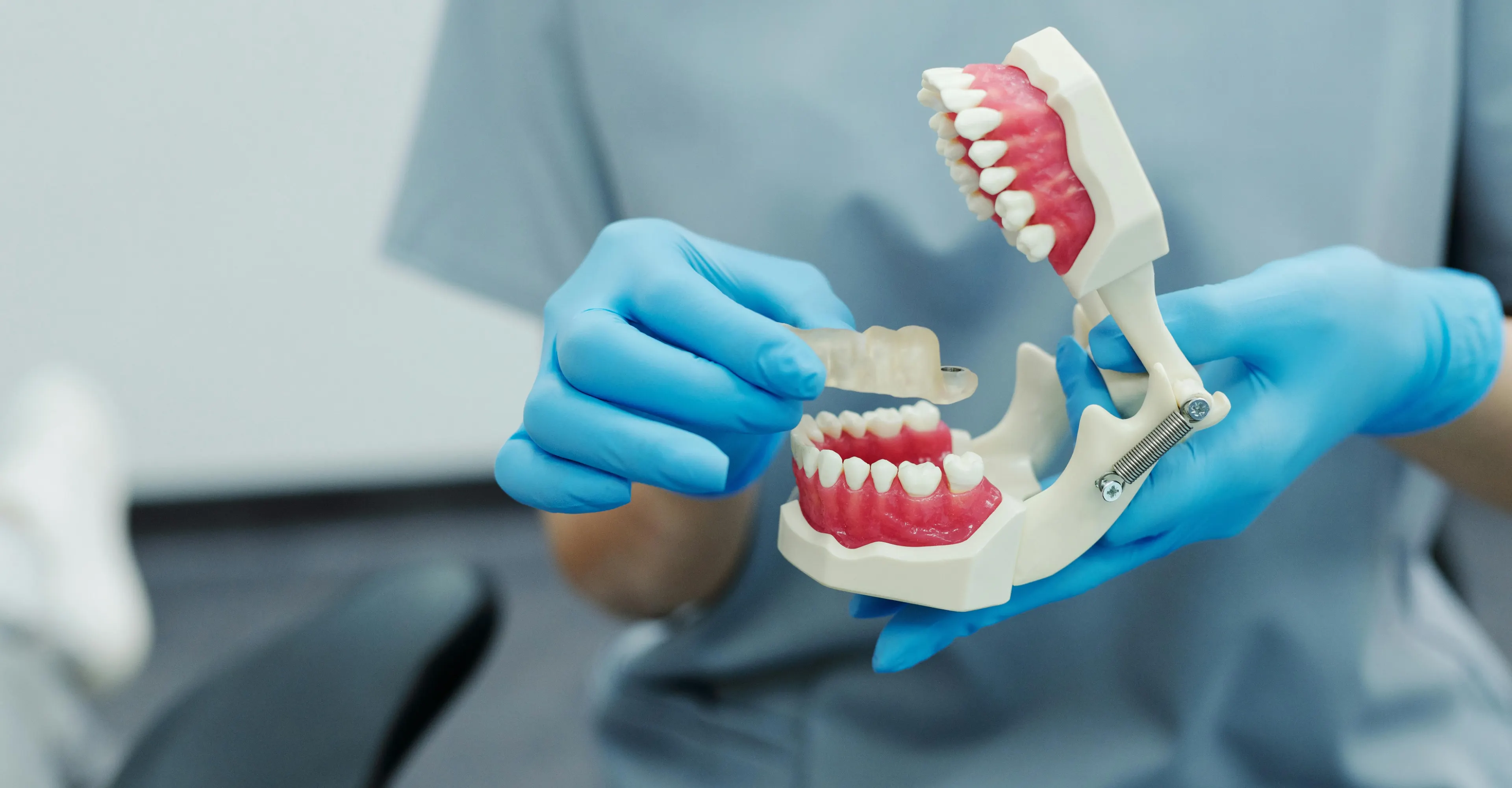
When you hear "full mouth implants," it can mean a couple of different things. The first option is a set of fixed, permanent teeth that stay in your mouth around the clock. These are often called a full arch bridge. The second option is implant-supported dentures, sometimes known as snap-on dentures. These dentures securely snap onto implants for excellent stability but can be removed for cleaning.
Implant-supported dentures are a fantastic middle ground, offering much more stability and comfort than traditional dentures without the cost of replacing every single tooth individually. Our team can walk you through all the specialized treatments we offer to find the perfect fit for your needs and lifestyle.
Are Full Mouth Implants Right for You?
Deciding on full mouth implants is a big step, but it's also a significant investment in your long-term oral health. With the right care, dental implants can last a lifetime, making them a truly permanent solution. The best way to know if they're the right choice is to consider your goals. Are you looking for a hassle-free option that feels completely natural? Do you want to stop worrying about loose dentures or dietary restrictions?
Understanding your options is key to making a smart choice for your health and budget. The only way to get a clear picture of what will work for you is to have a conversation with a dental professional. You can book an appointment with us to discuss your specific situation and create a personalized treatment plan.
How Much Do Full Mouth Dental Implants Cost?
Let's talk about the number one question on everyone's mind: the cost. Investing in a full set of dental implants is a significant decision for your health and your finances. The final price tag isn't a simple, one-size-fits-all number. It depends on your specific needs, the materials used, and even where your dentist's office is located. Understanding these variables will help you get a clearer picture of what to expect.
Breaking Down the Average Cost
When you start researching, you'll see a wide range of prices. Generally, a full mouth of dental implants can cost anywhere from $17,000 to $90,000. This is a huge range, so let's break it down. A fixed, full-arch bridge (where all the teeth in your upper or lower jaw are replaced as one unit) typically costs around $20,000 per arch. For implant-supported dentures, which snap onto the implants for stability, the average is closer to $8,300 per arch. If you're replacing every single tooth individually, the cost can be higher. These figures give you a starting point for planning your dental care.
How Location Affects the Price
You might not think about it, but where you live plays a big role in the cost of dental work. A dental practice in a major city often has higher overhead costs (like rent and staff salaries) than one in a smaller town. Because of this, you'll likely see higher prices for implants in dense urban areas. Here in Northern Virginia, costs can vary between different communities. That's why it's a good idea to get a personalized quote from a practice in a location that's convenient for you. Having multiple office locations can make it easier to find expert care that fits your budget and your life.
What Factors Influence the Final Cost?
When you see an advertised price for full mouth dental implants, it’s usually just a starting point. The final cost is unique to your specific dental needs and treatment plan. Think of it less like buying a product off the shelf and more like a custom solution for your smile. Several key elements come together to determine your total investment, from the materials used to the complexity of your procedure. Understanding these factors will help you have a more productive conversation with your dentist and feel confident in the treatment plan you build together.
Your Dentist's Location and Experience
Where your dental office is located plays a role in the overall cost. Practices in larger metropolitan areas often have higher overhead expenses, which can be reflected in their pricing. At Smile Makers, we have six convenient locations across Northern Virginia, allowing us to serve a wide community. Beyond geography, the experience of your dental team is a significant factor. A highly skilled prosthodontist or oral surgeon who specializes in complex implant cases brings a level of expertise that is essential for a successful, long-lasting outcome. This experience is a critical part of the value you receive.
Implant Materials and Quality
Not all dental implants are created equal. The type and quality of the materials used for the posts (the part that goes into the jawbone) and the final crowns will affect the price. For example, traditional titanium implants are known for their strength and biocompatibility and have been the industry standard for decades. Newer options, like zirconia, are prized for their tooth-like color and are a great choice for patients with metal sensitivities, though they often come at a higher price point. The quality of the implant materials is directly linked to their durability and appearance, so it’s an important topic to discuss with your dentist.
Additional Procedures You Might Need
For many patients, the implant journey involves more than just placing the posts. Your jawbone needs to be strong and dense enough to support the implants for the long term. If you’ve experienced bone loss, you might need a preparatory procedure like a bone graft to build up the area. Other common treatments include sinus lifts (for upper jaw implants) or tooth extractions to remove any remaining unhealthy teeth. These necessary steps ensure a solid foundation for your new smile and will be factored into your total treatment cost. Our team handles a wide range of specialized dental services to make sure your care is seamless from start to finish.
Your Full Mouth Implant Options (and Their Costs)
When it comes to replacing a full set of teeth, you have several excellent options. Each one comes with its own set of benefits, procedural differences, and, of course, costs. Understanding these choices is the first step toward finding the perfect fit for your smile and your budget. Let's look at the most common full mouth implant solutions and what you can expect to invest in each.
All-on-4® Implants
All-on-4® implants are a great solution for replacing an entire arch of teeth, top or bottom. As the name suggests, this technique uses just four titanium implants that are strategically placed to support a full, permanent denture. It’s a popular choice because it’s so efficient and can often provide you with a beautiful new smile on the same day as your procedure. The cost of full mouth dental implants using the All-on-4® method typically falls between $24,000 and $50,000 for a complete set. This approach often minimizes the need for bone grafting, which can also help keep the overall treatment time and cost down.
All-on-6 Implants
Similar to the All-on-4® concept, All-on-6 implants use six implants per arch instead of four. This option is often recommended for patients who need a bit more stability and support, especially if they have lower bone density. The two additional implants help distribute biting forces more evenly across the jaw, ensuring a strong and durable foundation for your new teeth. The price for an All-on-6 restoration can range quite a bit, from $17,000 to $90,000. This wide range reflects differences in case complexity, the specific materials used for the final teeth, and any additional procedures required to prepare your jaw for the implants.
A Full Set of Individual Implants
If you're looking for the most lifelike tooth replacement, a full set of individual implants is the gold standard. This approach involves placing one implant for nearly every missing tooth, each topped with its own crown. It’s the closest you can get to replicating the function and feel of natural teeth. Because this method is the most comprehensive, it also comes with the highest price tag. The average cost of dental implants for a full mouth reconstruction using individual implants generally ranges from $60,000 to $90,000. While it's a significant investment, the results are incredibly stable, long-lasting, and easy to care for.
Implant-Supported Dentures
Implant-supported dentures, sometimes called snap-on dentures, offer a great middle ground between traditional dentures and fixed implants. This option uses a few implants (typically two to four) to anchor a custom-made denture that you can remove for cleaning. The implants provide excellent stability, so you don't have to worry about your dentures slipping or using messy adhesives. It’s a more affordable way to get the benefits of implant technology. According to a full mouth dental implants cost guide, you can expect to pay around $8,289 per arch, with prices typically falling between $7,628 and $13,297. This makes it an accessible choice for many patients.
Will Insurance Cover Full Mouth Implants?
Figuring out the financial side of full mouth implants can feel like a huge hurdle, but you don't have to do it alone. One of the biggest questions we hear is about insurance. While it’s a common belief that dental insurance won’t touch the cost of implants, that’s not always the case. Many plans offer some level of coverage, but the details depend entirely on your specific policy.
The key is to understand exactly what your plan covers before you begin treatment. This involves a little bit of homework, like calling your insurance provider and reviewing your benefits booklet. Our team is also here to help you make sense of your coverage and provide a detailed cost estimate so you can plan with confidence.
Understanding Your Coverage Limits
It's true that most dental insurance plans won't pay for the entire cost of full mouth implants. However, many will provide partial coverage, which can significantly reduce your out-of-pocket expenses. Your plan might cover specific parts of the process, like the tooth extractions or the final crowns that attach to the implants. To find out for sure, you’ll need to contact your insurance company directly. Ask them for a "predetermination of benefits" after we create your treatment plan. This document will outline exactly what they expect to pay. If your coverage is limited, our Loyalty Discount Plan can be a great alternative for making treatment more affordable.
Medical vs. Dental Insurance
Sometimes, your medical insurance might play a role, especially if your tooth loss was caused by a medical condition, an accident, or a congenital defect. In these situations, the procedure may be considered medically necessary, and your medical plan could cover a portion of the costs. Dental insurance, on the other hand, typically views implants as a dental procedure. It’s always a good idea to check with both your medical and dental insurance providers. We can help you gather the necessary documentation to submit claims to either carrier, ensuring you get the maximum benefit you’re entitled to.
Annual Maximums and Waiting Periods
When you review your dental insurance policy, there are two key terms to look for: annual maximum and waiting period. The annual maximum is the total amount your plan will pay for dental care within a single year. For a major procedure like full mouth implants, it's easy to reach this limit. A waiting period is the time you must be enrolled in a plan before you’re eligible for certain benefits, particularly for major restorative work. Understanding these details will help you time your treatment and budget effectively. The best way to get clear answers is to book a consultation so we can review your specific needs and help you with your insurance.
How Can You Pay for Full Mouth Implants?
Seeing the price tag for full mouth implants can feel overwhelming, but don't let it stop you from exploring your options. A healthy, confident smile is a worthwhile investment, and there are many flexible ways to manage the cost. Most dental practices understand that this is a significant financial decision and offer several pathways to make your new smile a reality. Let's walk through the most common payment solutions so you can find the one that works best for your budget.
In-House Payment Plans
One of the most direct ways to manage costs is through an in-house payment plan. We believe quality dental care should be accessible, which is why we offer options to help spread out the expense of your treatment over time. Instead of paying one lump sum, you can make smaller, more manageable monthly payments. For patients without dental insurance, our Loyalty Discount Plan provides reduced fees on many services, making your overall treatment more affordable. Always ask our team about the payment plans available, as we can work with you to create a financial arrangement that fits your needs.
Third-Party Financing and Healthcare Credit
Many patients use third-party financing companies that specialize in healthcare expenses. Services like CareCredit function like a credit card specifically for medical and dental costs. These companies often provide flexible repayment terms, sometimes extending up to several years, which can significantly lower your monthly payment. For qualified applicants, some plans even offer introductory 0% APR periods, meaning you won't pay any interest if you pay off the balance within the promotional timeframe. This is a popular and effective way to finance your dental implants without delaying your treatment.
Personal Loans and Savings
If you prefer a more traditional route, using personal savings or securing a personal loan from a bank or credit union are also great options. A personal loan may offer a competitive interest rate and gives you the funds upfront to pay for your procedure. You then simply make regular payments back to the lender. Of course, using your savings means you avoid interest and monthly payments altogether. The best first step is to book a consultation with our team. We can provide a detailed cost breakdown and help you explore all the financial avenues available for your treatment plan.
How Do Implants Compare to Other Options?
When you're looking at replacing missing teeth, it’s smart to weigh all your options. Dental implants are a popular and effective solution, but how do they stack up against more traditional choices like dentures and bridges? The main differences come down to upfront cost, long-term value, and overall impact on your quality of life. While other options might seem more affordable at first glance, implants often prove to be the better investment for your health and confidence over time. Let's break down the comparisons so you can feel confident in your decision.
Implants vs. Dentures and Bridges: A Cost Comparison
It’s true that dental implants typically have a higher initial price tag than dentures or bridges. But it's important to look at the full picture. Dentures and bridges often come with recurring costs for replacements, repairs, and adjustments every few years. These expenses can add up significantly over your lifetime. In contrast, implants are designed to be a permanent solution. While a full set of individual implants can be a major investment, options like implant-supported dentures offer a more moderate price point, often ranging from $24,000 to $50,000. Think of it as a one-time investment in a lasting solution versus smaller, ongoing payments for a temporary fix.
The Long-Term Value of Implants
The real value of dental implants goes far beyond the initial cost. Because they are surgically placed into your jawbone, they function just like natural teeth. This means you can eat, speak, and smile with complete confidence. More importantly, implants stimulate the jawbone, preventing the bone loss that occurs when teeth are missing. Dentures and bridges don't offer this crucial health benefit. This makes implants a superior long-term investment in your oral health. Our team offers a range of restorative dental services and can help you find the solution that best fits your needs and preserves your smile for years to come.
Clearing Up Common Cost Myths
One of the biggest myths we hear is that implants are simply too expensive to be a realistic option. While the upfront cost is a factor, their durability makes them more affordable over time. Another common misconception is that dental insurance won't cover them. The truth is, many insurance plans now offer partial coverage for implants. It’s always worth checking the details of your specific plan. We believe everyone deserves access to a healthy smile, which is why we offer a Loyalty Discount Plan and can help you understand your financing options to make your treatment manageable.
What to Expect From the Implant Process
Getting full mouth dental implants is a significant decision, and it helps to know what the journey looks like from start to finish. The process is a partnership between you and your dental team, designed to restore your smile and confidence. It involves several stages, from initial planning to the final placement of your new teeth. While it takes time, each step is carefully managed to ensure the best possible outcome. Let’s walk through what you can expect.
Your First Consultation and Treatment Plan
Your journey begins with a one-on-one consultation. This first meeting is all about you: your dental health, your goals, and your questions. Your dentist will perform a thorough examination, which may include X-rays or 3D imaging, to assess your jawbone density and overall oral health. This is the best way to get an exact cost for your situation. Based on this evaluation, we’ll create a personalized treatment plan that outlines the entire process, the timeline, and a clear breakdown of the costs. You can book an appointment at any of our Northern Virginia locations to get started.
Understanding the Timeline and Recovery
The implant process happens in several phases over a few months. First, a titanium post is surgically placed into your jawbone. This post acts as the new root for your tooth. Over the next several months, your jawbone will naturally fuse with the implant in a process called osseointegration. This creates a strong, stable foundation. Once healed, a small connector called an abutment is attached to the post, and finally, your custom-made crown is secured on top. Our team of dental specialists will guide you through each stage and provide detailed aftercare instructions to ensure your recovery is smooth and comfortable.
Where to Find Support and Resources
We believe that world-class dental care should be accessible. Our team is here to help you understand all your payment options. We can walk you through how your insurance benefits apply and explain financing solutions that can make the cost more manageable. Many patients find our in-house Loyalty Discount Plan helpful for reducing out-of-pocket expenses on various treatments. Don’t hesitate to ask us about creating a payment schedule that fits your budget. Our goal is to provide you with the resources and support you need to move forward with your new smile confidently.
Related Articles
- What Is Full Mouth Reconstruction? A Complete Guide
- Dental Implants Fairfax VA | Tooth Replacement Options
- Dental Implants Woodbridge VA | Tooth Replacement Options
Frequently Asked Questions
How long can I expect my full mouth dental implants to last? With consistent care, the titanium posts that are placed in your jawbone can last a lifetime. They are designed to fuse with your bone, creating a permanent foundation. The teeth attached to them, whether it's a bridge or a denture, are very durable but may need maintenance or replacement after many years of use, much like natural teeth or any other dental work. Good oral hygiene and regular dental check-ups are the key to ensuring their longevity.
Is the process of getting full mouth implants painful? Your comfort is a top priority during the entire process. The surgery itself is performed with effective anesthesia, so you won't feel any pain during the procedure. Afterward, it's normal to experience some soreness and swelling, which is typically manageable with pain medication. Most patients say the discomfort is similar to what you might feel after other dental procedures, like a tooth extraction.
Why is there such a wide price range for a full set of implants? The final cost is unique to each person's treatment plan. The price variation comes down to a few key factors: the specific solution you choose (like All-on-4 versus individual implants), the materials used for your final teeth, and whether you need any preparatory procedures. For example, someone who needs a bone graft to strengthen their jaw will have a different total cost than someone who doesn't.
What if I've been told I don't have enough bone for implants? This is a very common concern, but it doesn't usually mean implants are off the table. Bone loss often happens after teeth have been missing for a while. Fortunately, we can often rebuild the necessary foundation using procedures like bone grafting. This adds a step to the process, but it makes it possible for many people to become excellent candidates for a secure, long-lasting implant solution.
How do I choose between fixed implants and snap-on dentures? The best choice really depends on your lifestyle, budget, and personal preference. Fixed implants, like a full arch bridge, are a permanent part of your mouth and feel the most like natural teeth. You care for them just by brushing and flossing. Implant-supported dentures (snap-ons) provide excellent stability but are removable for cleaning. This option is often more affordable while still eliminating the problems of traditional loose dentures.