


Living with missing or failing teeth affects everything from what you eat to how you feel in social situations. Full mouth dental implants offer a permanent, life-changing solution, but the potential cost can feel like a major hurdle. This financial concern often leads people to search for the "full mouth dental implants cost cheapest" provider, hoping for a quick and affordable fix. While we understand the urgency, it’s crucial to know what you’re paying for. This guide will explain how a high-quality, lasting solution can be made affordable, ensuring your investment gives you a healthy, confident smile for decades.
Key Takeaways
- Understand what shapes the price: The total cost for full mouth implants is a sum of its parts, including the number of implants, the type of restoration (fixed vs. removable), your material choice, and any necessary prep work like bone grafts.
- Create a payment strategy that works for you: Make the investment manageable by combining options like dental insurance benefits, pre-tax HSA or FSA funds, and in-house financing or loyalty plans offered by your dental practice.
- Choose your provider with confidence: The right provider is key to a successful outcome, so look for a specialist with proven experience, ask for a clear and itemized cost breakdown, and be wary of any offers that seem too good to be true.
What Are Full Mouth Dental Implants?
If you're missing most or all of your teeth, the idea of a full, confident smile might feel out of reach. Full mouth dental implants are a modern solution designed to completely restore your smile from the ground up. Unlike traditional dentures that simply rest on your gums, implants are small posts that are surgically placed into your jawbone, creating a strong and stable foundation. A full set of beautiful, functional teeth is then attached to these posts. It’s a permanent fix that looks, feels, and works just like your natural teeth.
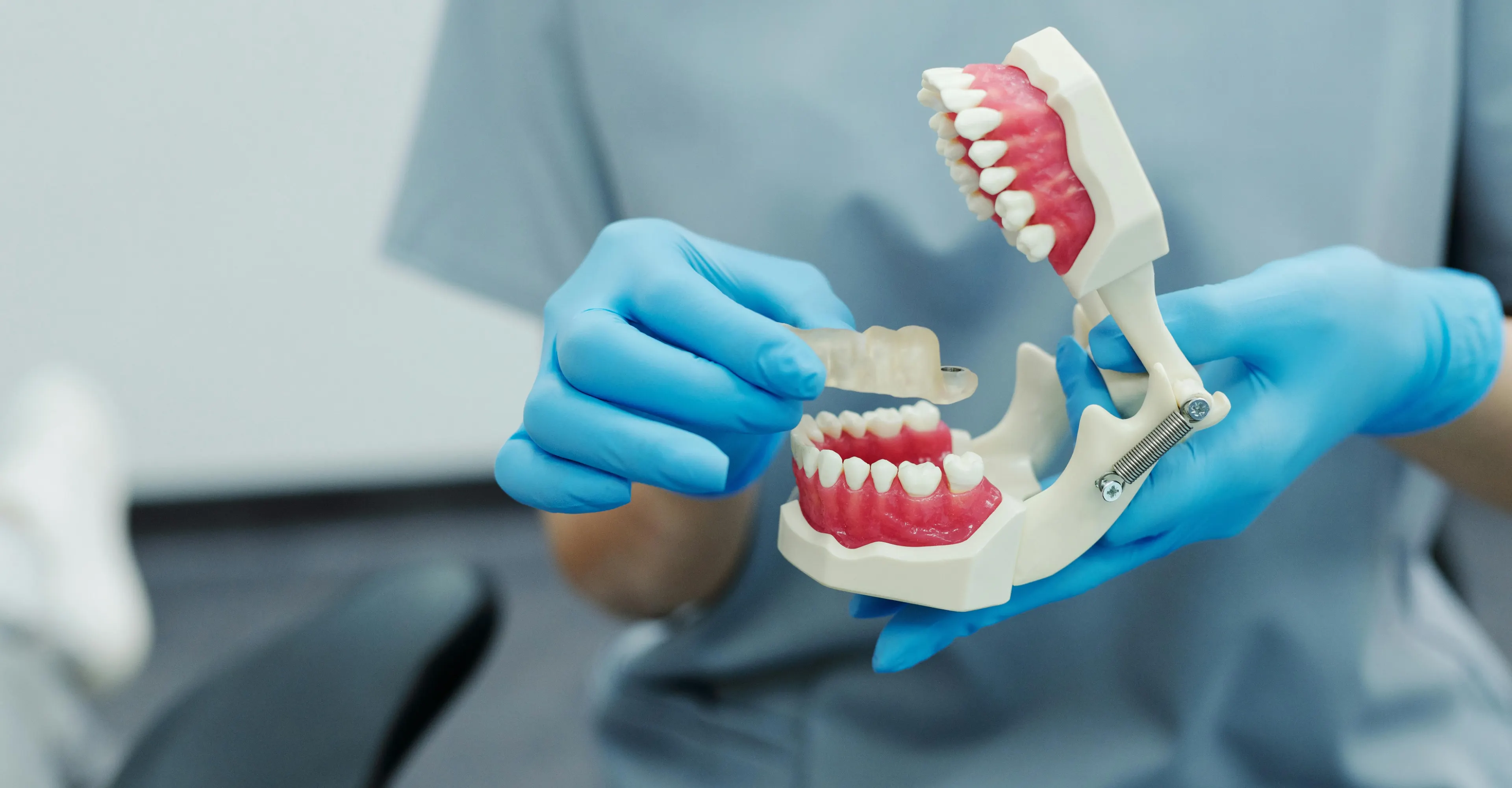
There isn't just one way to do this, which is great because it gives you options. Depending on your specific needs, jaw health, and budget, your dentist might recommend a fixed arch, an implant-supported denture, or a series of implant-supported bridges. Each option offers a way to rebuild your smile and get back to eating, speaking, and laughing without a second thought. Understanding these different types is the first step in figuring out the best path forward for you.
Fixed Full Arch Implants
A fixed full arch implant is a complete set of new teeth for your upper or lower jaw, secured by just a few strategically placed implant posts. Think of it as a total smile restoration that stays put. The "fixed" part is key here; these teeth are permanently attached and can only be removed by your dentist. This gives you incredible stability, so you never have to worry about your teeth slipping or moving while you eat or talk. Many people love this option because it feels the most like having their natural teeth back. You can eat all your favorite foods and care for them simply by brushing and flossing, just like you normally would.
Implant-Supported Dentures
This option blends the stability of implants with the convenience of a removable denture. Instead of relying on messy adhesives, your custom denture "snaps" securely onto a few implants placed in your jaw. You get the best of both worlds: the implants hold your denture firmly in place while you go about your day, but you can easily remove it at home for thorough cleaning. This gives many people peace of mind and makes maintenance feel straightforward and manageable. Typically, just four to six implants are enough to support a full denture, providing a reliable and comfortable fit that is a major step up from traditional dentures.
Implant-Supported Bridges
If you have several missing teeth in a row but don't need a full arch replacement, an implant-supported bridge is an excellent solution. This approach uses dental implants as anchors for a bridge that spans the gap left by the missing teeth. Unlike a traditional bridge that requires grinding down healthy adjacent teeth for support, an implant-supported bridge stands on its own. This is a huge benefit because it preserves your natural tooth structure while providing a strong, permanent fix. Our prosthodontic specialists often recommend this to restore function and aesthetics to a specific section of your mouth. It’s a durable, long-lasting way to fill in the gaps and complete your smile.
How Much Do Full Mouth Dental Implants Cost?
Let's talk numbers. The cost of full mouth dental implants is one of the biggest questions people have, and for good reason. It’s a significant investment in your health and confidence. While the final price tag depends on your specific needs, we can look at national averages to give you a clear and realistic starting point. Think of these figures as a baseline before you get a personalized quote.
The total cost is influenced by the type of implant solution you choose, the materials used, and any preparatory work you might need. For example, a fixed, permanent bridge will have a different price point than a removable, implant-supported denture. Understanding these differences is the first step toward figuring out what’s right for your smile and your budget. The only way to know your exact cost is to come in for a consultation where we can create a custom treatment plan just for you. We can also discuss our Loyalty Discount Plan, which helps make care more affordable.
Cost of Fixed Full Arch Implants
Fixed full arch implants are the top-tier solution for a complete smile restoration. Because they are permanently secured in your mouth, they look, feel, and function just like natural teeth. Nationally, the average cost for a fixed full arch is around $19,979 per arch. The typical price range falls between $19,315 and $30,878. This variation accounts for factors like the complexity of your surgery and the specific materials chosen for your final bridge. While it's the highest-priced option, patients choose it for its unparalleled stability and permanence. You never have to worry about taking your teeth out, and you can eat all your favorite foods with confidence.
Cost of Implant-Supported Dentures
Implant-supported dentures offer a fantastic middle ground, providing much more stability than traditional dentures at a more accessible price point. These dentures snap securely onto implants but are still removable for easy cleaning. The average cost for implant-supported dentures is about $8,289 per arch, with most people paying somewhere between $7,628 and $13,297. This option eliminates the slipping and discomfort associated with conventional dentures, giving you a secure fit and renewed confidence when you speak and eat. It’s one of our most popular restorative dental services for patients looking for a blend of function and value.
How Location Affects Your Cost
Where you live plays a role in the final cost of your dental implants. You’ll generally find that prices are higher in major metropolitan areas, where the costs of running a practice are greater. Even within a region like Northern Virginia, pricing can differ from one town to the next. At Smile Makers Dental Center, we aim to provide consistent and transparent pricing across all our convenient locations. By having an established presence in the community, we can manage our costs effectively and pass those benefits on to you. This allows us to offer expert care without the premium price tag you might find at a boutique practice in a high-rent district.
What Influences the Final Cost of Implants?
When you start researching dental implants, you’ll quickly find that there isn't one single price tag. The final cost is a sum of several parts, and it’s tailored to your specific dental needs and goals. Think of it like building a custom solution for your smile; the final price depends on the blueprints. Key factors include how many implants you need, the type of teeth that will be attached to them, the materials used, and any preparatory work your jaw might need to be ready for the procedure.
Understanding these components helps you see where the value is and allows you to have a more productive conversation with your dentist. It’s about creating a plan that not only restores your smile but also fits your budget and long-term health goals. At Smile Makers, we believe in transparency, so let’s walk through exactly what goes into the cost of your new smile.
Number of Implants
The most direct factor influencing cost is the number of implants you need. A single implant to replace one missing tooth will naturally cost less than a procedure to restore an entire arch. However, a full-mouth restoration doesn't always mean one implant for every missing tooth. Instead, we can use as few as four to six implants to securely anchor a full set of new teeth. This approach, often called a full arch restoration, is both clinically effective and more cost-efficient than placing a dozen or more individual implants. During your consultation, we’ll use advanced imaging to determine the ideal number and placement of implants to give you a stable, long-lasting result.
Restoration Type: Fixed vs. Removable
Once the implants are in place, they need to support your new teeth, which is called the restoration. You have two main options here: fixed or removable. A fixed restoration, like a full arch bridge, is permanently secured to the implants and can only be removed by a dentist. It functions and feels the most like natural teeth. A removable restoration, often called an implant-supported overdenture, snaps onto the implants but can be taken out for cleaning. While both provide excellent stability compared to traditional dentures, fixed options are generally more complex and therefore come at a higher price point. Your choice will depend on your lifestyle, budget, and personal preference, and our prosthodontics specialists can help you decide.
Material Choice: Zirconia vs. Acrylic
The material used for your new teeth also plays a significant role in the final cost. The two most common options are acrylic and zirconia. Acrylic is a strong, reliable dental-grade resin that offers a more budget-friendly solution. It looks great and functions well, though it may wear down over time. Zirconia is a premium ceramic material known for its exceptional strength and incredibly natural appearance. It’s highly resistant to chipping, staining, and wear, making it a fantastic long-term investment. Stronger, more natural-looking materials like zirconia cost more than acrylic, but many patients find the durability and superior aesthetics are worth it for their cosmetic dentistry goals.
Preparatory Procedures Like Bone Grafts
For dental implants to be successful, they need to fuse with a sufficient amount of healthy jawbone. If you’ve had missing teeth for a while, you may have experienced some bone loss in that area. In these cases, a preparatory procedure like a bone graft is necessary to build up the jaw and create a solid foundation for the implant. Other procedures, like a sinus lift for upper implants or the extraction of failing teeth, may also be required before implant surgery can begin. If you need bone grafts, infection control, or reshaping of your gums, it can add to the overall cost and timeline of your treatment. Our oral surgery team will assess your unique situation to see if any of these steps are needed.
Your Provider's Expertise and Location
Finally, the experience of your dental team and the geographic location of the practice can influence the cost. A highly trained specialist with years of experience in complex implant cases may have higher fees, but you’re paying for their expertise and a higher likelihood of a successful, complication-free outcome. Dental costs also vary from city to city. While prices might be higher in major metropolitan areas, our goal is to provide exceptional care that is both accessible and affordable for our community. With six convenient Northern Virginia locations, we offer consistent, expert care close to home, along with flexible payment options to make your dream smile a reality.
How to Find Affordable Full Mouth Implants
A full mouth restoration is a major investment in your health and confidence, but the price tag doesn’t have to be a barrier. While you should be cautious of deals that seem too good to be true, there are practical ways to find high-quality, affordable full mouth dental implants. It’s all about knowing what to look for and what questions to ask. By exploring specific types of procedures, seeking out practices with efficient setups, and considering all your local options, you can find a solution that fits your budget. Many dental offices also offer programs like our Loyalty Discount Plan to help make care more accessible. Let’s walk through a few key strategies to help you in your search.
"Teeth in a Day" Procedures
You may have heard of "Teeth in a Day," and it’s an option worth looking into for both convenience and cost-effectiveness. This approach, which includes treatments like All-on-4, allows your surgeon to place the implants and attach a full set of functional, temporary teeth in a single appointment. This means you walk out of the office with a brand-new smile right away. While you’ll still need to heal before getting your permanent set, this method can reduce the total number of appointments, which can lower overall costs. It also minimizes the time you have to spend with missing teeth, letting you get back to eating and smiling with confidence much sooner.
Practices with In-House Labs
One of the best ways to find more affordable implant solutions is to look for a dental practice that has its own in-house dental lab. When a dentist's office has to send out for crowns, bridges, or dentures to be made by a third-party lab, it adds extra costs and time to your treatment. A practice with an on-site lab cuts out the middleman. This direct collaboration between your dentist and the lab technician often leads to a better fit, faster turnaround times, and significant cost savings that get passed on to you. During your consultation, it’s a great idea to ask if the practice creates its restorations in-house.
Dental School Clinics
If you live near a university with a dental program, a dental school clinic can be another avenue for affordable care. At these clinics, dental students perform procedures under the direct and constant supervision of experienced, licensed faculty. Because these are educational institutions, the prices for complex treatments like full mouth implants are often much lower than at a private practice. The trade-off is usually time, as appointments can take longer and the overall process may be slower. However, if your schedule is flexible, this can be a fantastic way to receive quality care at a fraction of the typical cost.
Common Misconceptions About Implant Costs
When you start researching the cost of full mouth dental implants, the numbers can feel all over the place. It’s easy to get confused by conflicting information and flashy advertisements that promise the world for a low price. Let's clear up some of the biggest misconceptions floating around. Understanding the truth behind the price tag helps you make a confident and informed decision about your smile.
We'll walk through why "free" isn't really free, how the cheapest price tag can cost you more in the long run, and what the true value of this investment looks like. We'll also cover how you can make the most of your insurance benefits to make your new smile a reality. Getting clear on these points is the first step toward restoring your smile with confidence.
The Myth of "Free" Implants
You’ve probably seen ads for "free dental implants," and it’s natural to wonder if they’re legitimate. The short answer is no. Dental implants are a sophisticated medical procedure involving high-quality materials, advanced technology, and the expertise of a skilled surgeon. Reputable dental offices simply can't offer them for free. These offers are often misleading marketing tactics that can hide unexpected fees or lead to low-quality care from inexperienced providers. It's also important to know that government programs like Medicare or Medicaid typically do not cover the cost of dental implants, so it's best to be wary of any claims suggesting otherwise. A trustworthy provider will always be transparent about costs from the start.
Why the Cheapest Option Isn't Always the Best Value
It’s tempting to go for the lowest price, but with dental implants, the cheapest option can end up costing you more over time. High-quality implants are designed to last for decades, often 25 years or more with proper care. In contrast, less expensive alternatives like dental bridges may need to be replaced every 10 to 15 years, and traditional dentures often require replacement every 5 to 10 years. When you factor in the cost of repeated replacements and repairs, a durable implant solution often proves to be more cost-effective in the long run. Think of it as an investment in a permanent, hassle-free smile instead of a temporary fix that requires ongoing maintenance and expense.
The Long-Term Value of Implants
The value of dental implants goes far beyond the initial price. This treatment is an investment in your health, confidence, and overall quality of life. Because they look and feel like natural teeth, you can eat your favorite foods without worry and speak with clarity. More importantly, dental implants are the only tooth replacement option that helps prevent bone loss in your jaw. When you lose a tooth, the underlying bone begins to shrink, which can alter your facial structure. Implants stimulate the jawbone just like natural tooth roots, preserving your facial contours and promoting better oral health for years to come. This makes them a truly comprehensive solution for your smile.
How to Maximize Your Insurance Coverage
Figuring out insurance can feel like a puzzle, especially since many plans classify implants as a cosmetic procedure and may only cover a portion of the cost. The first step is to call your insurance provider to understand exactly what your plan covers for major procedures. From there, look for a dental practice that helps you make the most of your benefits. Many offices offer flexible payment plans or work with third-party financing to break the cost into manageable monthly payments. At Smile Makers, we also offer a Loyalty Discount Plan to help make treatment more affordable for our patients, especially those without dental insurance. Don't let the initial numbers discourage you; there are many ways to fit this investment into your budget.
How to Pay for Full Mouth Dental Implants
Seeing the total cost of full mouth dental implants can feel intimidating, but it’s important to know you have options. A healthy, confident smile is a worthwhile investment, and there are several practical ways to make it fit your budget. From using insurance benefits to in-house plans, you can find a path that makes financial sense for you. Let’s walk through the most common ways to pay for your treatment so you can move forward with clarity and confidence.
Many people find that combining a few different payment strategies is the best approach. For example, you might use your insurance to cover part of the cost, pay for a portion with your HSA, and finance the rest through a payment plan. The key is to explore all your avenues and create a plan that feels manageable. Our team is always here to discuss these options with you and help you find the right solution for your specific situation. We believe that financial concerns shouldn't stand in the way of life-changing dental care. That's why we are committed to transparency and will provide a detailed cost breakdown during your consultation, with no hidden fees. Understanding the full picture is the first step toward making an informed decision about your health and your finances.
Using Your Dental Insurance
While most dental insurance plans don’t cover the full cost of implants, they can often reduce your total out-of-pocket expense. Your policy might cover related procedures, such as tooth extractions, or contribute toward the cost of the final crowns that attach to the implants. The best way to understand your benefits is to call your insurance provider directly and ask about your specific coverage for implant procedures. Our team at Smile Makers is also here to help you review your policy and will work to maximize any benefits available for your dental services. We handle the paperwork so you can focus on your treatment.
Using an HSA or FSA
If you have a Health Savings Account (HSA) or a Flexible Spending Account (FSA), you can use these funds to pay for your dental implants. These accounts are a fantastic tool because they allow you to set aside pre-tax money for qualified medical expenses, which includes dental work. Using pre-tax dollars is like getting an immediate discount on your procedure, making your money go further. Before your consultation, check your account balance and confirm your contribution limits to see how much you can put toward your new smile. It’s a financially savvy way to invest in your health.
Exploring Dental Credit Cards
Third-party financing through a dedicated medical credit card is another popular option. Companies like CareCredit offer financing plans specifically for healthcare costs, often with promotional periods that feature zero or low interest. This allows you to break up the total cost into manageable monthly payments. If you choose this route, make sure you understand the terms and can pay off the balance before the promotional period ends to avoid high interest charges. It can be a great way to get the treatment you need now and pay for it over time.
In-House Payment Plans and Financing
You don’t always have to work with an outside lender. At Smile Makers, we want to make exceptional dental care accessible to everyone in our community, which is why we offer flexible in-house payment plans. We can work with you directly to create a dental financing schedule that fits comfortably within your budget. This approach is often more straightforward and allows us to tailor a solution just for you. Our goal is to remove financial stress from the equation so you can focus on achieving a healthy, beautiful smile.
Loyalty and Membership Plans
For patients without dental insurance, a membership or loyalty plan can be the perfect solution. Our SmileMakers Dental Discount Plan is a private membership program designed to provide an affordable alternative to traditional insurance. It’s not an insurance policy but a simple, annual plan that gives you access to significant discounts on a wide range of treatments, including major procedures like implants. Many of our patients find that our discount plan offers better savings and more comprehensive coverage than most insurance policies on the market.
What to Expect During Your Recovery
Getting your new smile is an exciting process, and knowing what to expect during recovery can help you feel confident and prepared. Your healing journey happens in stages, from the first few weeks of gentle care to the long-term habits that will keep your implants healthy for years to come. Here’s a straightforward guide to help you through each phase of your recovery.
The First Few Weeks: Diet and Healing
After your procedure, your mouth needs time to heal. For the first couple of weeks, you’ll stick to a soft food diet to protect the implant sites. Think smoothies, soups, yogurt, and mashed potatoes. You’ll want to avoid anything hard, crunchy, or sticky that could disturb the area as it heals. This simple step is one of the most important things you can do to ensure your implants heal properly and without any setbacks. It gives your jaw the break it needs to begin the healing process on the right foot. Our team provides a full range of dental services and will give you detailed post-op instructions to follow.
Your Full Recovery Timeline
While you’ll start feeling much more like yourself within a few weeks, the complete healing process for full mouth implants takes a bit longer. The most critical part of recovery happens beneath the surface, where the implant posts fuse directly with your jawbone. This process, called osseointegration, is what makes implants so strong and stable. It typically takes between three to six months to complete. Patience during this time is key to a successful, lifelong result. Think of it as building a strong foundation for a smile that will last for decades. Our dental specialities include expert implant placement and follow-up care to monitor your progress.
Signs of Complications to Look For
Your comfort and safety are our top priorities. It’s important to monitor your healing and know what to look for. While some swelling and discomfort are normal right after surgery, certain signs may point to a complication. Be on the lookout for excessive swelling that doesn’t improve, persistent pain, or any discharge from the surgical sites, as these could indicate an infection. If you experience any of these symptoms or feel like something isn’t right, don’t wait. It’s always best to be cautious and get in touch with your dentist. You can book an appointment with us immediately if you have any concerns during your recovery.
Long-Term Care for Your New Smile
Once your implants have fully healed, caring for them is straightforward and very similar to caring for natural teeth. To ensure your new smile lasts a lifetime, maintaining excellent oral hygiene is essential. This means brushing twice a day, flossing regularly (we can show you the best tools for cleaning around implants), and attending regular dental check-ups and cleanings. It’s also wise to avoid habits like smoking, which can negatively affect the health of your gums and implants. Consistent care helps protect your investment, and our Loyalty Discount Plan makes it easier to keep up with routine visits.
How to Choose the Right Implant Provider
Choosing the right provider is just as important as choosing the right type of implant. This is a long-term investment in your health and confidence, so you want a team you can trust completely. The right dentist will not only have the technical skill but will also listen to your concerns, explain your options clearly, and make you feel comfortable throughout the entire process. Finding a provider who combines expertise with genuine care is the key to a successful and stress-free experience.
Your relationship with your implant provider doesn’t end after the final restoration is placed. You’ll be seeing them for regular check-ups and maintenance for years to come. That’s why it’s so important to find a practice where you feel seen and supported. Look for a team that is transparent about costs, patient with your questions, and dedicated to your long-term oral health.
Check Their Qualifications and Credentials
When you’re looking for a provider for full mouth implants, you want someone with specialized training. While many general dentists place implants, complex cases often benefit from a specialist’s touch. Look for credentials like prosthodontist, periodontist, or oral surgeon. These dentists have completed years of additional training focused specifically on tooth replacement, gum health, and oral surgery. Our team includes specialists who are experts in implant dentistry. Don’t be shy about asking about a dentist’s experience with full mouth cases. Ask to see before-and-after photos of their previous patients to get a sense of their work.
Get the Most Out of Your Consultation
The consultation is your opportunity to interview the dental team and decide if they’re the right fit for you. A good provider will conduct a thorough examination, including 3D imaging, to assess your bone density and overall oral health. They should present you with a personalized treatment plan that details every step of the process. This is also when you should receive a clear, itemized cost breakdown. If a provider is vague about pricing or pressures you to make a quick decision, consider it a red flag. You can book an appointment at one of our Northern Virginia locations to get a clear, no-pressure treatment plan.
Ask These Key Questions
To make sure you have all the information you need, go into your consultation with a list of questions. This shows you’re an engaged patient and helps you compare different providers accurately.
Here are a few essential questions to ask:
- What are your qualifications and how many full mouth implant cases have you completed?
- What type of implants and materials do you recommend for me, and why?
- What is the complete, all-inclusive cost? Ask for a written quote that includes the surgery, posts, abutments, final restoration, and any preparatory procedures like bone grafts.
- What does the recovery and follow-up care process look like?
- What financing options or payment plans do you offer?
Spotting Red Flags with Low-Cost Options
If you see an advertisement for full mouth implants that seems unbelievably cheap, it’s wise to be cautious. Some offers are "bait-and-switch" tactics, where the advertised price doesn't include essential parts of the procedure, leading to surprise fees later. Extremely low prices can also be a sign of low-quality materials or an inexperienced provider, which can lead to implant failure and more costly repairs down the road. True "free dental implant" offers are often scams designed to collect your personal information. Your smile is a serious investment, and prioritizing quality and expertise over the absolute lowest price will always provide the best long-term value.
Get Your Custom Implant Plan in Northern Virginia
Thinking about full mouth implants is a huge step, and it's completely normal to wonder how you can make it work for your budget. The key is finding a dental team that creates a personalized treatment plan just for you, one that addresses your unique dental needs without causing financial stress. A good plan should give you a clear path forward, so you know exactly what to expect.
Here in Northern Virginia, we believe that everyone deserves a smile they love. That’s why we focus on making care accessible. We help you understand your options by working with many insurance providers to keep your out-of-pocket costs as low as possible. For those without insurance, our in-house Loyalty Discount Plan is designed to give you access to significant savings on a wide range of treatments, including implants.
Flexible financing options can also make the investment much more manageable, allowing you to break down the total cost into predictable monthly payments. This way, you can focus on your healing and your beautiful new smile instead of worrying about a large upfront expense.
The best way to get a clear picture of your costs and treatment path is to sit down with a professional. By scheduling a consultation, you can get a custom implant plan that fits your goals and your wallet. We're here to walk you through every step, ensuring you feel confident and informed about your journey. You can book an appointment at one of our six Northern Virginia locations to get started.
Related Articles
- What Is Full Mouth Reconstruction? A Complete Guide
- Dental Implants Virginia | Smile Makers Dental Center
- Dental Implants Tysons VA | Tooth Replacement Options
- Dental Implants Fairfax VA | Tooth Replacement Options
Frequently Asked Questions
How long does the entire process for full mouth implants take? The journey to a new smile is a multi-step process that typically spans several months. It starts with your initial consultation and planning. The surgery to place the implants is next, followed by a crucial healing period of three to six months. During this time, the implants fuse with your jawbone to create a strong foundation. After you've fully healed, we'll create and attach your beautiful, permanent new teeth.
Will getting full mouth dental implants be painful? This is one of the most common questions we hear, and it's completely understandable to be concerned. The procedure itself is not painful because it's performed with effective anesthesia to ensure you are comfortable. After the surgery, it's normal to experience some soreness and swelling, but most people find it is very manageable with over-the-counter pain relievers and is less uncomfortable than they expected. We will give you detailed instructions to help you manage your comfort during recovery.
How do I know if I'm a good candidate for dental implants? The most important factor for being a good candidate is having enough healthy jawbone to secure the implants. General good health and non-smoking habits also contribute to success. If you've experienced bone loss from having missing teeth for a while, don't worry. Procedures like bone grafting can often rebuild the necessary foundation, making implants possible for many people. The only way to know for sure is to come in for a consultation where we can take a 3D scan and assess your specific situation.
Why should I choose implants over traditional dentures? While traditional dentures are a valid option, implants offer significant advantages for your long-term health and quality of life. Implants are the only solution that stimulates your jawbone, which prevents the bone loss that causes facial changes over time. They are permanently fixed or securely snapped in place, so you never have to worry about them slipping, clicking, or limiting your diet. They truly look, feel, and function just like natural teeth.
How do I take care of my new implants? Caring for your new smile is surprisingly straightforward. You'll treat your implants much like you would natural teeth, with consistent brushing twice a day and daily flossing. We can show you special tools to make cleaning around the implants easy and effective. Regular dental check-ups and cleanings are also essential to ensure the health of your gums and the longevity of your investment. With proper care, your new smile can last for decades.