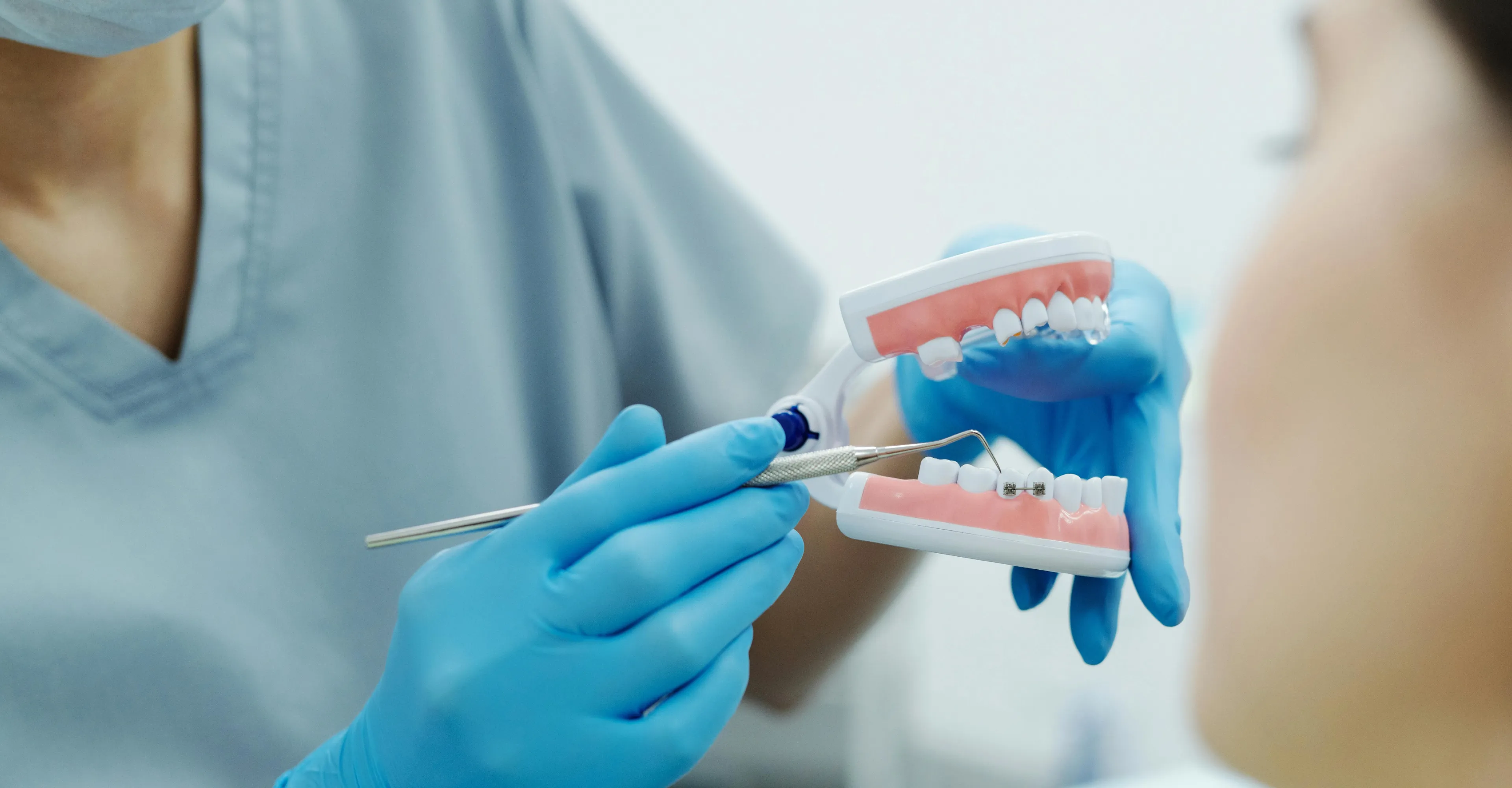



Dental bridge vs implant: A bridge replaces a missing tooth with a replacement tooth connected to crowns on neighboring teeth. An implant replaces the tooth root with a post in the jaw that supports a replacement tooth. Neither option is right for everyone; the choice depends on oral health, the condition of nearby teeth, your preferences, and a dentist’s evaluation.
Schedule an appointment to discuss your options
What is the difference between a dental bridge and an implant?
A dental bridge fills a gap with a replacement tooth connected to crowns that fit over neighboring teeth. Those teeth provide support. An implant is a small post placed in the jawbone to serve as an artificial tooth root, with a replacement tooth attached after the appropriate steps in care.
Both approaches can replace a missing tooth, but they work differently. A bridge uses the teeth next to the space. An implant is supported by the jaw rather than those neighboring teeth. A dentist can explain which approach may be suitable after reviewing your mouth, health history, and goals.
For a broader overview of tooth replacement approaches, see these tooth replacement options. You can also read about what a dental bridge is and factors that can affect bridge planning.
One useful way to frame the question is to ask what will support the new tooth and what other parts of your mouth will be involved. With a bridge, the neighboring teeth are part of the design. With an implant, the support comes from the jaw, so the evaluation focuses on whether the tissues can support the plan. These differences affect preparation, appointments, and cleaning—not just the appearance of the final tooth.
How does each option get support?
A traditional bridge is anchored to teeth beside the gap. Preparing those teeth to hold crowns is part of the bridge process. The replacement tooth, called a pontic, sits between the supporting crowns. This arrangement can be considered when adjacent teeth are suitable for that role.
An implant is anchored in the jawbone. It does not rely on neighboring teeth for support. The process typically involves placement of the implant and a period of healing before the final replacement tooth is attached. Timing and suitability vary, so a dentist must assess the individual situation.
Different designs may be used in certain circumstances. For example, a bridge can sometimes be supported by a single adjacent tooth, or implants can support more than one replacement tooth. These are not interchangeable recipes: the right design depends on the location of the gap and the patient’s needs.
Think about a missing tooth between two otherwise healthy teeth. A bridge may require those teeth to be prepared as supports, while an implant plan is evaluated independently of them. Now consider a gap beside a tooth that already has a large restoration or needs a crown. That detail may change the discussion because the adjacent tooth’s condition matters to a bridge design. These examples illustrate why the same missing-tooth question can lead to different conversations; they are not recommendations for an individual case.
The location and size of the gap also matter. A tooth toward the front may raise questions about appearance and how the replacement blends with surrounding teeth. A tooth toward the back may make chewing and access for cleaning especially important topics. Tell the dentist what activities or concerns matter to you so the plan can address them alongside the clinical assessment.
How do bridges and implants compare?
A comparison can help organize the discussion, but it cannot determine which treatment is appropriate. The details of the gap, neighboring teeth, gums, jaw, and health history all affect planning.
| Factor | Dental bridge | Dental implant |
|---|---|---|
| Primary support | Neighboring teeth that hold the crowns | A post placed in the jawbone |
| Effect on nearby teeth | Adjacent teeth are involved in supporting the restoration | Does not use neighboring teeth as supports |
| Care at home | Requires cleaning around the bridge and beneath the replacement tooth | Requires regular brushing and cleaning around the implant restoration |
| Care process | Usually involves preparing support teeth and fitting the bridge | Usually involves implant placement, healing, and fitting the replacement tooth |
| What determines suitability | Condition of supporting teeth, gap location, and oral health | Jaw and gum health, medical history, gap location, and healing considerations |
| Planning conversation | Ask how support teeth will be prepared and how the bridge will be cleaned | Ask about evaluation, healing stages, and the final restoration |
The table is a starting point, not a treatment recommendation. A dental exam helps determine what is possible for a particular gap and whether other considerations should be addressed first. For additional context, read about types and basics of dental bridges.
It is also helpful to compare the practical demands rather than looking for a universally faster or simpler option. Ask how many visits are expected, what happens at each visit, and whether there may be a temporary restoration. Find out how the bite will be checked and what follow-up will be recommended. A clear sequence lets you plan around work, school, caregiving, and travel without assuming a standard timeline.
As you compare, separate confirmed information from questions that still need an exam. You may already know your schedule constraints or that you prefer to avoid involving neighboring teeth if possible. The dentist can then explain whether those preferences fit the clinical findings, what tradeoffs each suitable option has, and what additional information would help make a decision.
Book an appointment to review tooth replacement choices
What should you consider when deciding?
Start with the teeth around the gap. A bridge uses neighboring teeth as supports, so their condition matters. If those teeth already need crowns, that may factor into a conversation, but only a dentist can determine whether they are suitable. With an implant, the jaw and surrounding tissues need to be assessed, along with health factors that may affect healing.
Consider the timeline and number of visits you can manage. A bridge and an implant have different steps. Implant care includes a healing period, and the overall schedule depends on the case. A bridge also requires planning and fitting. Ask what stages are expected, what follow-up is needed, and how temporary tooth replacement may be handled if relevant.
Think about daily cleaning as well. A bridge needs attention around and beneath its replacement tooth, where food and plaque can collect. Your dental team can show you appropriate ways to clean the area. Implant restorations also need consistent home care and routine professional follow-up. No restoration removes the need to care for the surrounding gums and teeth.
Your preferences matter too. You may value preserving the neighboring teeth, avoiding a surgical procedure, or understanding how each option feels and functions. Share questions or concerns openly, including anxiety about dental visits. If dental anxiety is part of the decision, this overview of sedation dentistry may help you prepare questions for the practice team.
It can help to make a short list of what matters most before the consultation. For example, note whether minimizing work on nearby teeth is a priority, how flexible your schedule is for visits, and what you want to know about cleaning. These preferences guide a conversation, but they do not replace clinical findings. If you have had dental work in the area before, bring that up as well.
Also bring the details that can make an appointment more productive: a current medication list, relevant medical history, prior dental records if available, and your questions about healing or home care. Mention if you have had trouble keeping a restoration clean or if a previous dental experience makes you uneasy. You can ask the team to explain unfamiliar terms as they arise. Understanding the proposed steps is part of making an informed decision, and there is no need to choose before your questions are answered.
What does the process involve?
Planning a bridge
The dentist evaluates the gap and the teeth that could support the bridge. If the approach is appropriate, the support teeth are prepared, impressions or digital records are collected, and the bridge is made and fitted. The dentist checks the fit and bite and explains how to keep the area clean. Your exact sequence may vary.
Ask what the preparation entails, how the fit will be checked, and what to do if the bridge feels uncomfortable after placement. You can also ask whether a temporary restoration is part of your plan and what foods or habits to be mindful of while adjusting. The answers depend on your particular treatment plan, so avoid relying on another person’s experience as a schedule for your own care.
Before leaving a fitting visit, make sure you know how to contact the practice with a concern and when follow-up is expected. Ask the dental team to demonstrate cleaning beneath the bridge, rather than assuming ordinary flossing will reach every surface. If your bite feels uneven or something does not feel right, ask for guidance instead of attempting to reshape or adjust the restoration at home.
Planning an implant
Planning begins with an assessment of the mouth and jaw, including whether there is enough healthy support for the proposed restoration. The dentist discusses the steps and healing expectations. Implant placement is followed by healing; when appropriate, the replacement tooth is attached. Some people need additional planning or care, and not everyone is an immediate candidate.
Ask which parts of the process are expected in your case and what may affect the sequence. Share your complete health history and current medicines with the dental team, and ask how follow-up visits fit into the plan. Do not assume that an implant can be completed in one visit or that the same timeline applies to every patient.
You can ask what the team will monitor during healing, which instructions to follow between visits, and whom to call if you have a concern. Clarify how the final tooth will be attached and how the bite and fit will be reviewed. These are planning questions, not a prediction that a particular step will be needed; the clinician can explain what applies after examining your situation.
Questions about implant care can be part of a wider conversation about implant-supported tooth replacement, though that article discusses a different approach and is not a substitute for an individual exam. Smile Makers describes its available oral surgery services online; a consultation can clarify which team or service is relevant to your situation.
How can you care for either restoration?
Follow the instructions your dental team gives you, and keep regular dental visits. Brush twice daily with fluoride toothpaste and clean between teeth every day, using tools recommended for your restoration. Ask your dentist or hygienist to demonstrate how to reach around a bridge or implant without injuring the gums.
With a bridge, make sure you understand how to clean beneath the replacement tooth. The space may require a floss threader or another tool recommended by your dental professional. Ask for a demonstration and practice while the team can give feedback. A routine that is easy to repeat is more useful than a complicated approach you are unsure how to do.
For an implant restoration, clean around the visible parts just as carefully as the surrounding teeth. Your dental team can recommend suitable tools and explain what changes should prompt a call. Routine checkups allow the team to review the restoration and the health of nearby tissues. Home care and professional follow-up both matter.
Pay attention to changes such as discomfort, looseness, difficulty chewing, or irritation around the restoration. These symptoms do not establish a diagnosis, but they are good reasons to contact the practice for guidance. Do not try to adjust or repair a restoration yourself.
Making the routine manageable can help you follow it consistently. Keep any recommended cleaning aid where you brush, and ask whether the technique should change if your gums are sensitive. If you travel or keep supplies in more than one place, consider a small care kit. At checkups, tell the hygienist what parts of cleaning are difficult; a demonstration or a different recommended tool may make the routine easier.
The American Dental Association offers general patient information through its official website. Use general resources to prepare questions; your dentist’s assessment is necessary to understand your own options.
What questions should you ask your dentist?
Clear questions can make the appointment more useful. You do not need to decide before you understand the available choices. Consider asking:
- What are the realistic options for this specific missing tooth?
- How do the neighboring teeth and the jaw affect my choices?
- What steps, visits, and healing time should I expect?
- How should I clean each option at home?
- What follow-up care will be important?
- What factors could change the plan, and when should I call the office?
- How will you check whether the restoration fits and functions as intended?
- Are there health-history details or medicines I should discuss before choosing?
Bring a list of medicines and relevant health information, and mention any dental anxiety or scheduling concerns. You can review Smile Makers locations and learn about the practice’s dental services before your visit. The goal is a clear discussion of your circumstances, not choosing a procedure based on a general comparison alone.
It may also help to ask for the plan in everyday language and to repeat back the steps as you understand them. If you are comparing options, ask the dentist to explain the advantages and limitations of each one for your specific mouth. You can take notes or bring someone you trust to help remember the discussion. A decision made with a clear understanding of care steps and follow-up is easier to approach calmly.
Before you finish, confirm the next step and whether any records or additional evaluation are needed. If more than one choice appears reasonable, ask for the benefits and limitations of each in relation to your own priorities. You might also ask how the team will help you learn the cleaning technique and what follow-up will look like. Taking time to understand the plan can make the decision feel more manageable than trying to choose from a short description alone.
Request a visit to discuss your next step
Frequently asked questions
Is a bridge or implant better for one missing tooth?
There is no single best choice for everyone. The condition of the adjacent teeth, jaw and gum health, medical history, and personal preferences all matter. A dentist can compare suitable options after an examination.
Does an implant require work on nearby teeth?
An implant is supported by a post in the jaw rather than by crowns on neighboring teeth. Whether it is appropriate depends on an assessment of the jaw, surrounding tissues, and overall health.
How long does a bridge or implant take?
The schedule depends on the treatment plan. A bridge involves preparation and fitting. Implant care includes placement and healing before the final restoration may be attached. Ask the dentist for a timeline based on your needs.
How do I clean under a dental bridge?
Food and plaque can collect beneath the replacement tooth. Your dental team can demonstrate suitable flossing aids or other cleaning tools and show you how to use them safely.
What if I am nervous about choosing or receiving care?
Tell the practice team what worries you and ask them to explain the visit and available comfort options. You can also review this guide to managing dental anxiety before your appointment.
A thoughtful conversation and an examination can help you understand the tradeoffs and choose a plan that fits your oral health and preferences.